
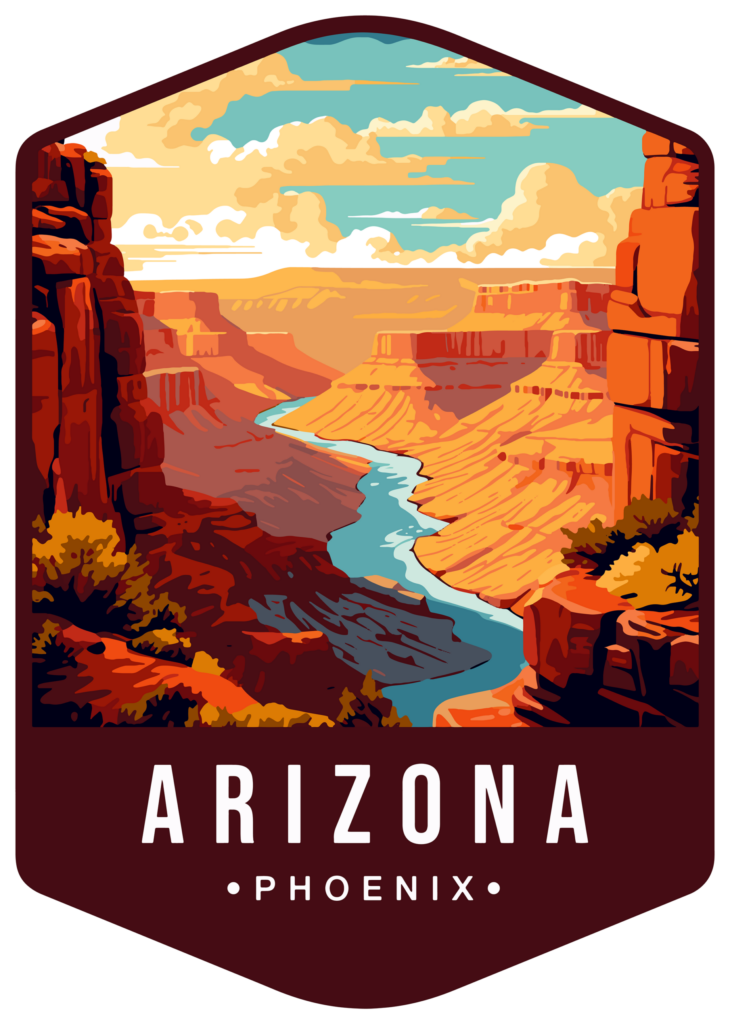
Arizona has been home to indigenous peoples for at least 13,000 years. The Ancestral Puebloans, also known as the Hohokam in southern Arizona, thrived in the desert from around 300 BCE to 1450 CE. They constructed an extensive network of irrigation canals, allowing them to grow crops in the Sonoran Desert. Their trade networks extended from the Pacific Coast to Mexico to the Mississippi River.
In northern Arizona, the Ancestral Puebloans built cliff dwellings and pueblos. Their distinctive architectural styles and artistic traditions have become icons of the American Southwest. The Hopi people, whose ancestors are direct descendants of the Ancestral Puebloans, still live in traditional villages atop mesas in northern Arizona. The Apache, Mojave, Yuma, and Chemehuevi peoples continue their traditions, keeping the cultures, traditions, and languages alive.
When Spanish explorers arrived in the 1500s, they found thriving Native American communities with their own form of governance. Spanish colonial expansion into Arizona was slower than in New Mexico, partly due to the harsh desert and the resistance of indigenous peoples. Spanish missionaries built missions in southern Arizona, some of which still stand today.
After Mexico gained its independence from Spain in 1821, Arizona became part of the Mexican Republic. The southern area continued to grow with settlements of both Spanish and Mexican people, while much of the northern and central Arizona remained under Native American control. That changed dramatically with the Mexican-American War and the Treaty of Guadalupe Hidalgo in 1848, which transferred Arizona to the United States.
The initial American territorial boundaries did not include all of present-day Arizona and it wasn’t until the Gadsden Purchase of 1853 that the southern portion of Arizona was added to the territory. Soon enough, American settlers, miners, and ranchers flooded into the territory following the discovery of silver and copper deposits. American settlers clashed with Native Americans, leading to decades of warfare. The U.S. government issued forced removal declaration and confined thousands to reservations, but the Native Americans fought to maintain their sovereignty and control over their ancestral lands.
The path to statehood was complicated by disputes over water rights, conflicts between miners and farmers, and debates over whether Arizona was ready to become a state. The construction of dams and irrigation systems, including the Roosevelt Dam completed in 1911, enabled farming to expand into the desert. Soon Arizona had both the population and the economics to be earn statehood. It wasn’t until 1912 that the Arizona territory became a state, just six weeks after New Mexico.
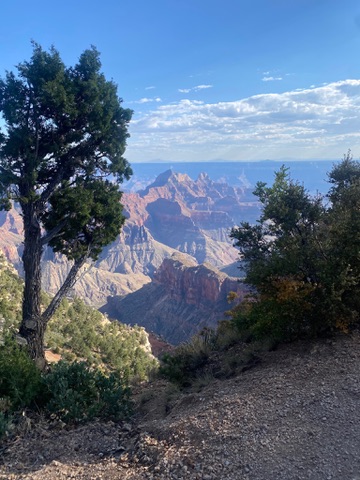
Arizona is one of my favorite places to visit (and maybe someday I’ll get to snowbird there!) with its mind-blowing geography and deep connection to its history. The Grand Canyon is the place that attracts the most visitors and rightly so. The chasm is vast, carved by the Colorado River over millions of years. Looking into the canyon, you can see nearly two billion years of Earth’s history. I saw it from the sky for years before I got to look at it up close and the sheer size of it is breathtaking, both from above and from ground level.
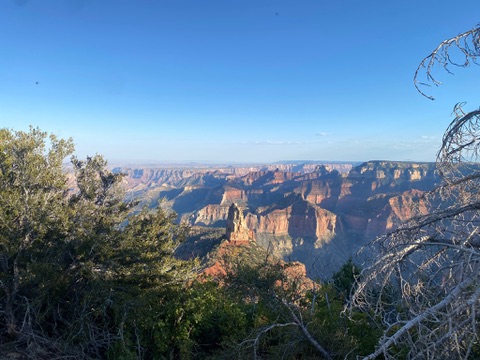
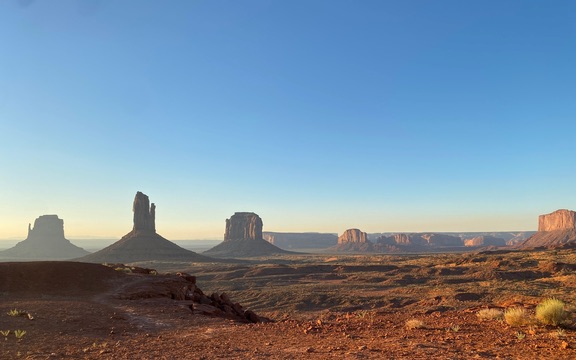
Monument Valley is on the Arizona-Utah border and within the Navajo Nation. It is iconic southwest desert with its towering buttes and mesas. The red rock formations create a landscape like none other. When Hawke and I visited, we stayed at an Airbnb campsite, so close that we were able to walk to the cliffs and watch the sun set on the Mittens.
Sedona is the town that probably gets the most attention in central Arizona, but that whole area is beautiful with the Verde Valley and stunning red rock formations. Hiking through the area around Sedona is one of my fondest memories, seeing petroglyphs and caves that outlaws called home.
Nearby you’ll find Jerome, an old gold-mining camp turned into a bit of a tourist spot. The narrow winding road delivers you to the tiny town, squeezed together with no room to spread out. We visited the Puscifer store, did a little wine tasting then followed the road the hugs the cliff out toward Perkinsville. The town is well-known for its ghost tours and mining past.
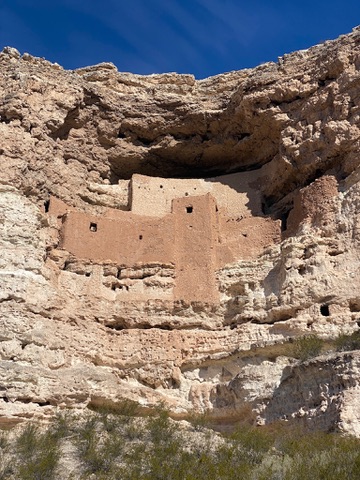
Montezuma Castle National Monument is further south and while it has nothing to do with Montezuma, it is the site of a cliff dwelling that dates back to the 12th century. For years after it was discovered, tourists would climb the ladders and choose their own souvenirs from items left so long ago. These days, you can only see from afar, but you can check out 3D replicas inside to get an idea of what it was like living on the side of a cliff.
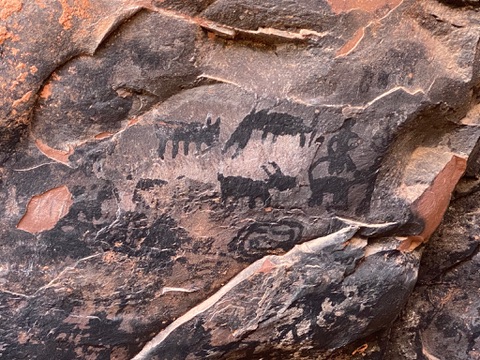
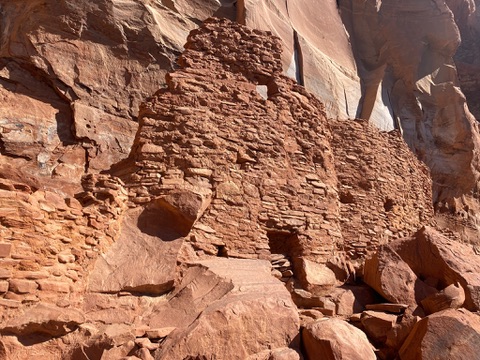
In eastern Arizona is the Petrified Forest National Forest which contains one of the world’s largest concentrations of petrified wood. Trees that lived and died over 200 million years ago can be seen, as well as petroglyphs and pictographs.
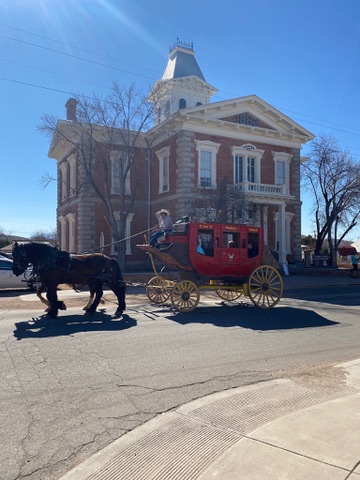
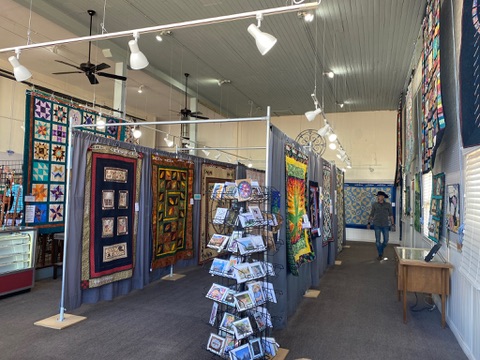
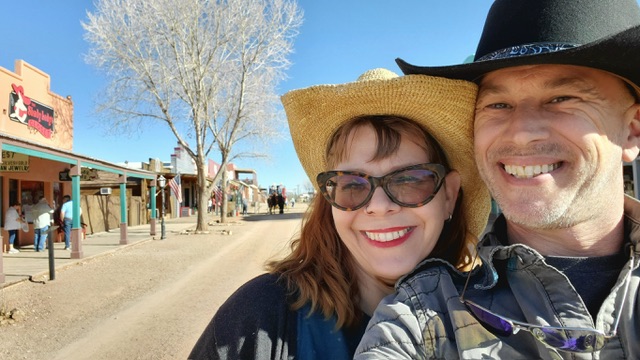
One place I was surprised to find is the tiny town of Tombstone. We stayed there on our LQS tour for a night, picked up some sarsaparilla, bought a Stetson for Hawke, watched a mock gunfight and ambled down the boardwalk where we just happened up a local quilt show. You really never know what you’ll find out there. (Bonus points if you can quote as many lines from the movie as Hawke!)
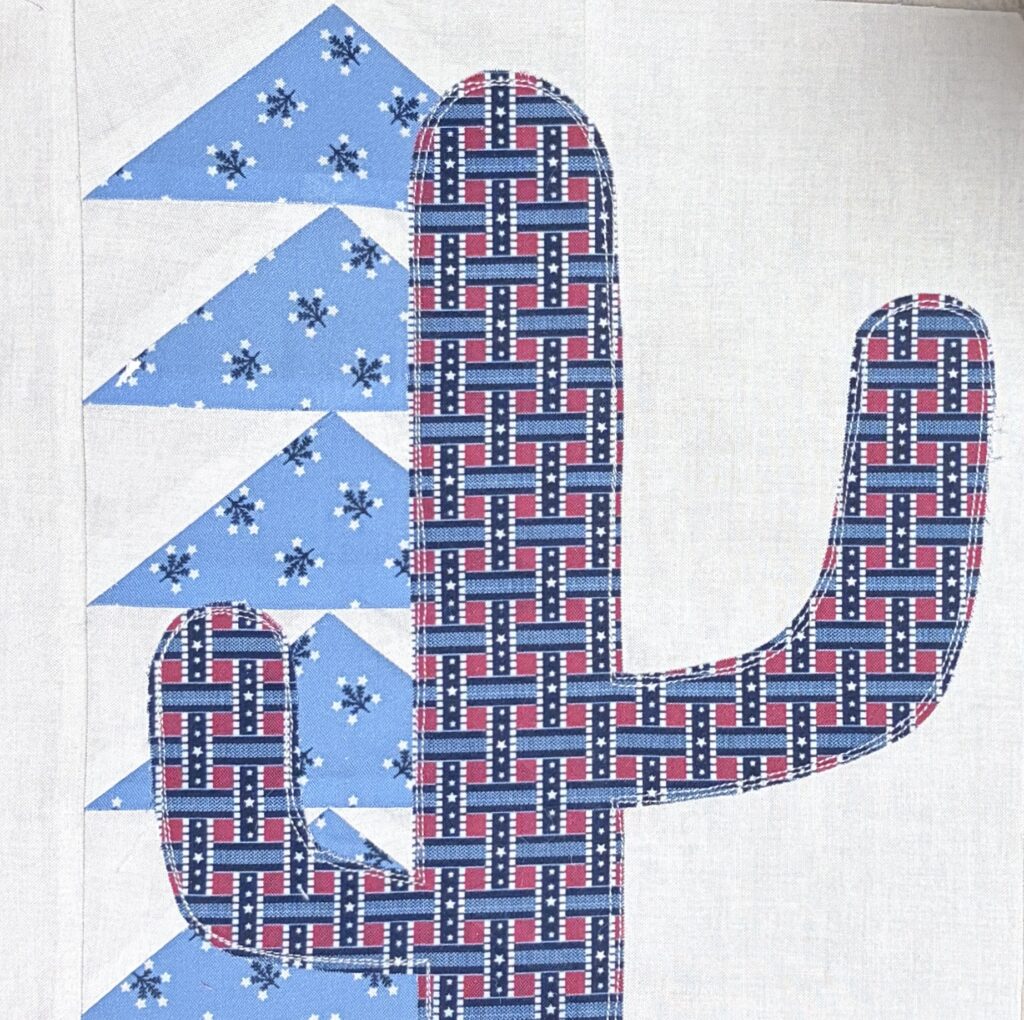
Quilt Block
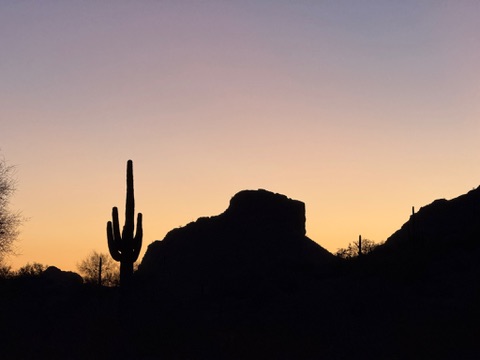
Arizona is home to the Saguaro National Park and the state is filled with them, so it seemed like a natural fit for the block, but I also wanted to pay some respect to all the mountains, whether they are red rocks or not. Up north, the land is far from flat.
This block is made using foundation paper piecing for nearly-perfect flying geese and then the cactus design is appliqued on top. This can be done by machine or by hand and recommendations are given in the pattern for ways to get it to look good.
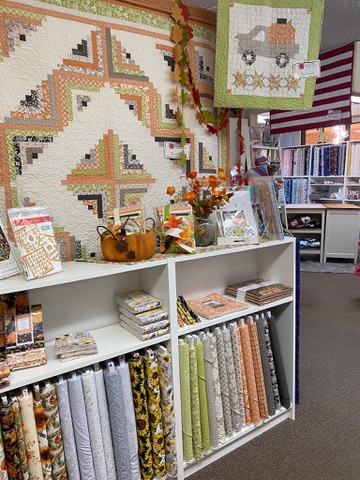
Quilt Shops
- Mad B’s Quilt & Sew in Mesa
- Painted Desert Quilts in Holbrook
- Modern Quilting in Phoenix
- By & By in Tucson
- Quilters Quarters in Cottonwood
- Quilt Central Studio in Green Valley
If you have a favorite place to visit or a quilt shop to recommend, leave a comment below!