
Alaska’s human history stretches back thousands of years to when indigenous peoples first arrived during the last ice age. The Native peoples of Alaska—including the Tlingit, Haida, Yupik, Inupiat, and many other tribes—adapted to the harsh environments.
Europeans began exploring of Alaska in the 18th century with Russian fur traders who lured by the tremendous wealth of sea otters and furs. The Russian-American Company established colonies throughout Alaska, with Sitka becoming the capital of Russian America in 1808. Russian Orthodox missionaries worked to convert the Native population, and their influence continued long after.
The turning point came in 1867 when the United States purchased Alaska from Russia for $7.2 million. At the time, many thought it was a foolish move, but Secretary of State William Seward championed the purchase, believing in the territory’s potential. But his intuition was proven right when gold was discovered in the Klondike region in 1896, kicking off one of the largest gold rushes in American history. Thousands of fortune seekers headed north, transforming remote areas and creating new settlements overnight.
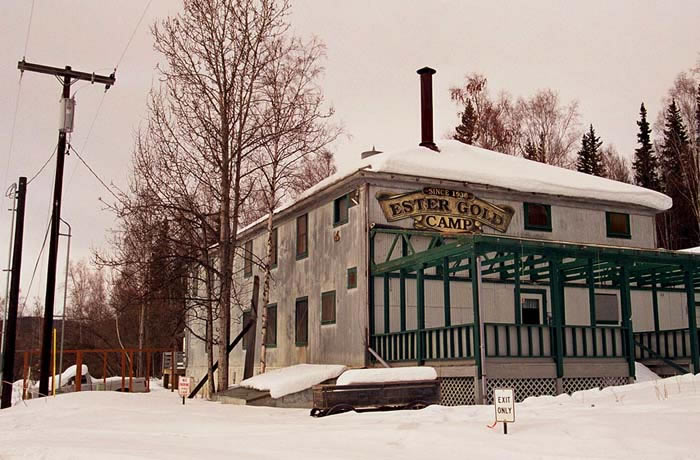
The discovery of gold in Southeast Alaska and the Yukon brought an enormous amount of attention to the territory. Skagway and other towns grew rapidly as jumping-off points for miners heading to the goldfields. The gold rush didn’t last long, but it forever changed Alaska’s economy and its connection to the continental United States. It also changed the way indigenous peoples lived as their lands were transformed and resources were depleted.
During World War II, the Alaska Territory became crucial to American defense. The Japanese occupation of the Aleutian Islands in 1942 was the first foreign invasion of American soil since the War of 1812. The U.S. military response was swift and massive, establishing bases and building infrastructure that really modernized the territory. After the war, Alaska’s military importance continued to grow. It was seen as a crucial defensive position in the Cold War with the Soviet Union just across the Bering Strait.
The discovery of oil at Prudhoe Bay in 1968 transformed Alaska’s economy and made statehood economically viable. Alaska became the 49th state in 1959, and the state’s oil revenues funded the economic development and modernization of the area. The Trans-Alaska Pipeline, completed in 1977, was an engineering marvel and became the lifeblood of the state’s economy. It also caused a great deal of controversy as it bore through indigenous lands.
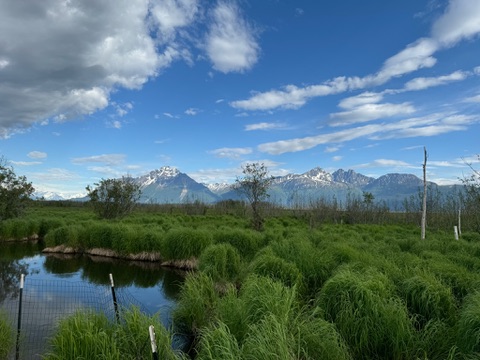
Today, Alaska is known for its natural beauty. Denali National Park protects over six million acres of pristine subarctic landscape, home to grizzlies, moose, and caribou. The Inside Passage offers breathtaking coastal scenery with glaciers and temperate rainforests. The nights that are bright as day and the Aurora Borealis draw millions of visitors each year. One of these times, it’s going to be me. There’s so very much I want to see and experience there.
Quilt Block
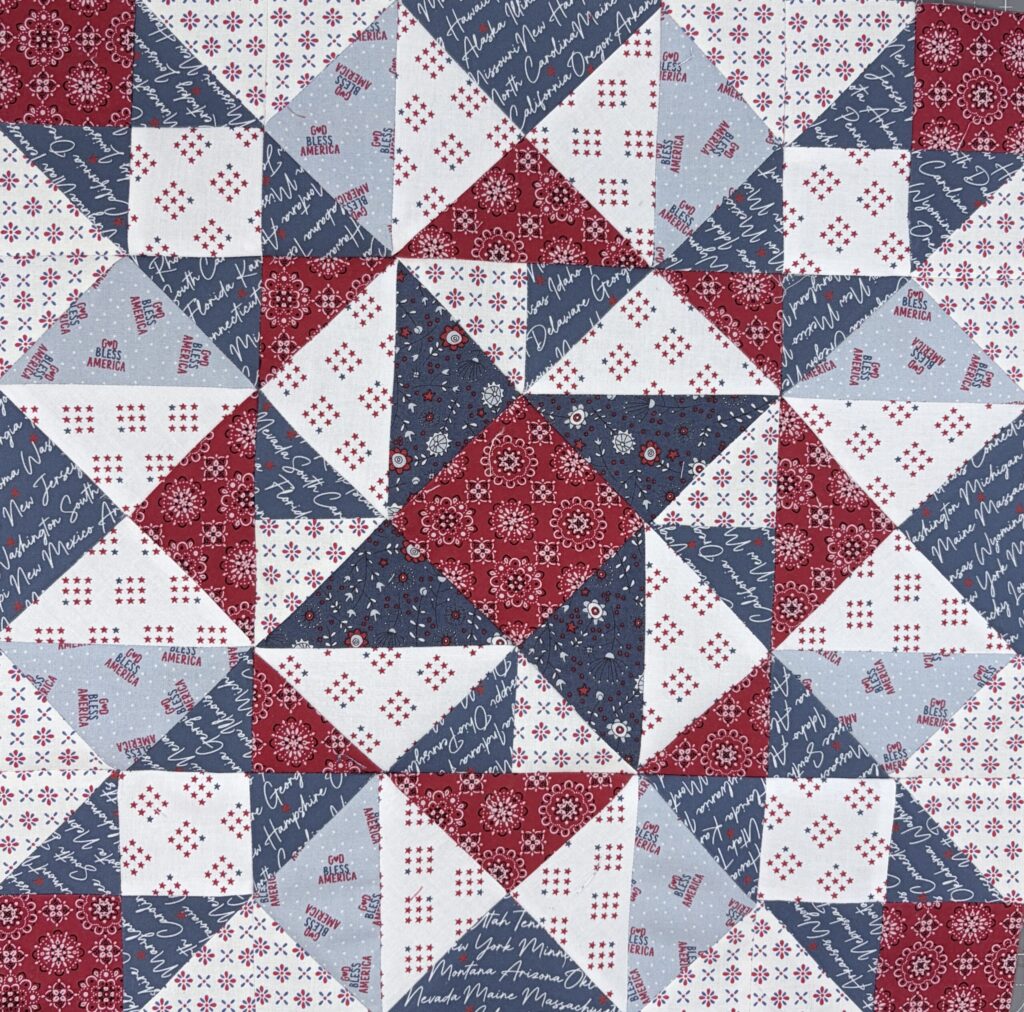
Because Alaska is the largest state, it’s also the largest block in the Quarter Millennial Quilt at 16 1/2″ x 16 1/2″. “Untamed Alaska” is made from several different style blocks that we’ve practiced along the way: half-square triangles, quarter square triangles, flying geese and hourglass blocks.
Inspired by the wildness of Alaska, I re-worked the Indian Maze block to become the Untamed Alaska block for our Quarter Millennial Quilt. You can use 5 or 6 fabrics, being sure to pay attention to the values. You’ll need to have dark, medium and light fabrics to make the block really sing.
Watch the video to see how we put it together in sections then rows to keep that chaotic look.
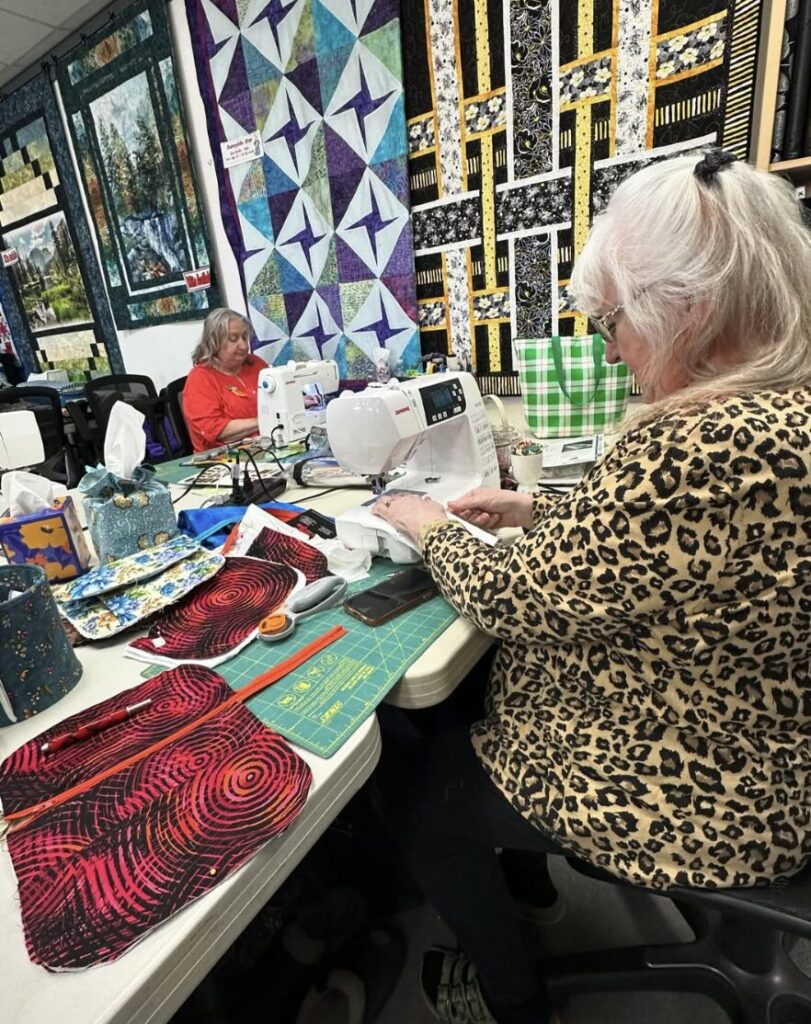
Quilt Shops
- Twisted Sisters’ Quilty Pleasures in Eagle River
- Stitch’n Time in Palmer
- Sylvia’s Quilt Depot in Wasilla
- Blissful Bobbin in Fairbanks
- Northern Threads in Fairbanks