
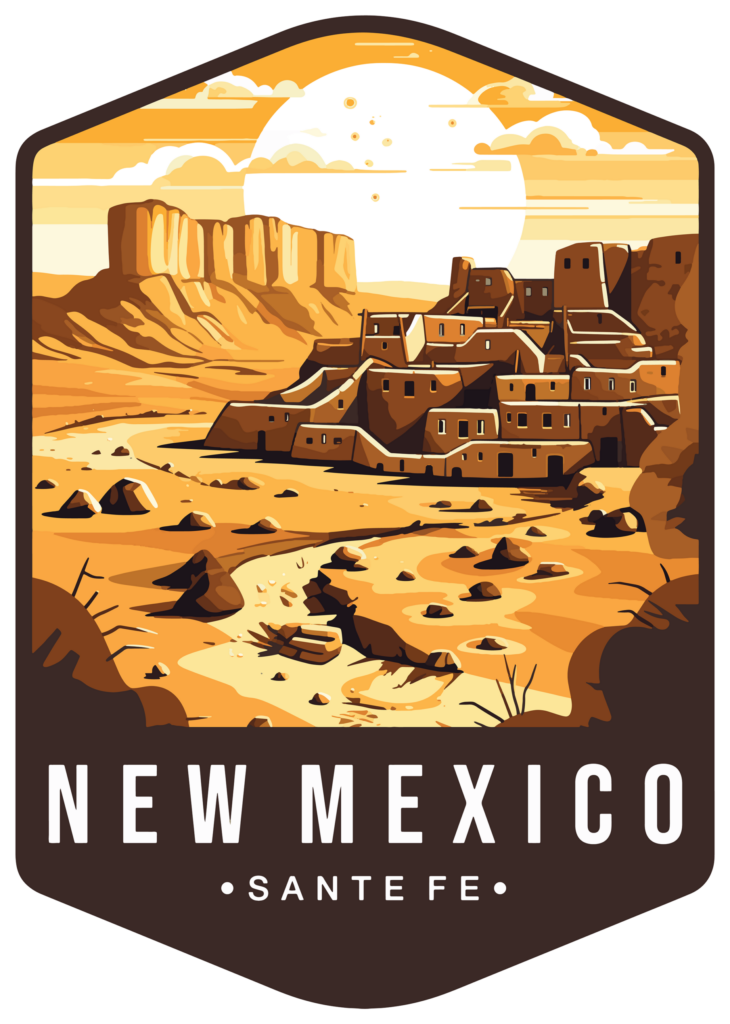
New Mexico has been home to indigenous peoples for thousands of years, with archaeological evidence suggesting humans have lived there for at least 12,000 years. The Ancestral Puebloans, also known as the Anasazi, established many settlements in New Mexico, especially in the northwestern part of the state. By around 1300 CE, the Ancestral Puebloans had established major population centers throughout New Mexico, including Chaco Canyon. However most of the settlements were abandoned as the Ancestral Puebloans migrated to new locations.
The Pueblo peoples are the direct descendants of the Ancestral Puebloans and continue to live in New Mexico, maintaining their cultural traditions, languages, and spiritual practices. Today, there are 19 federally recognized Pueblo tribes in New Mexico, each with its own distinct government, language, and cultural traditions. These pueblos include Taos, Picuris, San Juan, Santa Clara, San Ildefonso, Tesuque, Pojoaque, Nambe, Ohkay Owingeh, Jemez, Zia, Santo Domingo, Kewa, Sandia, Isleta, Acoma, Laguna, and Zuni. Each pueblo maintains its own pueblo government and continues to practice traditional ceremonies, arts, and crafts that have been passed down through generations.
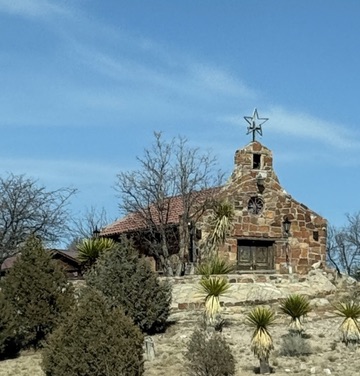
Spanish explorers arrived in New Mexico in the 1500s and in 1598, Juan de Oñate established the first permanent Spanish settlement at San Juan de los Caballeros, the beginning of Spanish colonial rule that would last over 200 years. Spanish missionaries built missions throughout New Mexico, converting many Pueblo peoples to Catholicism, though indigenous spiritual practices often continued alongside Christian beliefs. Spanish colonial rule was often harsh and exploitative, with indigenous peoples subjected to forced labor and cultural suppression. This oppression led to the Pueblo Revolt of 1680, when Pueblo peoples, led by Po’pay, rose up against Spanish rule and successfully drove the Spanish out of New Mexico.
Spanish rule was eventually reestablished in 1692, but the Spanish were forced to make concessions to the Pueblo peoples, allowing them greater autonomy and religious freedom.
When Mexican gained independence from Spain in 1821, New Mexico became part of the Mexican Republic. The Mexican period saw the opening of the Santa Fe Trail, which connected New Mexico to American traders and settlers in Missouri.
The situation changed dramatically with the Mexican-American War and the Treaty of Guadalupe Hidalgo in 1848, which transferred New Mexico to the United States. The discovery of gold and other valuable minerals attracted American settlers and miners. The construction of railroads connected New Mexico to the east, driving economic development and settlement.
American settlers and the U.S. government pursued policies of forced removal and reservation confinement, including the Long Walk of 1864, in which the Navajo people were forcibly removed from their homeland and marched to Bosque Redondo. The Navajo were eventually allowed to return to their homeland in 1868, but the trauma remained.
New Mexico was an American territory for 62 years before achieving statehood in 1912, becoming the 47th state. The discovery of oil and natural gas deposits, combined with continued mining and ranching activities, provided economic justification for statehood. Interestingly, New Mexico’s constitution included protections for the Spanish language and the rights of Spanish-speaking citizens, reflecting the state’s unique cultural heritage.
One of the most important archaeological sites in North America is located in northwestern New Mexico: Chaco Canyon. The canyon contains the ruins of Pueblo Bonito, a massive pueblo structure that once contained over 600 rooms and served as a major ceremonial and administrative center for the Ancestral Puebloans.
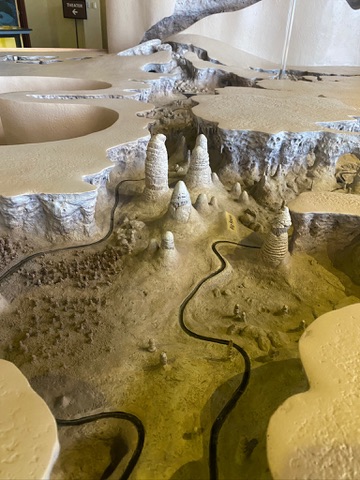
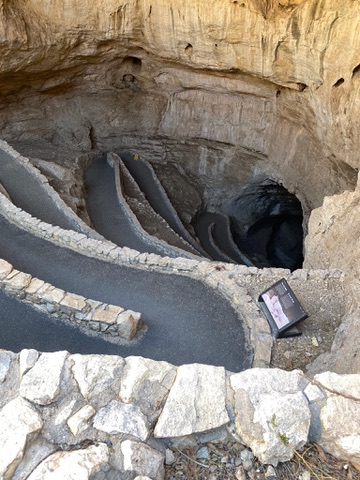
Several years ago, I had the opportunity to visit the Carlsbad Caverns, some of the largest cave systems in the United States. The caverns contain massive chambers filled with stalactites, stalagmites, and other cave formations that create an absolutely otherworldly landscape. The Big Room, the largest chamber in the caverns, is so vast that it could accommodate six football fields. It’s easy to lose track of the fact that it’s all underground, along with the grandiose size. We did the audio tour and it was so startling to see nautical fossils and coral reef, evidence of the lake that once coverd much of the states.
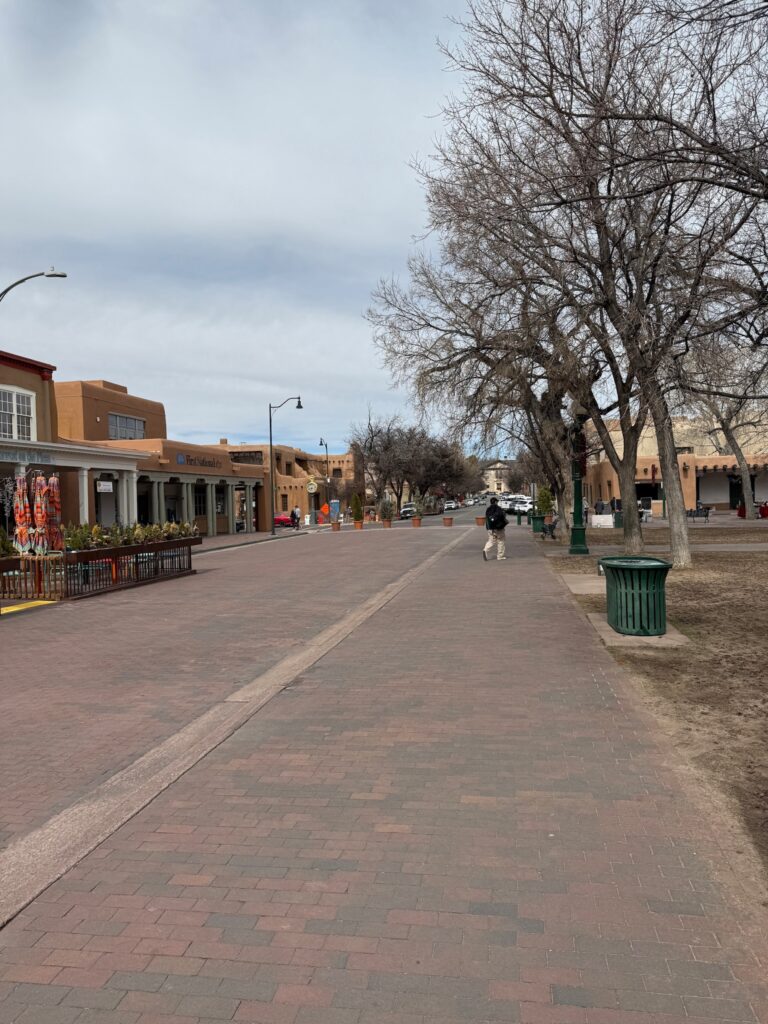
Santa Fe was a must visit, even though we didn’t have much time. We got to walk around The Plaza with its galleries, shops, and restaurants. The Georgia O’Keeffe Museum and the Museum of International Folk Art are both there and both still on my to-see list.
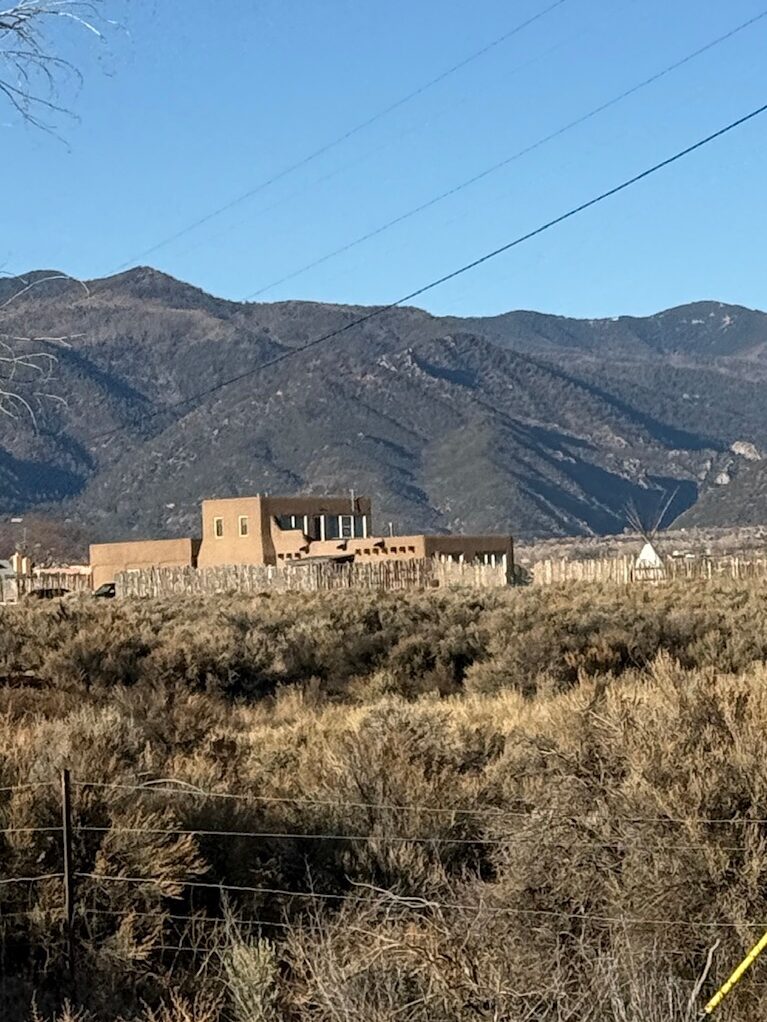
Taos Pueblo, one of the oldest continuously inhabited communities in the United States, sits at the edge of Taos and has been home to Taos people for over 1,000 years. The town of Taos itself is known for its artistic community, galleries, and restaurants, but we drove through when they were doing major construction and missed most of it.
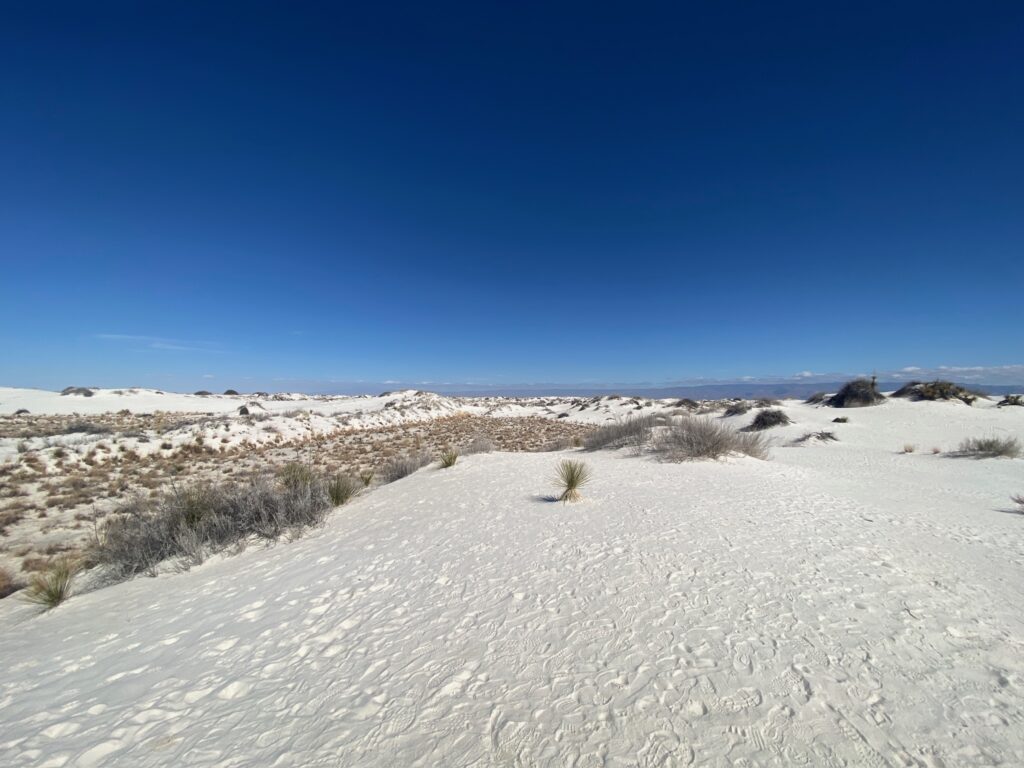
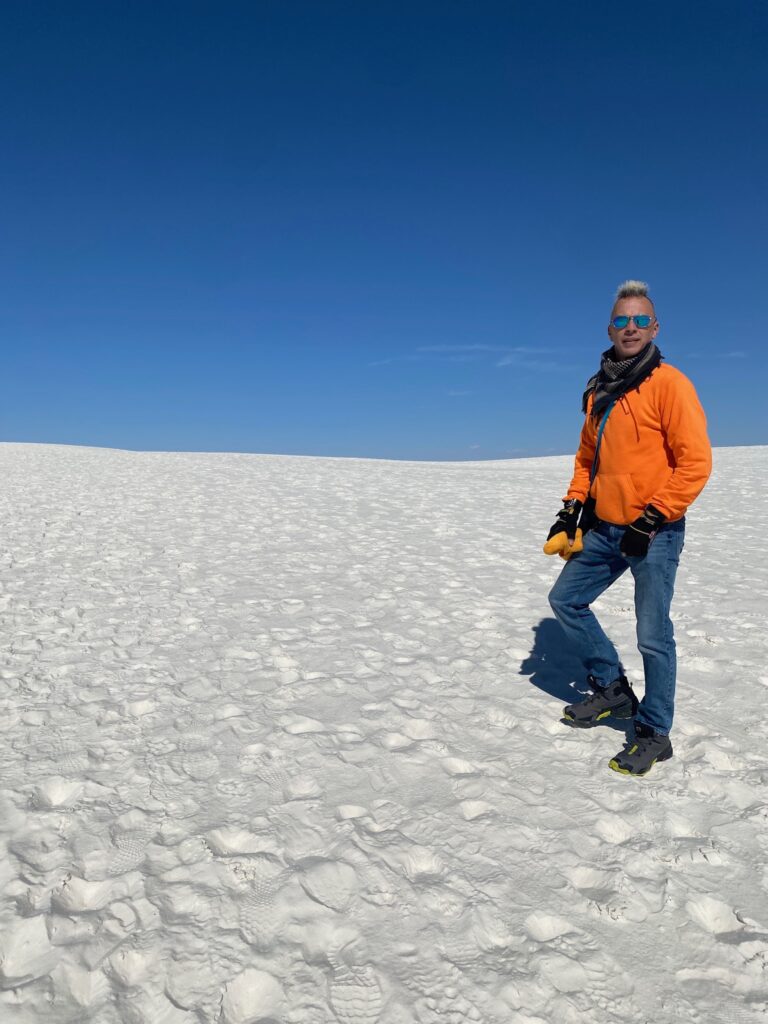
One of my very favorite places is White Sands National Park, in south-central New Mexico. It’s mind-blowing to experience driving throug what looks like snowdrifts, but is actually gypsum dunes. I’d never seen anything about the park and was shocked to see folks dragging sleds across the dunes to slide down…just like in the snow. It really does a number on your brain!
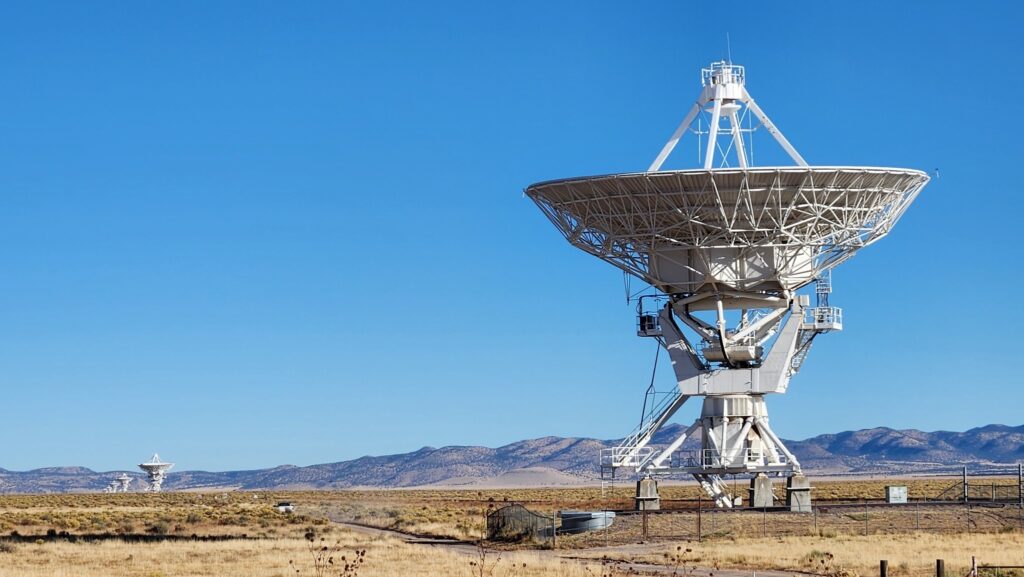
And one more place we kind of stumbled into.. the Very Large Array. If you’ve seen the movie Contact with Jodie Foster, you’ll recognize the place right away. If you’re a space nut, like Hawke, you’ll be thrilled to drive right to it without even trying.
Quilt Block
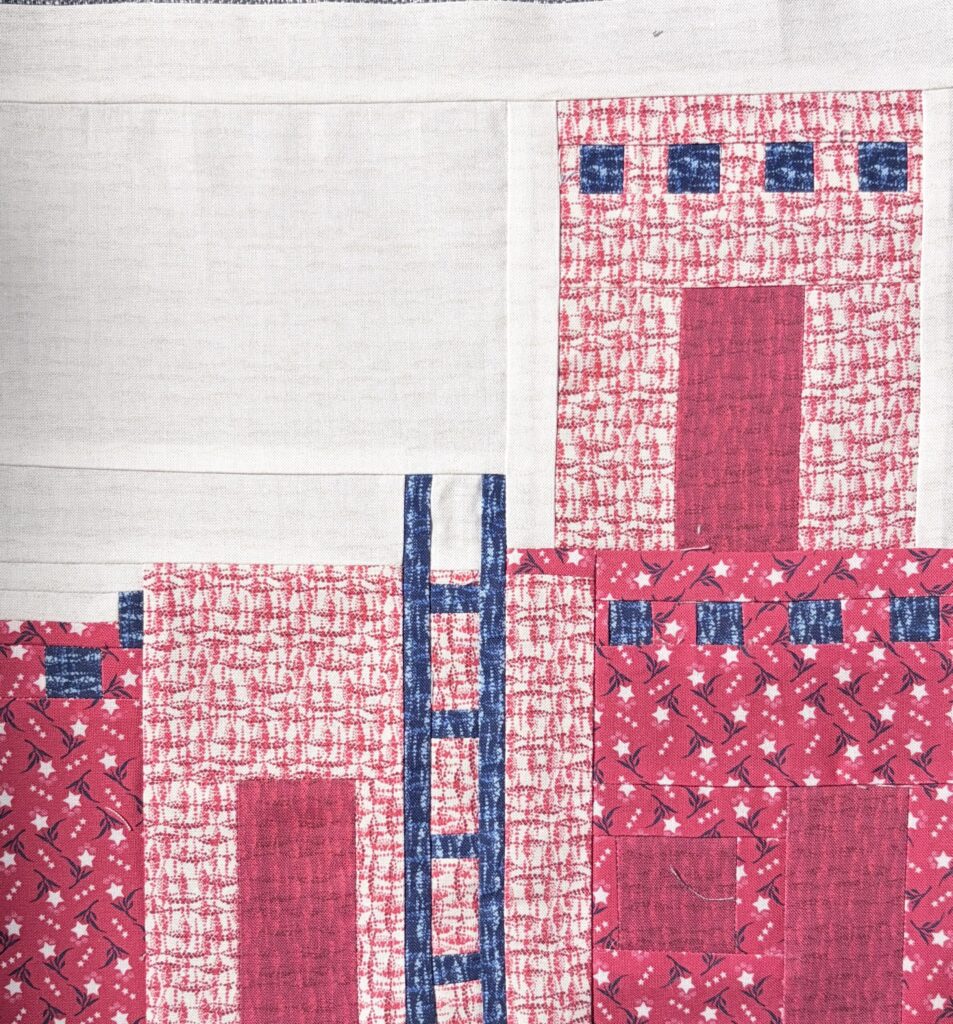
The Mi Pueblo es Su Pueblo block for New Mexico pays respect to the deep history of the Pueblo people in the area. Using some precision piecing, as well as strip piecing, it creates a little scene of three pueblos with a ladder to reach the fourth.
Because of the small pieces and narrow bits, make sure to starch your fabric well prior to cutting and tackle one pueblo at a time. They’ll all come together in the end.
You can also get creative with the sky by adding fabric with sky motifs or birds carefully placed. Have fun with it!
Quilt Shops
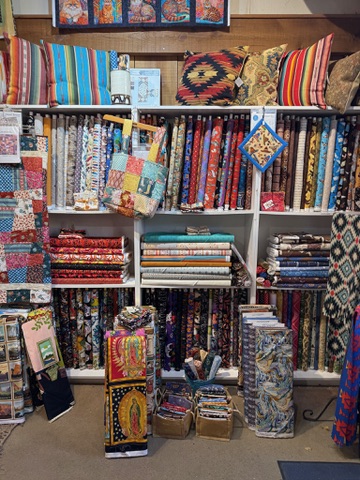
- Hip Stitch in Albuquerque
- Busy Bee Quilts in Edgewood
- Gathering Stitches in Bosque Farms
- A Quilting Stitchuation in Alto
- Atomic City Quilts in Los Alamos
- Taos Adobe Quilting in Taos