
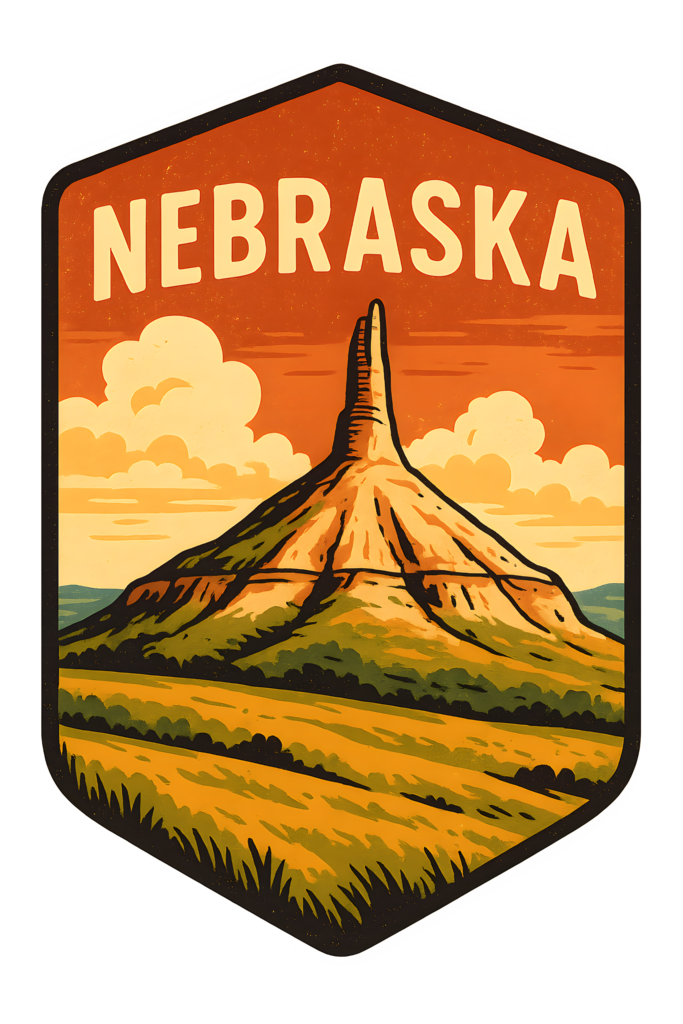
Nebraska’s history spans thousands of years of Native American presence and culture. The Omaha, Pawnee, Cheyenne, Sioux, and other tribes thrived on the Great Plains, due in part to the Platte and Missouri Rivers and the vast grasslands. The Pawnee in particular developed agricultural communities along the river valleys while maintaining seasonal buffalo hunts on the plains. These nations developed complex systems of trade, governance, and spirituality that reflected a deep understanding of their environment.
European explorers and fur traders began arriving in the early 18th century. French voyageurs sought beaver furs along Nebraska’s rivers, establishing trading relationships with Native peoples. The Louisiana Purchase in 1803 brought Nebraska under American control, though significant settlement didn’t occur for decades. The Missouri River remained the primary avenue of commerce, with steamboats eventually revolutionizing transportation and trade along its course.
The Homestead Act of 1862 opened Nebraska to massive settlement by offering 160 acres of free land to settlers willing to farm for five years. Waves of settlers arrived from Europe, particularly Germany and Scandinavia, as well as from eastern American states. They faced extraordinary challenges—harsh winters, tornadoes, grasshoppers, and droughts—yet persevered in establishing farms and communities. Sod houses, built from the prairie itself, became iconic symbols of frontier ingenuity and adaptation.
The transcontinental railroad’s construction through Nebraska in the 1860s was transformative. The Union Pacific Railroad connected eastern and western America with Omaha, making the city into a major railroad hub. The railroad brought more settlers, opened markets for agricultural products, and catalyzed the growth of towns and cities. Bailey Yard, in North Platte, is evidence of this with the largest classification yard in the world. We visited the Golden Spike Tower to see the enormous train yard at work.
Agriculture became Nebraska’s economic foundation, and the state’s identity became inseparable from farming and ranching. The Cornhusker became the state symbol, reflecting the dominance of corn cultivation. Irrigation development in the late 19th and early 20th centuries transformed western Nebraska from arid rangeland into productive farmland. The Platte River, supplemented by wells and irrigation systems, made large-scale agriculture possible across the state.
Nebraska achieved statehood in 1867, making it the first state admitted after the Civil War. The state’s economy was overwhelmingly agricultural, and the political culture reflected farmers’ interests and concerns.
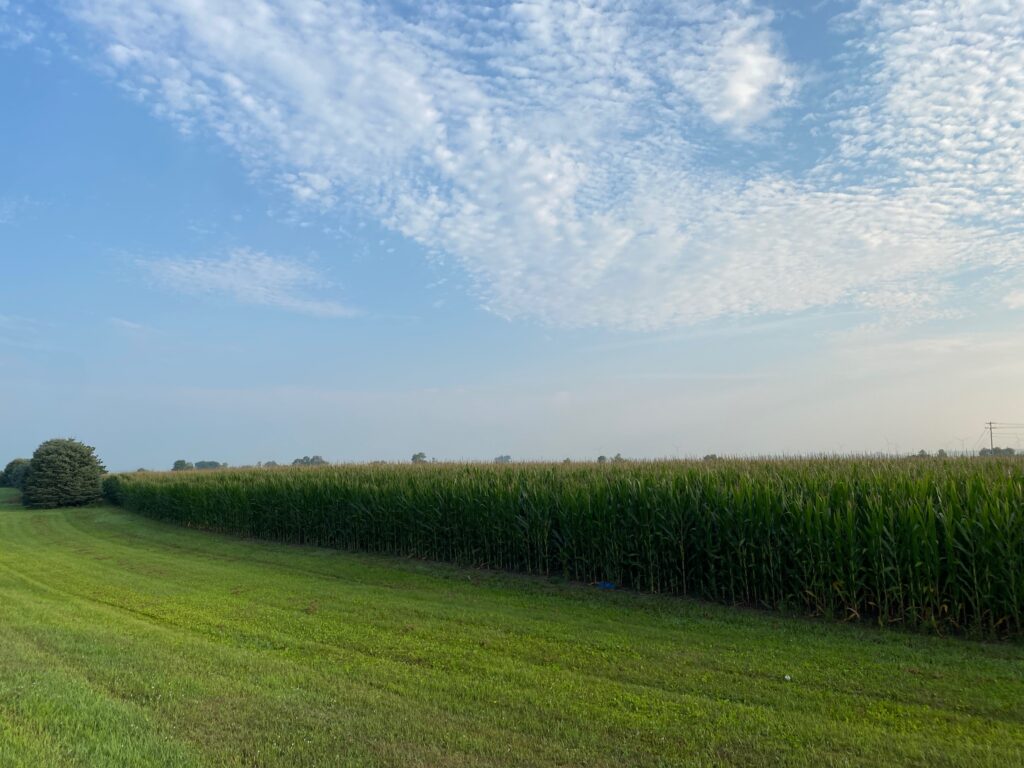
Today, Nebraska remains primarily agricultural, with corn and cattle production dominating the economy. No matter which direction you drive, it seems, there is farmland. Interspersed are some lovely historic sites, as well as some kitschy ones.
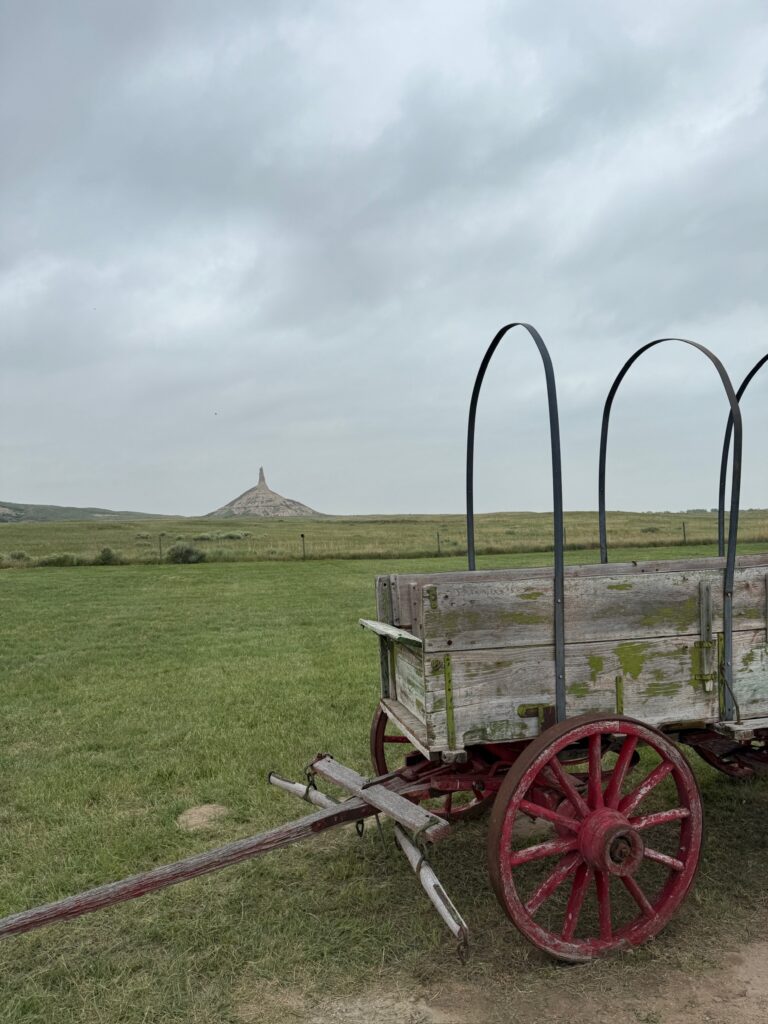
Chimney Rock, with its distinctive spire rising 325 feet above the prairie, appeared on trail maps and in countless diary entries as a reassuring marker of progress. Travelers had been walking for months by the time they reached it, and its appearance meant they were roughly halfway through their journey.
Today, you can still see it from miles away and a visit to the Chimney Rock National Historic Site proved highly educational.
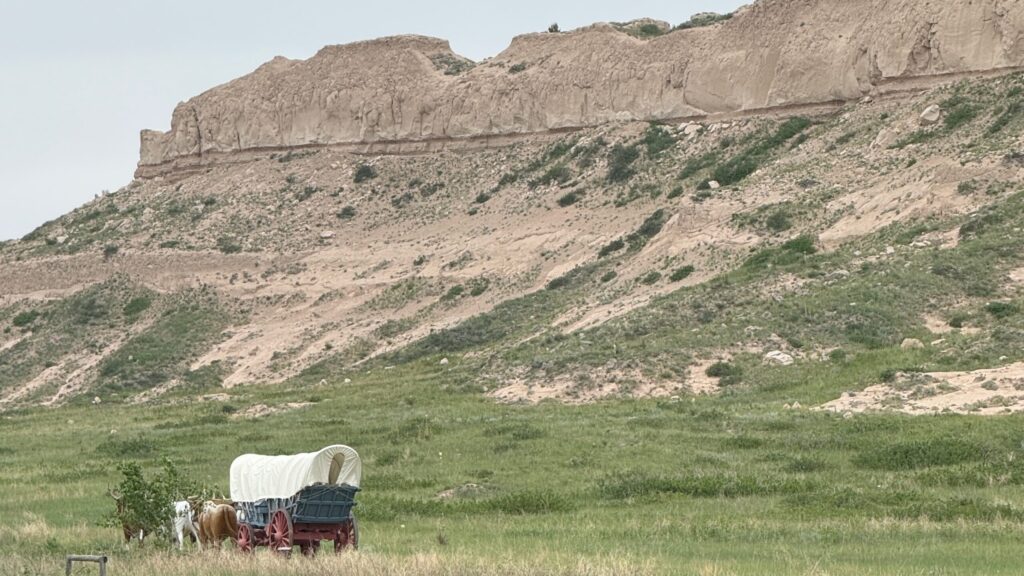
Scott’s Bluff National Monument is several miles to the west of Chimney Rock, so there’s reason not to stop there, too. Scotts Bluff provided both a navigational landmark and a natural barrier that forced westbound pioneers to choose between several routes. I recommend you take the drive up Summit Road to view the surrounding area from the top of the bluff. It’s beautiful, but also gives you a vague idea of how long and treacherous the trek westward was for the early pioneers.
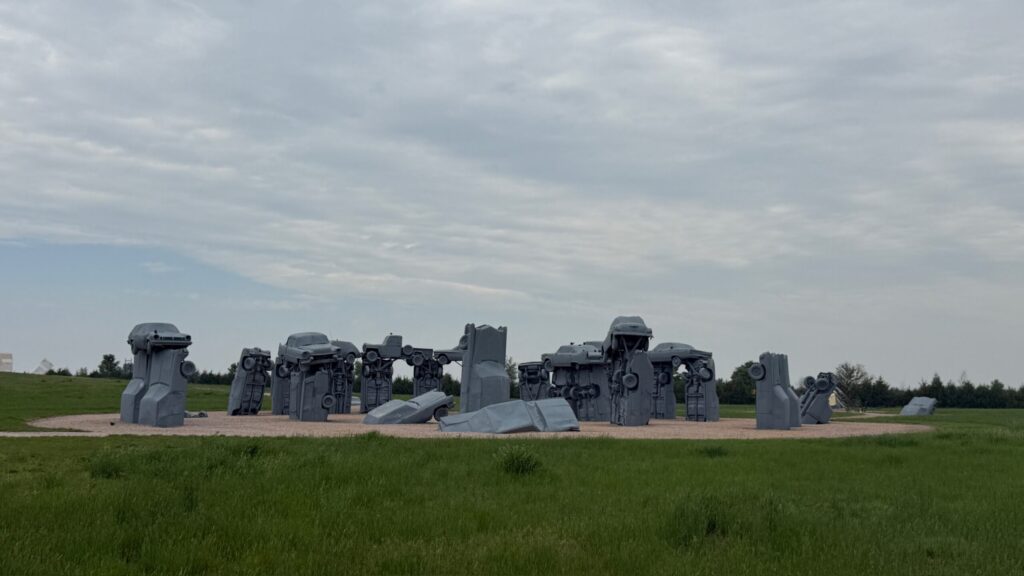
On a recent trip, we were able to visit Carhenge in Alliance. One of the things I have been doing for years is tacking places on the map that I want to see, then when we are driving, I check to see if any of those places are nearby. We stayed overnight north of Alliance and had planned a different route, but when I saw we were within a half hour of it, I knew we had to go. It’s in the middle of nowhere, so this might be the only chance. And it did not disappoint. Carhenge is a to-scale replica of Stonehenge, made with real cars buried in the dirt. It was as odd and fun as expected–well worth the re-routing of the day’s trip.
The International Quilt Museum in Lincoln is another place that’s been on my map for years and while it has often been closed when we drove through the area, I was able to visit in 2025 and it was absolutely worth it. If you need anything to remind you how diverse, interesting, and amazing quilts are…this is the place.
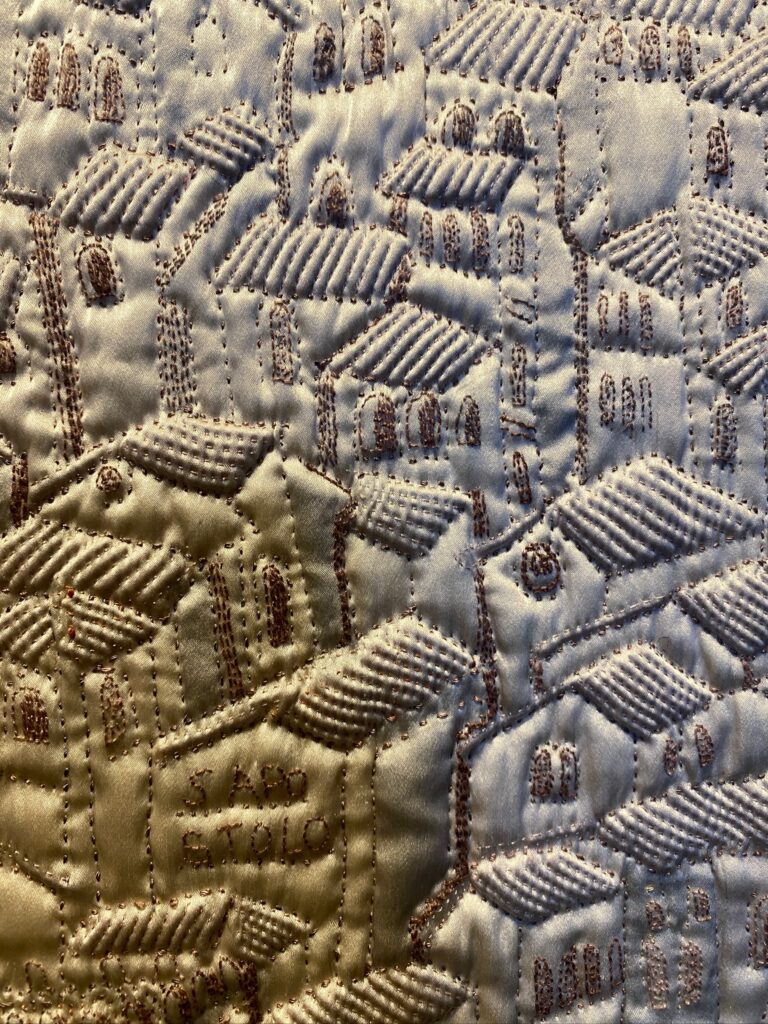
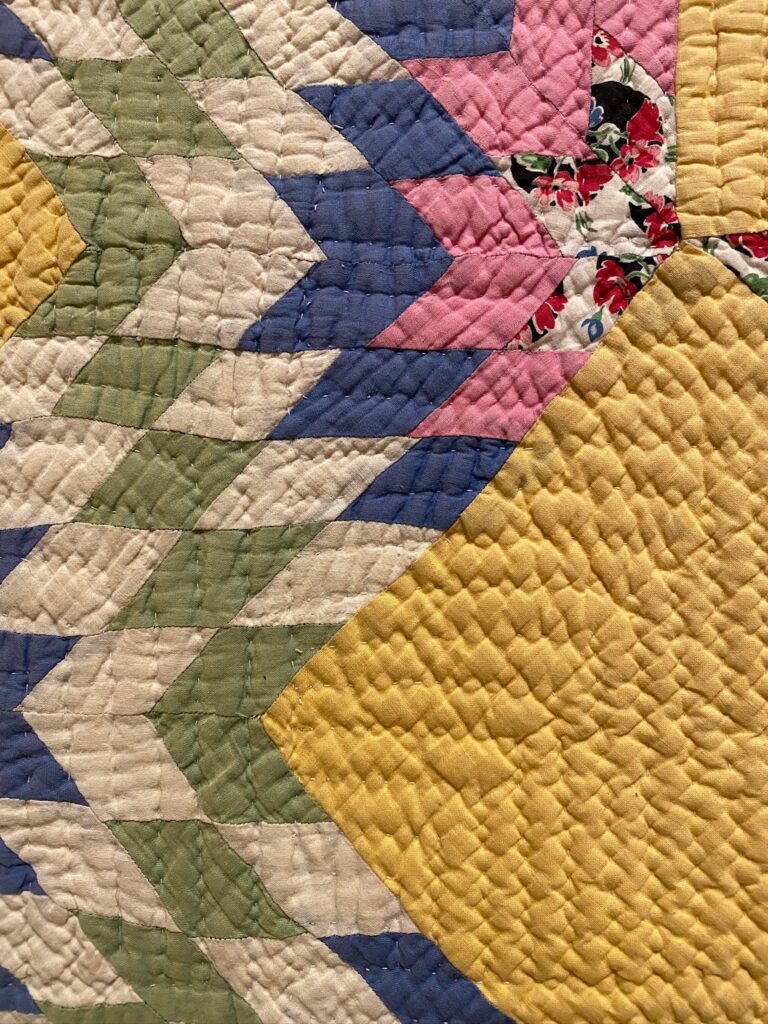
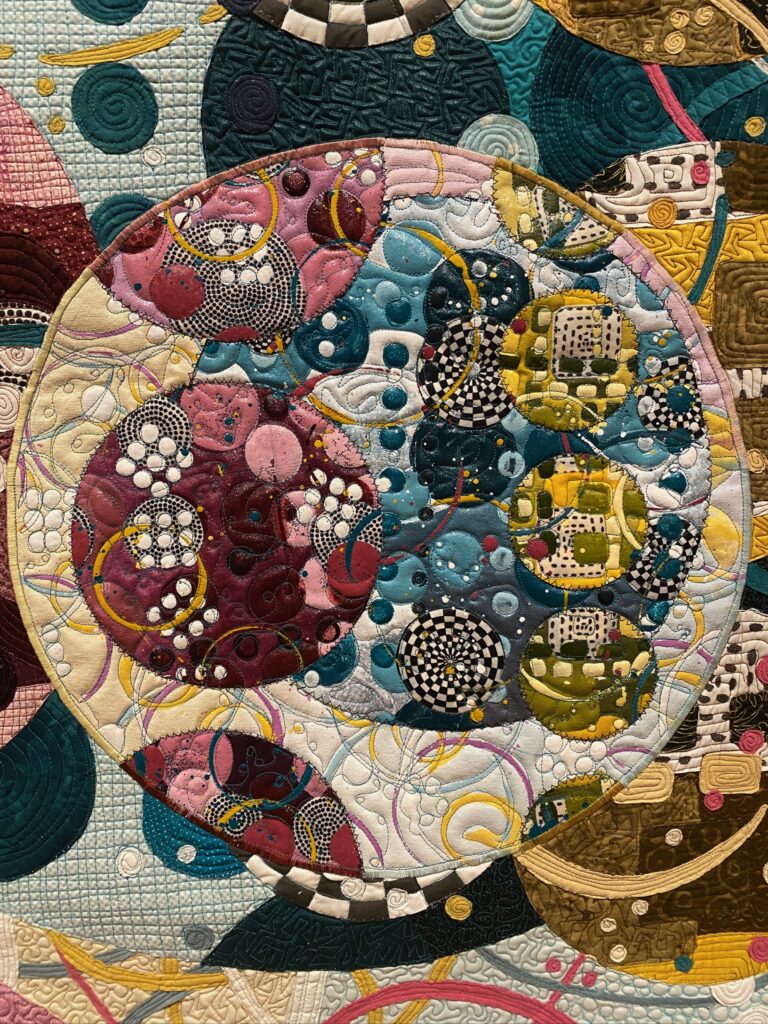
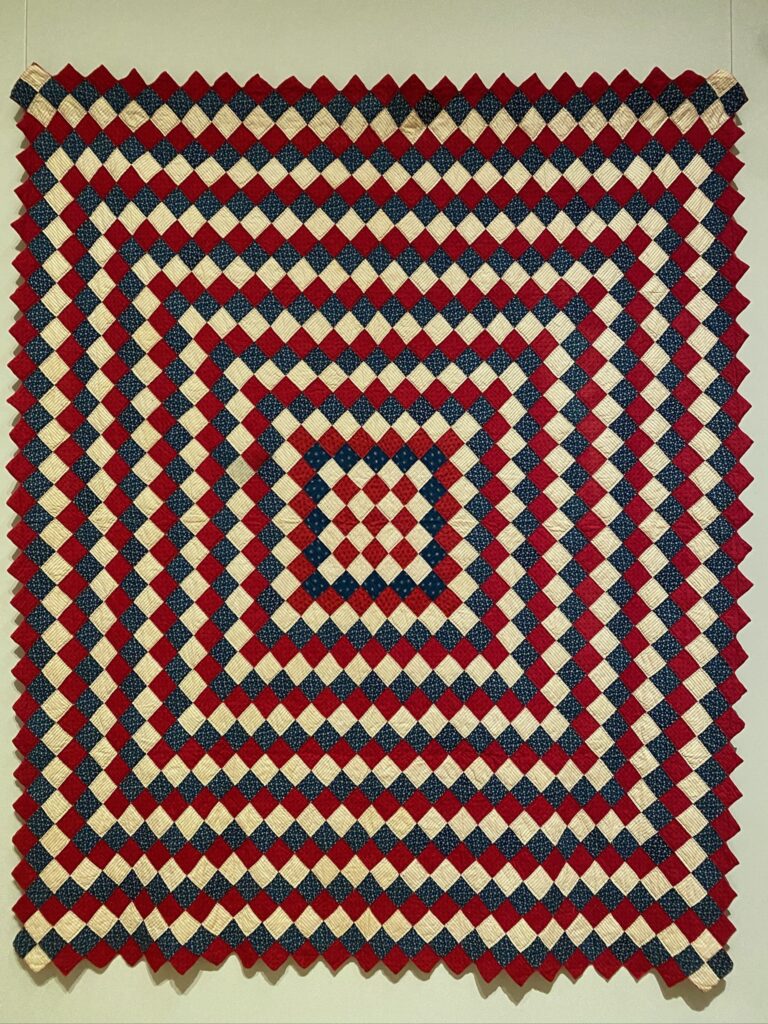
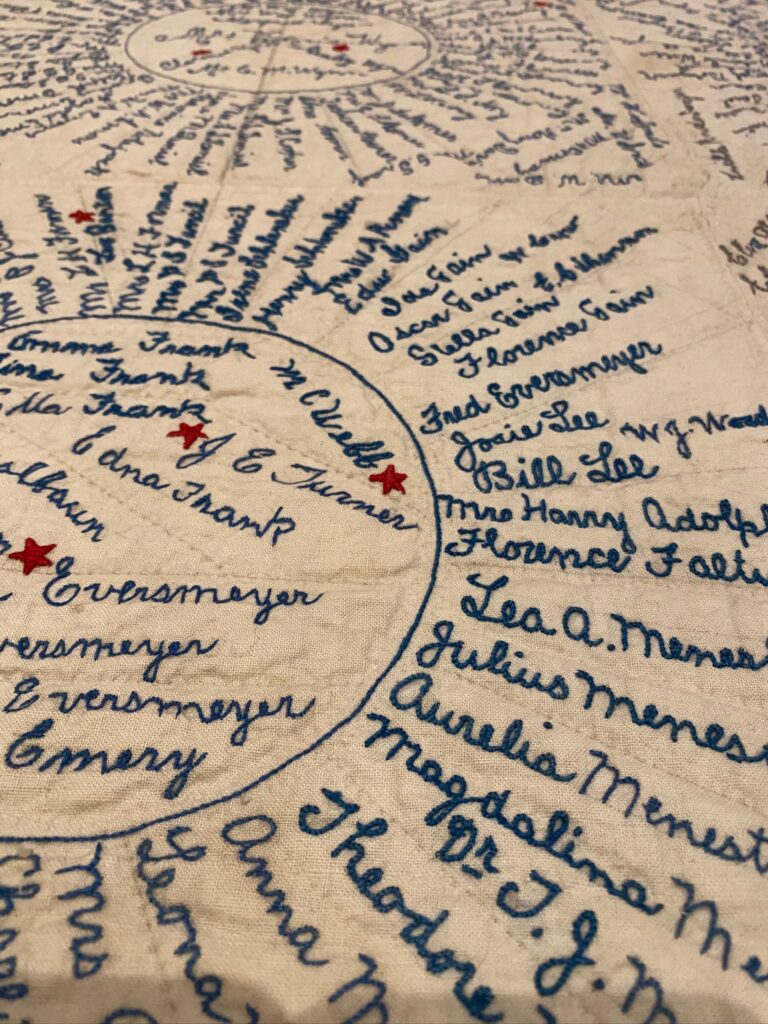
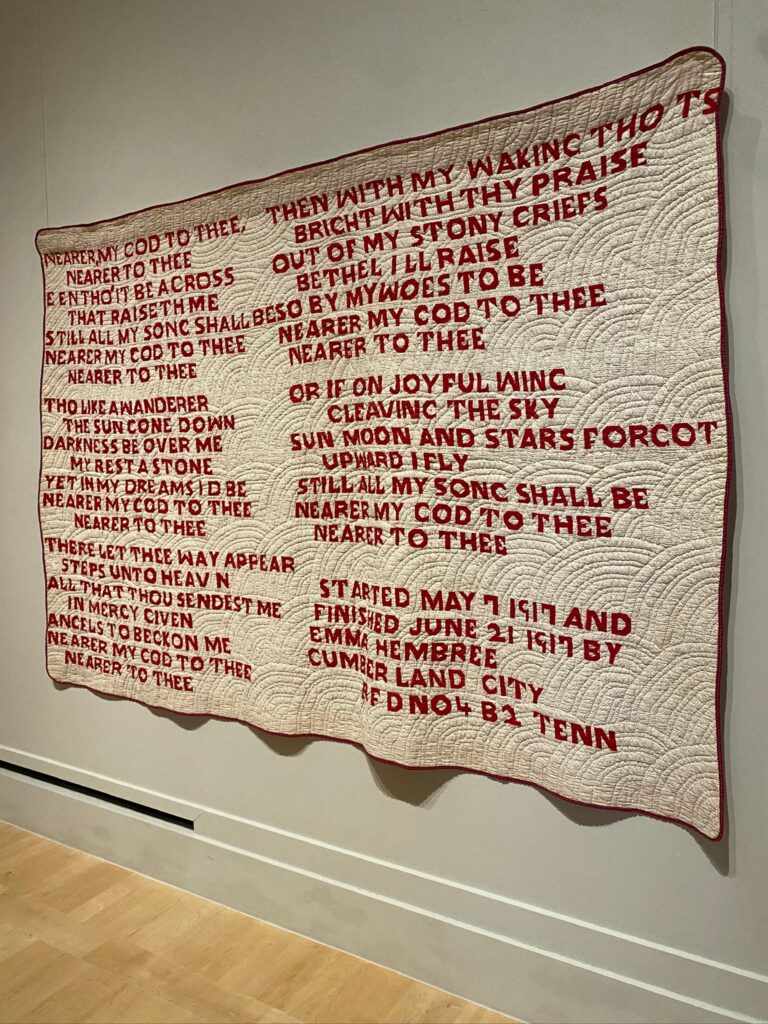
The current exhibition is, not surprisingly, “Material Nation: 250 Years of American Quilts” that chronicles quiltmaking in the Unites States. It will be hanging until December 19, 2026 so there’s still plenty of time to visit!
Quilt Block
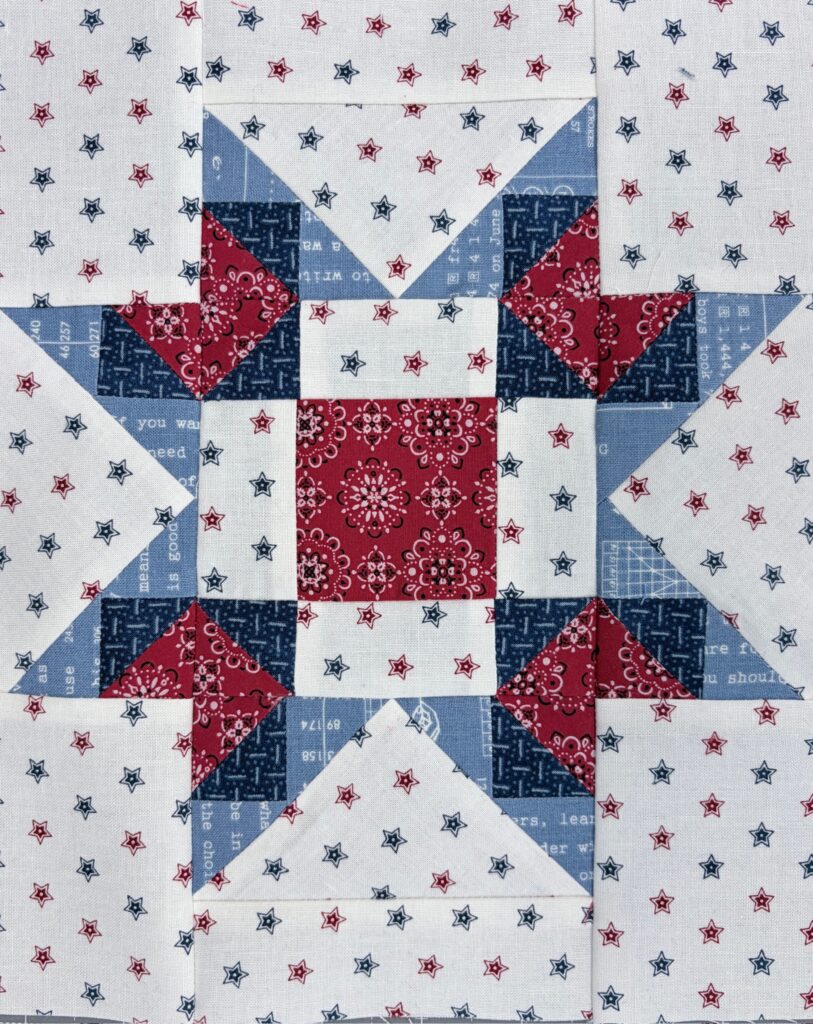
For the Quarter Millennial Quilt, I chose to use the “Stockyard’s Star for Nebraska” block from Barbara Brackman’s Encyclopedia of Pieced Quilt Patterns. I loved the seeming simplicity of it, but then when you take a closer look, it’s actually quite unique. This pertains to the state as well. It’s definitely a fly-over state for many folks and the drive across on the 80 is not super exciting either. But once you get off the main road, you start to see the wonders of the state.
To elongate the block to fit in the quilt layout, I changed the corner squares to corner rectangles and added a background strip to two sides. This allowed the block to stay the original star shape, but fit the needed space (based on its sq. mi).
The center square is a great place to fussy cut something memorable about the state or add a custom block (embroidery, anyone?). Take your time to lay everything out before you start sewing the sections together. It’s easy to get those HSTs twisted.
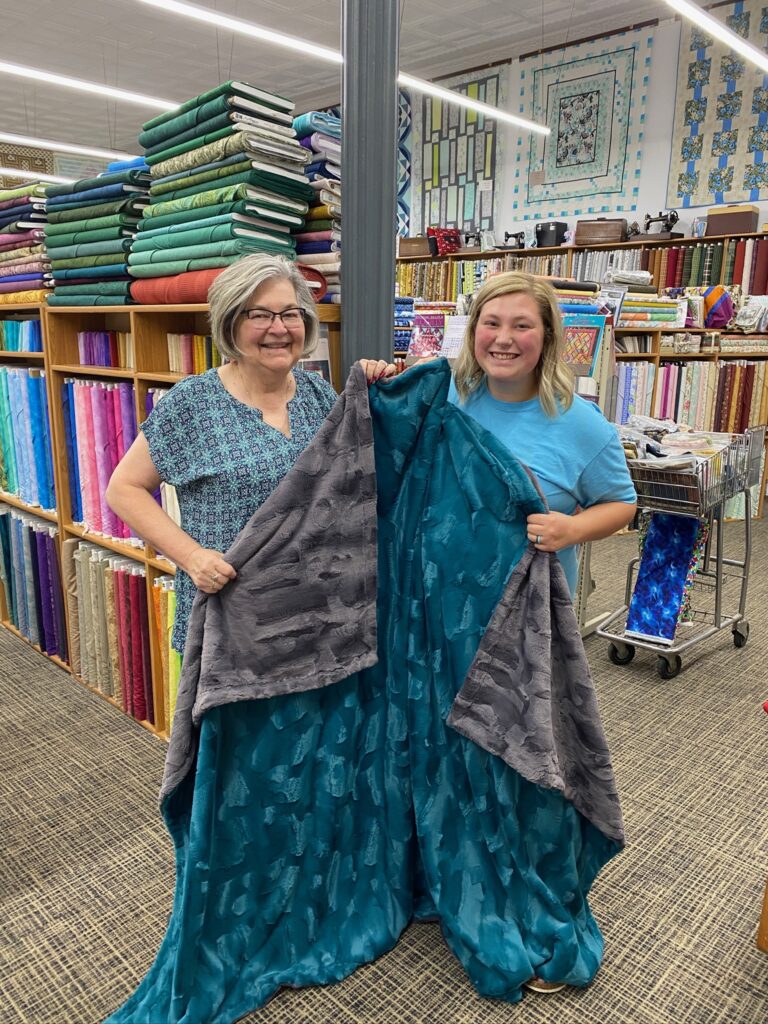
Quilt Shops
- The Quilt Shop in Wakefield
- ACME Fabric & Quilt Co in Blair
- Celtic Quilter in Omaha
- Fabric Bash in La Vista
- Nebraska Quilt Company in Fremont (Join me there in October!)
- The Quilter’s Cottage in Kearney
- Material Girl Fabrics in Grand Island