
This land was home to Caddo, Wichita, Osage, and Kiowa nations, indigenous people who lived throughout the region for centuries, hunting, farming, trading, and establishing communities. In the eastern part of the state, archaeologists have uncovered evidence of ancient mound-building cultures. Today, Oklahoma remains home to one of the largest Native American populations in the country, and their influence continues to shape the state’s culture, art, government, and identity.
Oklahoma’s modern history is closely tied to the forced relocation of Native peoples during the 1800s. After the passage of the Indian Removal Act in 1830, thousands of Cherokee, Choctaw, Chickasaw, Creek, and Seminole people were driven from their homelands in the southeastern United States and relocated to what was then called Indian Territory. These physically and emotionally exhausting journeys became known collectively as the Trail of Tears–many people died along the way from disease, exposure, and starvation. Once in Indian Territory, these nations rebuilt governments, schools, businesses, and communities despite the enormous hardship, building a strong foundation that continues to exist today.
During the late 1800s, the federal government opened large portions of tribal land to non-Native settlement through a series of land runs. The most famous, the Land Run of 1889, saw thousands of settlers race across the prairie to claim land stakes. Some participants slipped in early, earning the nickname “Sooners,” which later became associated with the state itself. Oklahoma Territory and Indian Territory were eventually combined, and in November 1907, Oklahoma officially became the 46th state. Oil discoveries soon transformed the economy, creating boomtowns almost overnight and making cities like Tulsa incredibly wealthy during the early twentieth century.
One of the most significant and tragic events in Oklahoma history was the Tulsa Race Massacre of 1921. In the Greenwood District of Tulsa, often called “Black Wall Street,” a prosperous Black business community was attacked by white mobs, leading to widespread destruction and loss of life. For decades the tragedy has been ignored by many historians, but recent efforts have brought more widespread recognition to it and its impact on the state and its citizens.
In the 1930s, Oklahoma’s lack of water and poor farming practices played a major role in the Dust Bowl, causing devastating dust storms across the Great Plains. Thousands of families left the state searching for work and better living conditions, many moving to California to become migrant agricultural workers in order to feed their families. (I recommend both “The Grapes of Wrath” by John Steinbeck and “The Four Winds” by Kristin Hannah.)
Oklahoma is along the famous Rt. 66, a thoroughfare from Chicago to Los Angeles and you can still find plenty of nostalgia along the way. In Tulsa, there’s the Route 66 Village, where memorabilia from its heyday has been relocated for folks to visit.
One of the places I’ve got on my to-visit list is the Oklahoma City National Memorial & Museum, honoring the victims of the 1995 bombing at the Alfred P. Murrah building. I just need to work up the emotional wherewithal next time I’m through.
Quilt Block
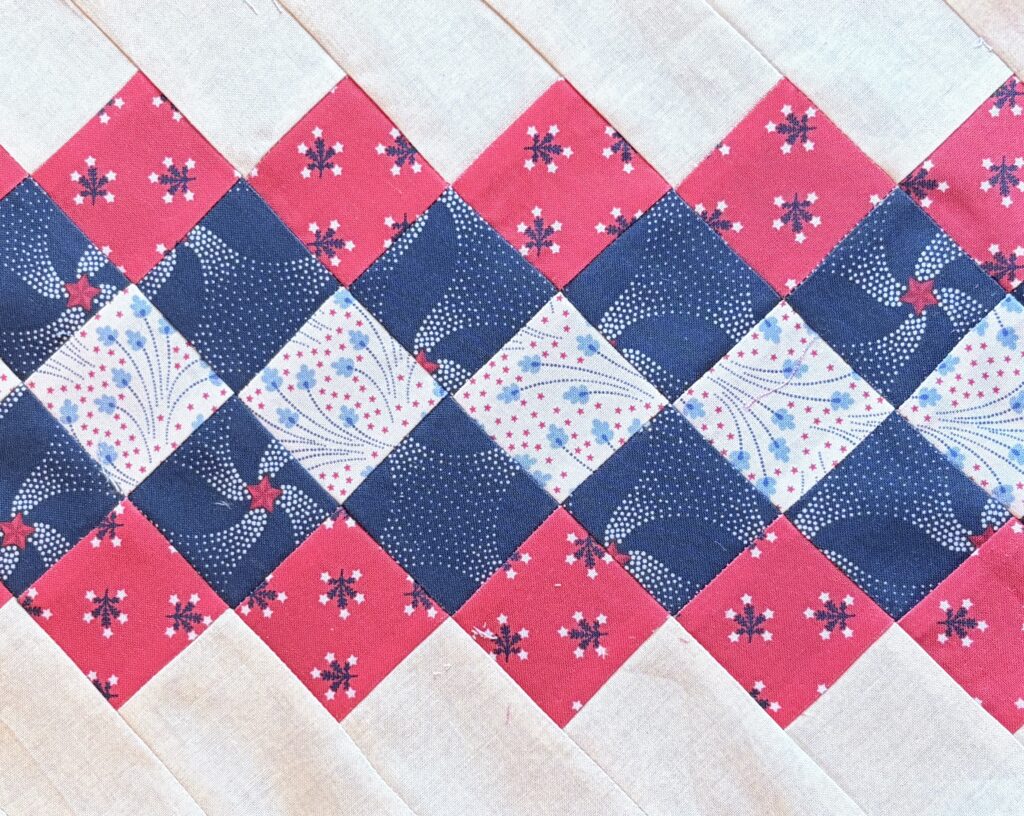
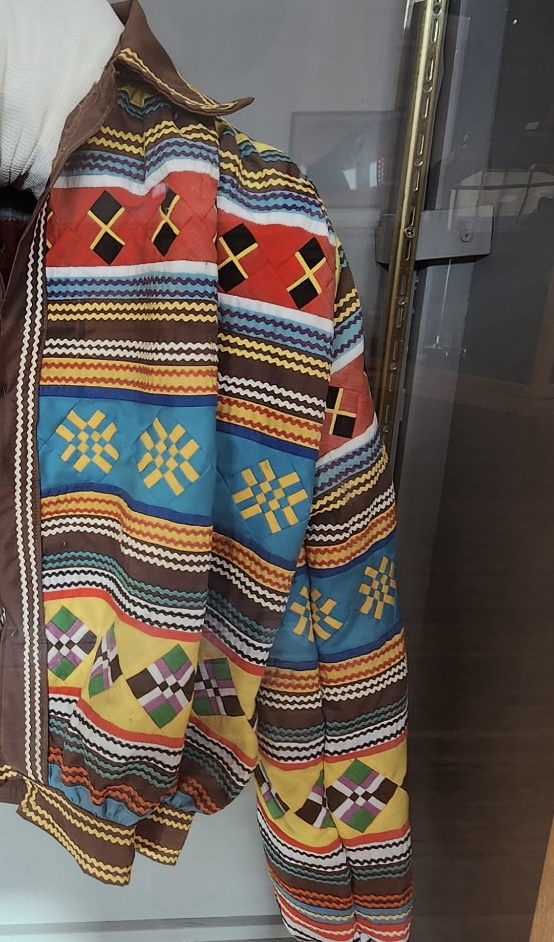
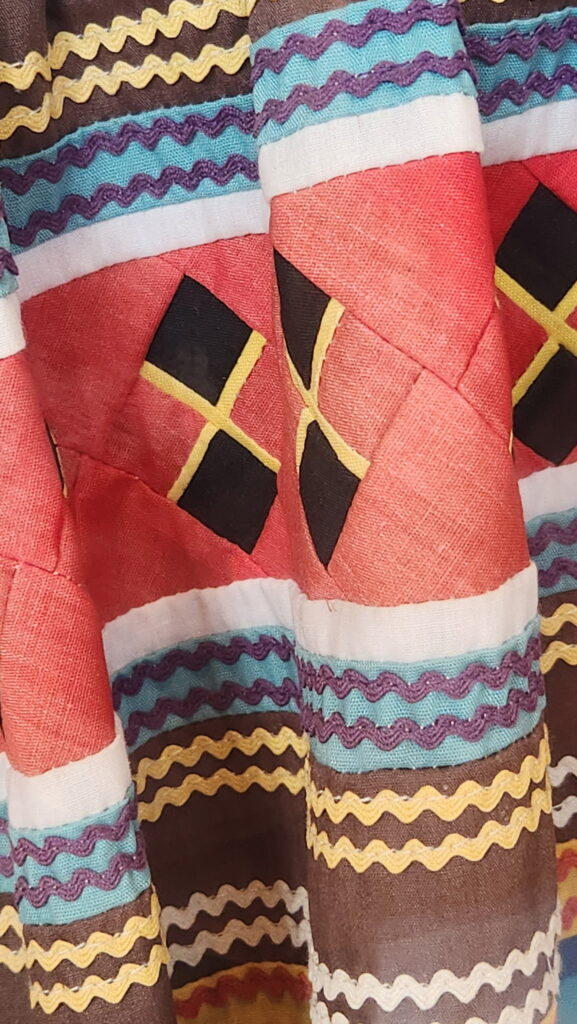
The Quarter Millennial Quilt block for Oklahoma is constructed with Seminole Patchwork techniques, a tradition that has continued, even today. Used in traditional clothing, I’ve seen garments with Seminole patchwork in many museums and am always so inspired by its clever piecing. We are tackling a basic design, but there are many more intricate designs–you can find out more about the history in this video with a Seminole patchworker or this video from the AhTahThiKi Musuem.
You will use four different fabrics that can be arranged in a variety of ways to create diamonds. With some clever piecing, cutting, re-sewing and trimming, you’ll create a block I’m calling Trail of Tears to bring recognition to the arduous journey that took the Seminole from Florida to Oklahoma.
Here’s an example of a Seminole patchwork jacket we saw at the Crazy Horse Memorial museum.
Quilt Shops
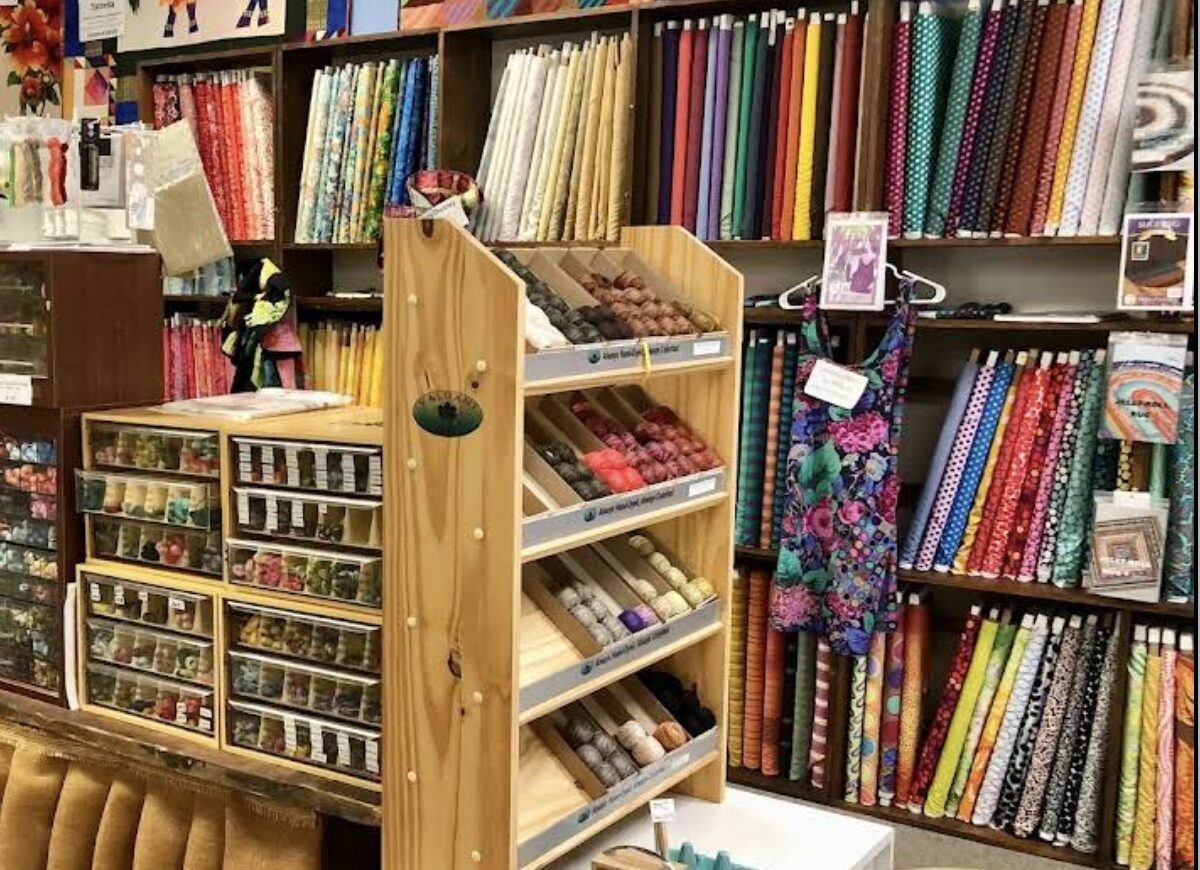
- Sooner Quilts in Guthrie
- Prairie Quilt in Hennessey
- Oklahoma Quilt Works in Oklahoma City
- Beth’s Quilting Quarters & Fabric Shoppe in Blanchard
- Make it Sew in El Reno
I’ll be heading to Oklahoma again in January 2027 to teach, so if you know of shops I need to make sure to stop at or interesting sites to visit, please let me know in the comments!