
South Dakota’s history spans thousands of years as a home to Native American tribes, including the Sioux (Dakota, Lakota, and Nakota peoples), Cheyenne, and Arapaho. These nations thrived on the Great Plains with buffalo hunting and seasonal migrations. When explorers and traders arrived in the late 17th century, they found a land with established cultures and traditions.
These first settlers came with the fur traders who traveled the Missouri River in search of beaver pelts. Nearly a hundred years later, the Lewis and Clark Expedition passed through the territory in 1804-1805, documenting their encounters with the Sioux and other tribes. The 19th century brought more and more traders, missionaries, and settlers, though the Great Plains remained sparsely populated until the railroad was completed. Fort Sumter, established in 1856 on the Missouri River, became one of the first permanent American settlements in the territory.
The Homestead Act, passed in 1862, had encouraged settlement by offering 160 acres of free land to settlers who would farm it for five years. This brought waves of European immigrants, including Germans, Scandinavians, and Czechs, who established farms and communities across the prairie. The influence of these settlers remains visible in the names of towns: Viborg, Stockholm, and Strasburg.
The Gold Rush of 1874-1875 brought thousands to the Black Hills region. When gold was discovered in the hills, prospectors flooded into the area, and towns like Deadwood grew quickly. Unfortunately, the discovery of gold and its removal intensified conflicts with the Native American tribes who held the land sacred. The Indian Wars of the 1870s and 80s was the result of the disregard for the Native cultures, forcing tribes onto reservations, killing off the buffalo herds and breaking treaties repeatedly. It all culminated in the famous Battle of the Little Bighorn in 1876, where the Lakota Sioux and other tribes defeated Lieutenant Colonel George Armstrong Custer’s army. This area is preserved as the Little Bighorn Battlefield National Monument.
Settlers continued to move west and the population of the Dakota Territory grew enough to warrant joining the Union. On November 2, 1889, South Dakota and North Dakota each became a state–twins of a sort.
The Great Depression of the 1930s hit agricultural communities particularly hard, exacerbated by severe drought that created the Dust Bowl. The state gradually diversified its economy, with manufacturing and tourism becoming more and more important. The construction of dams on the Missouri River provided hydroelectric power and water resources that transformed the harsh landscape. These days the state is known for its Wild West history, natural beauties and vast acres of agriculture.
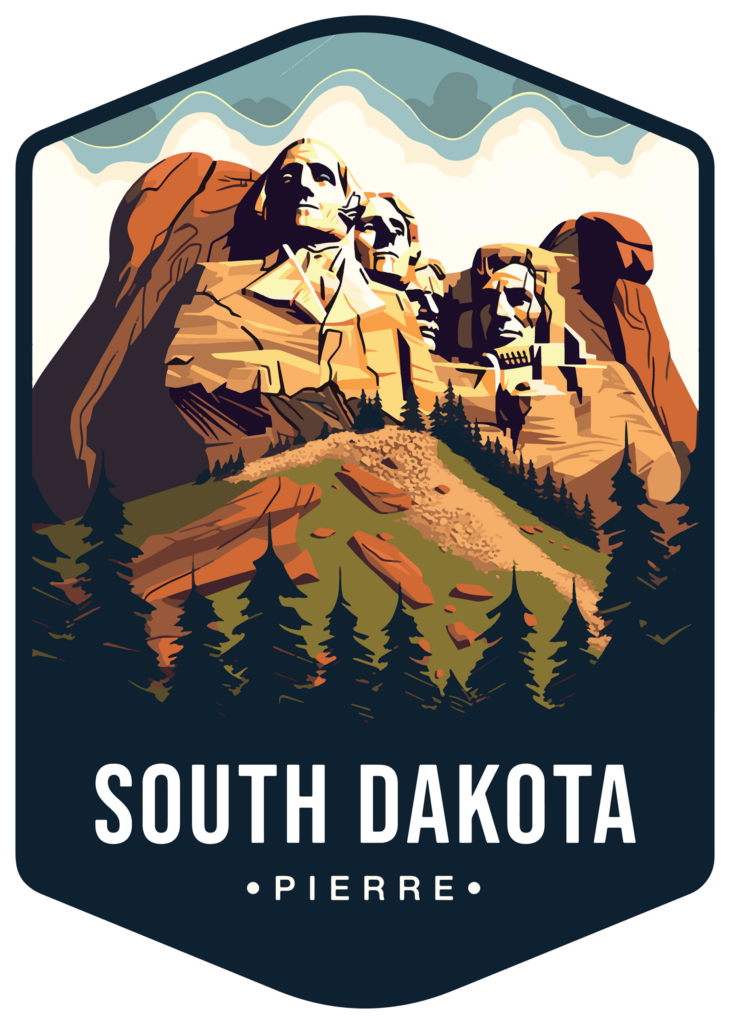
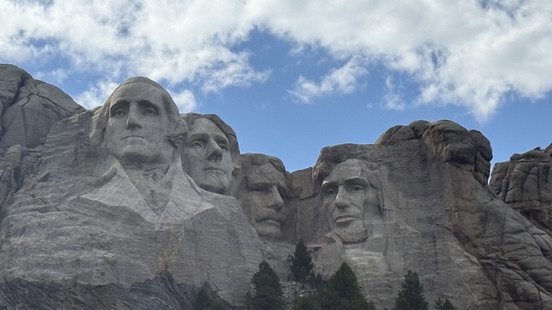
One of the most famous sites in South Dakota is Mount Rushmore. I was able to visit it for the first time just a couple years ago, after decades of having it on the bucket list. The iconic sculpture was carved into granite between 1927 and 1941, evolving along the way due to the nature of the rock and the skills of the carvers. I was astonished to realize just how large the heads actually are and how many folks worked tirelessly on them.
You can visit the Badlands, a vast series of canyons and rock formations that showcase geological history spanning millions of years. Deadwood, once a lawless mining town, has been preserved as a living museum of the frontier era. Additionally, South Dakota is home to the Wounded Knee Massacre site, a solemn reminder of the tragic conflict between federal forces and the Lakota Sioux in 1890. These diverse historical sites reflect the complex and often dramatic story of South Dakota’s past, from its deep indigenous roots to its transformation into a modern state.
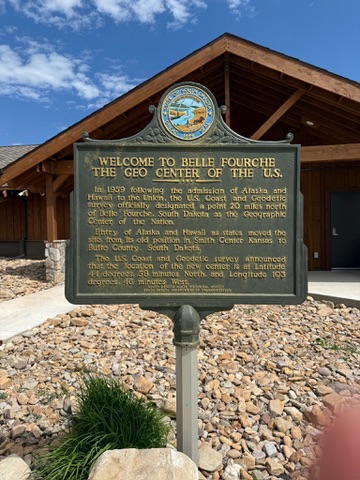
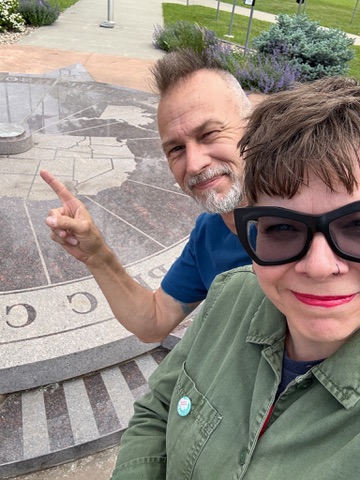
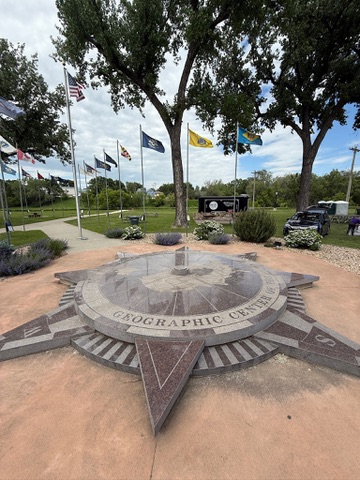
Belle Fourche is the geographical center of the contiguous United States and has a beautifully maintained city park to commemorate it. You can walk through, reading about the city, how it got the denotation as the center and see all the flags waving in the very-common wind.
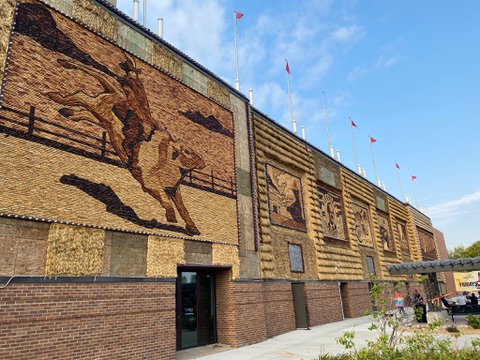
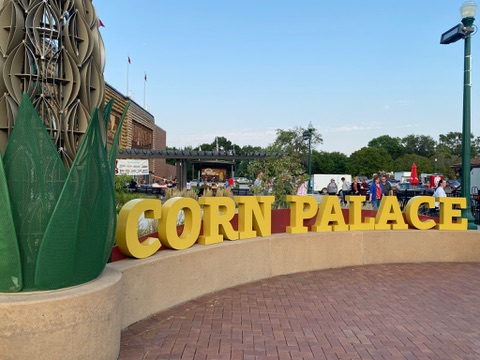
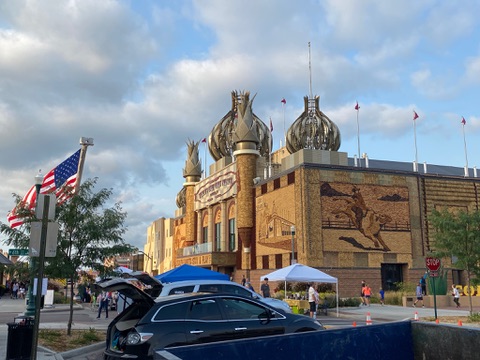
In Mitchell, you’ll find the Corn Palace, a delightfully kitschy pavilion in the center of town. The entire exterior of the building is covered in mosaics made from corn–husks, cobs, stalks–it’s all there creating images that draw from the local scenery. We landed in town during the Corn Palace Festival and it was perfect: food vendors, cover band, dog agility demonstration and the firemen passing out plastic helmets. It was so small town fun and we both loved every minute of it.
Quilt Block
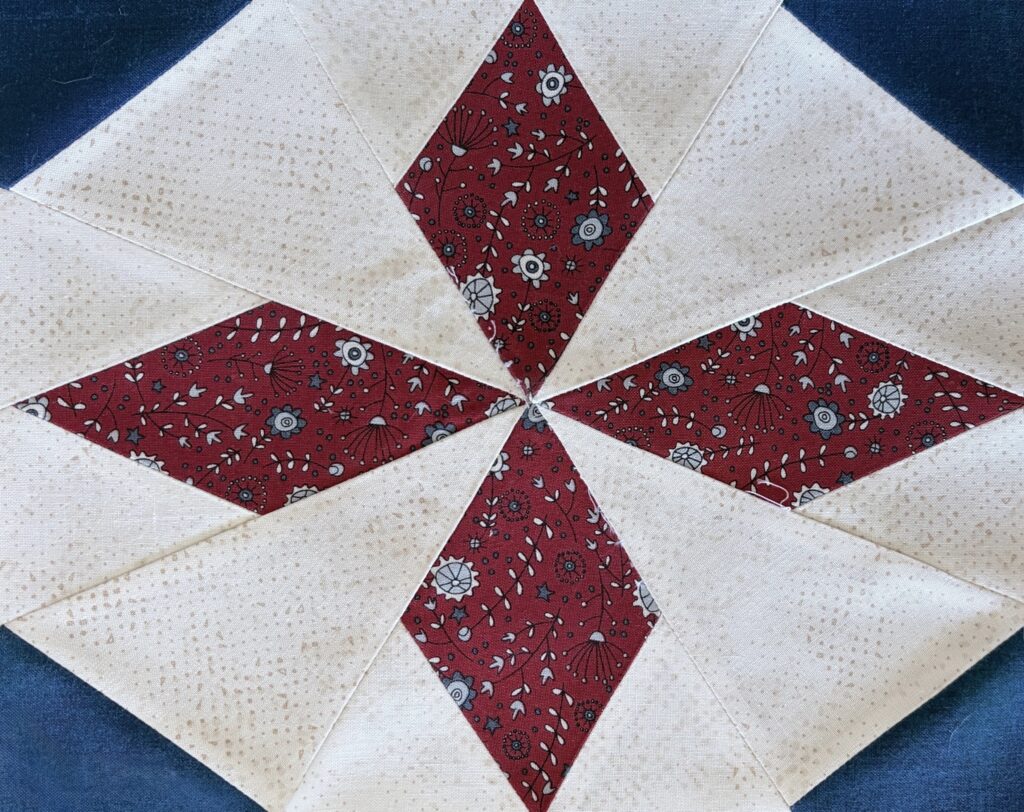
This version of the Dakota Star uses value to draw attention to the diamonds. The darker value of the diamonds, in comparison to all the light values surrounding it. The dark at the corner frames it all.
The trick with this block is getting those center points to match. I found the pin basting helped to find the right placement best, but it still took a couple of tries. When you’ve figured it out, glue baste in position, if you want, to make it easier to get them matched up.

Quilt Shops
The Bakery Fabrics in Bella Fourche
Sew Storm Quilting in Alcester
Jacqueline Joyce Stitch Studio in Sioux Falls
The Pin Cushion in Mitchell, SD