Thousands of years before European contact, Louisiana was home to indigenous mound-builders, much like Ohio. The Watson Brake mounds date back to 3400 BC (older than the Egyptian pyramids!). Later, when the first European explorers arrived, they were met by the Chitimacha, Caddo, Choctaw, and Natchez tribes and the area was called Bulbancha—a Choctaw word meaning “place of many tongues.”
De La Salle claimed the territory for France in 1682, but they struggled to make it worth holding on to. To keep it out of British hands, France secretly gifted Louisiana to Spain in 1762. The Spanish left their mark on the architecture of the French Quarter, which was almost completely rebuilt by the Spanish after two devastating fires.
In the mid-1700s, the Acadians arrived, forced from their homes in Nova Scotia by the British and re-settling in the swamps of south Louisiana, where their name eventually morphed into “Cajun.” These French-speaking people held onto their language, traditions, and independent spirit and continue to have a profound influence on the music and food that we know and love.
In 1800, Napoleon pressured Spain to give the area back to France, but then he sold it to Thomas Jefferson just three years later. The Louisiana Purchase cost $15 million and doubled the size of the United States.
Louisiana became the 18th state less than a decade later thanks to the US defeat of the British in the War of 1812. During the Civil War, Louisiana seceded from the Union and joined the Confederacy, but New Orleans was captured by Union forces in early 1862. That state was re-admitted to the union six years later.
Today, Louisiana produces a staggering amount of the nation’s crude oil and natural gas, and the Port of South Louisiana is as one of the largest tonnage ports in the Western Hemisphere.
Interestingly, Louisiana is the only state that doesn’t have counties, but is divided into parishes instead. And it is home to the world’s longest bridge built entirely over water: the Lake Pontchartrain Causeway, which stretches nearly 24 miles.
My first visit to Louisiana was about six years ago when I was invited to teach at The Fabric Shop in Ruston and it was where the shop owner introduced me to shrimp etouffee. I’m forever grateful — that’s a name I had no idea how to pronounce or what it might possibly taste like. Turns out it’s delicious.
When Hawke and I came through on our LQS tour, he got the chance to try real beignets (not surprisingly delicious). There two things that really stood out for me on that trip: Orlandeaux’s and the cypress trees.
Orlandeaux’s Cafe in Shreveport has been serving food since 1921, started when the south was segregated and has continued with family ownership through five generations. The restaurant has hosted many civil rights meetings, including with Martin Luther King, Jr.
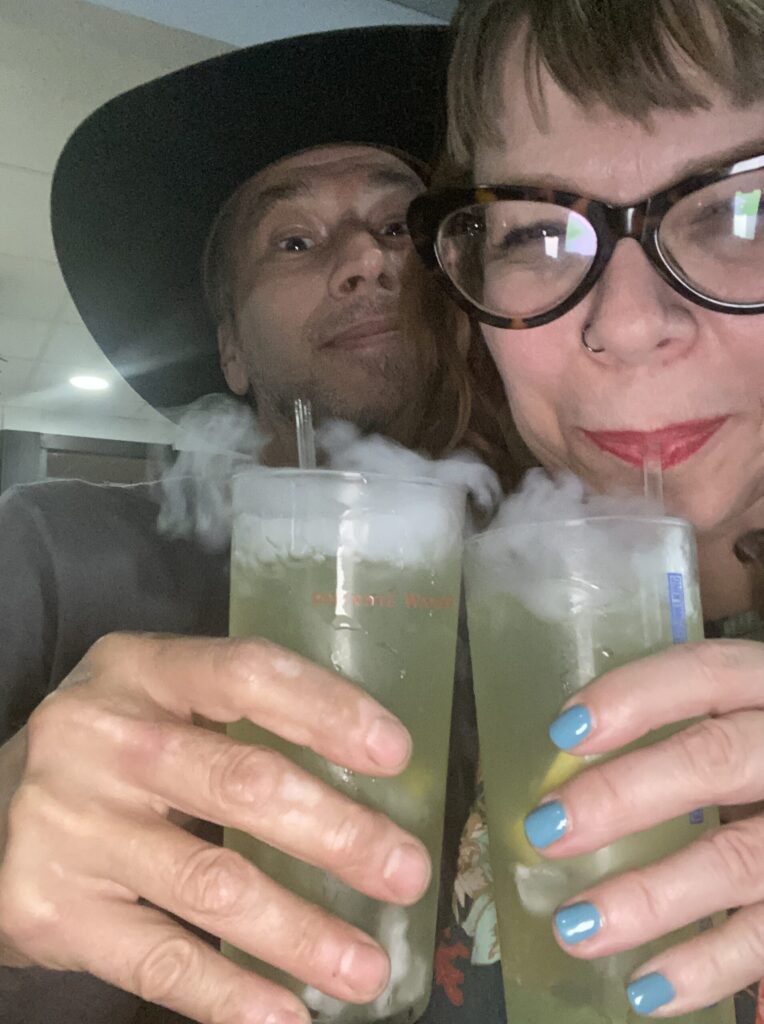
The lakeside restaurant was packed when we visited, so while we waited for a table, we noticed the drink of a fellow down the way. It was green and bubbly and we had to have it. Turns out it’s their signature Swamp Water cocktail, so of course we got them.
It’s the place I learned that I love shrimp and grits, too. Who knew I’d been missing out on such good food for so many years!
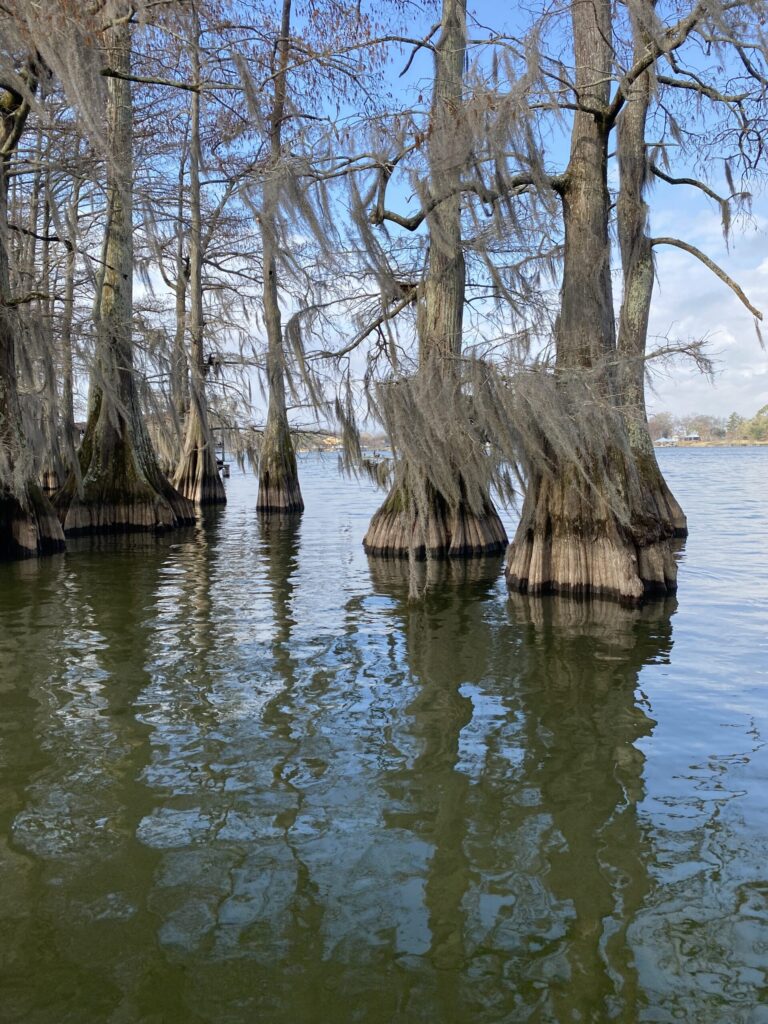
The Bald Cypress is the state tree and when we stopped in eastern Louisiana, our campground was right on the water..filled with cypress trees. Combine the trees with the kid finishing by headlamp and the armadillo in our site and the place was basically magical.
Quilt Block
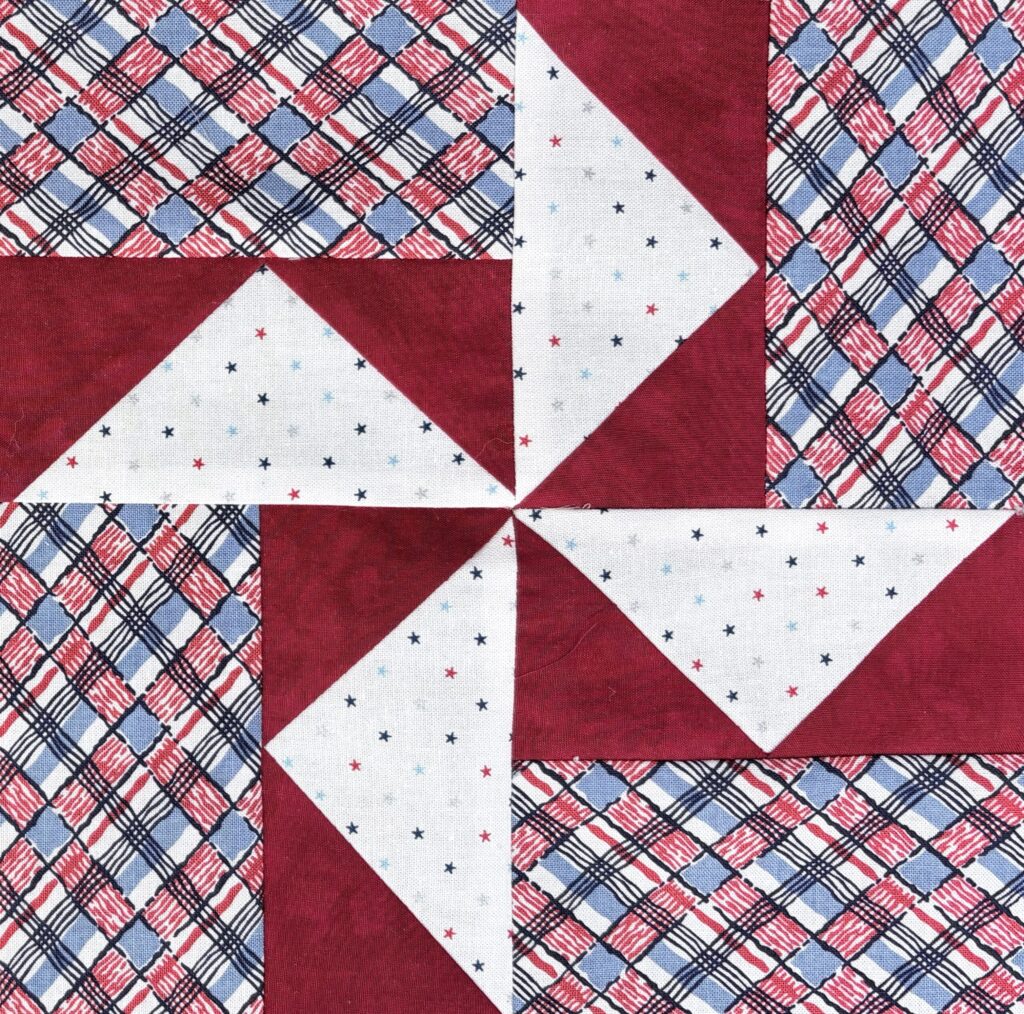
The Louisiana Block is a traditional quilt block that appeared first in Home & Hearth in the early 1900s. It can be pieced together in numerous ways, but for our block, we are using a couple techniques.
The Flying Geese patches are made using a four-at-at time technique that I really love for making them quickly and easily. We’ll also dive into nesting those center seems and aiming for good-enough, not perfect.
Quilt Shops
- The Fabric Shop in Ruston is a great little shop in quaint downtown Ruston, with Louisiana-centric fabrics plus all the notions, kits, and sewing machines you might want.
- Summer’s Haven Quilt Shop in Amite City has a beautiful selection of fabrics, including Tilda, and offers classes every week.
- My Sewing Shop in Baton Rouge offers classes for beginners and kits to keep you going.
I can’t wait to see your Louisiana block! If you live in or have visited Louisiana, I’d love to hear more about it!
P.S. In my research, I found out that Tabasco sauce was first made on Avery Island, off the coast of Louisiana by Edmund McIlhenny in 1868 … and it’s still made there today!