Petroglyphs and artifacts found in Yellowstone show Native Americans occupying the area more than 12,000 years ago. The Mountain Shoshone (also called Tukudika) lived at high elevations in northwestern Wyoming from prehistoric times through the mid-1800s. The Arapaho people settled there, as well, taking care of the land until settlers moved west. In the late 1800s both Arapaho and Shoshone were removed from their land and onto the Wind River Reservation.
Wyoming was created as a territory in 1868 and spent more than two decades working toward admission to the Union. The territory leaders knew that the traditional requirement of 60,000 residents might be a stumbling block—Wyoming’s population was considerably smaller. But they pressed forward anyway, holding a constitutional convention in 1889 and drafting a state constitution in just 25 days. When Congress finally acted, President Benjamin Harrison signed the statehood bill on July 10, 1890, making Wyoming the 44th state.
Interestingly, Wyoming had already made history in 1869 by becoming the first territory to grant women the right to vote—a progressive move that would remain controversial even as the state pursued admission to the Union. It also earned it the nickname: The Equality State.
Since before the area was settled, the buffalo (technically the American bison) covered the Great Plains in numbers estimated between 30 and 60 million. These magnificent creatures were central to Native American life for thousands of years, providing food, shelter, clothing, and spiritual significance. But the arrival of European settlers and the completion of the Transcontinental Railroad in 1869 spelled disaster for the herds. Market hunters and the U.S. Army systematically killed millions of bison—some for sport, some as a deliberate strategy to undermine Native American communities by destroying their primary food source.
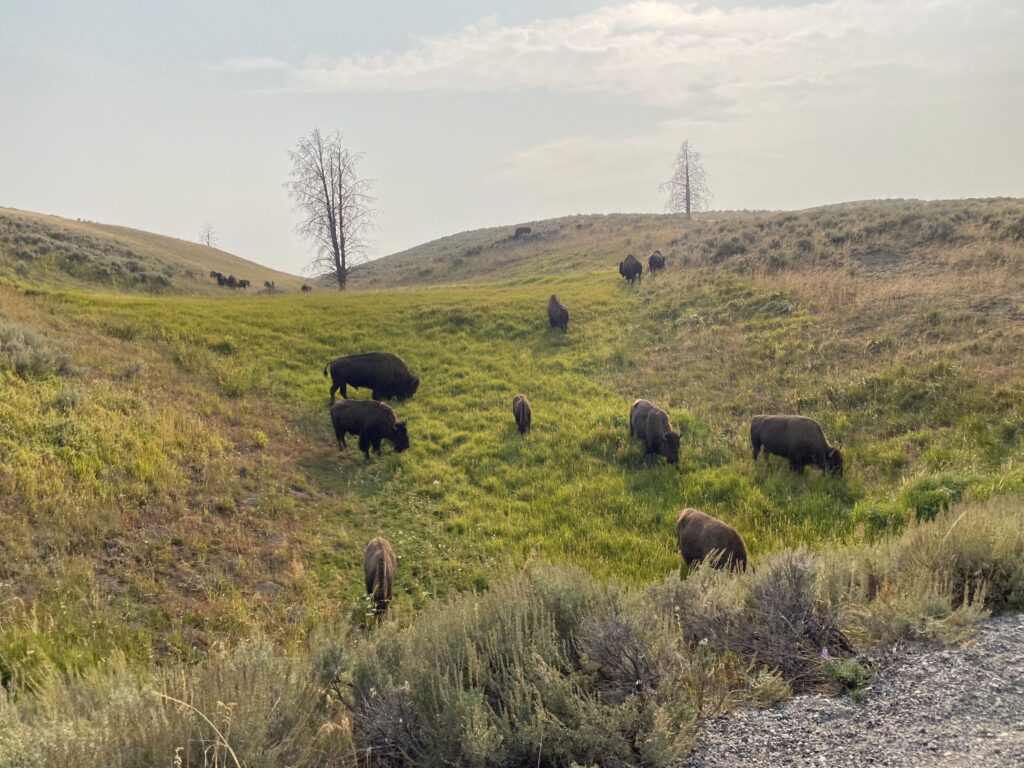
By the late 1880s, fewer than 1,000 bison remained in the wild, with Wyoming’s Red Desert and Yellowstone area serving as their last refuge. Conservation efforts, beginning in 1902, helped save the species from extinction. Today, Yellowstone’s bison population has recovered to nearly 5,500 animals, and tribal restoration programs, particularly the InterTribal Buffalo Council, have returned over 20,000 buffalo to tribal lands across the country.
Yellowstone National Park is important in many ways, including its place as the world’s first national park. Most of it is in Wyoming, with just a bit falling within Montana and Idaho borders. It took me decades to finally get a chance to visit, but several years ago we spent a couple of days driving through the area.
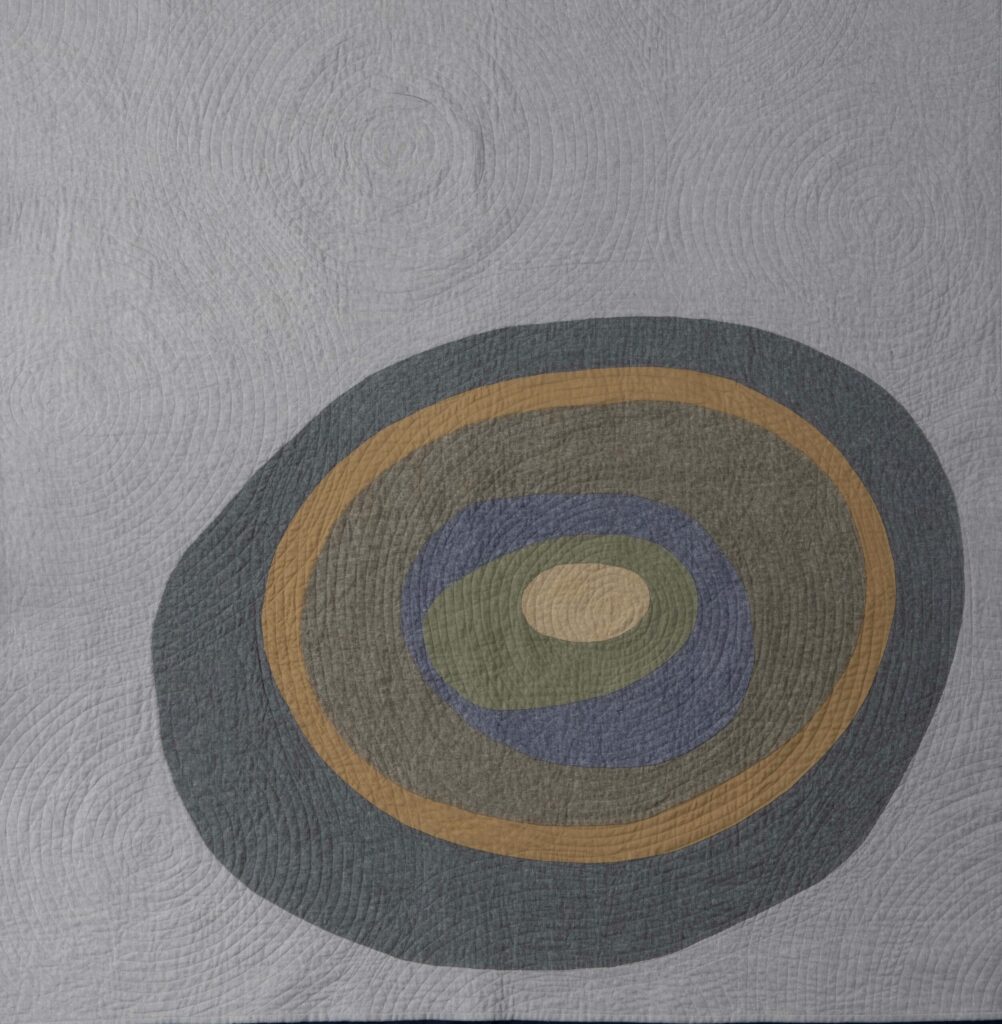
The Artist Paintpots Trail mesmerized me with the bubbling and the concentric circles in the mud inspiring me to re-create it in linen for my American Travels quilt series.
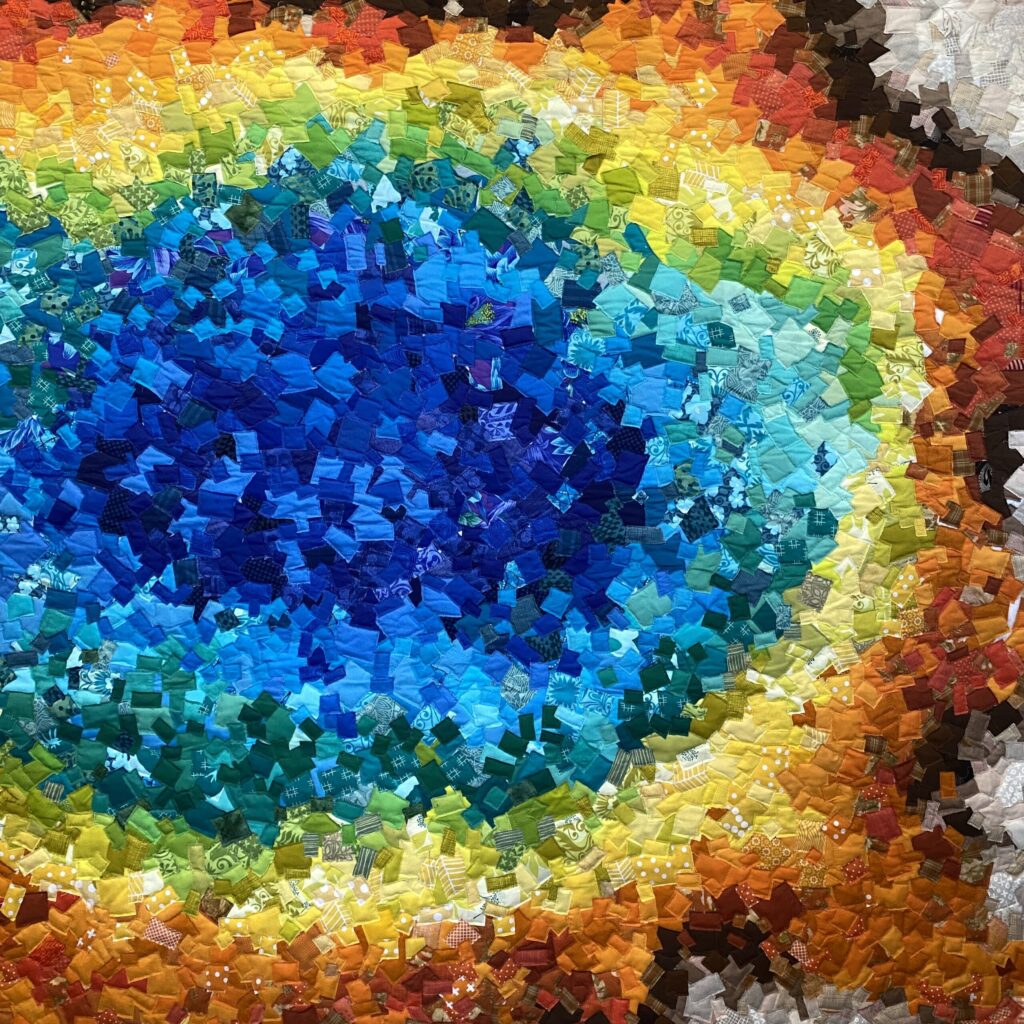
The Grand Prismatic Springs were mind-blowing and if you’ve never had the chance to see them in person, you really should put it on your to-see list. It’s incredibly beautiful and the boardwalk trail allows views of others that allow you to see the depth of these springs. Hawke and I joined forces for the Prismatic Portal quilt, also part of the American Travels series, but with him taking the reins on color dispersement and quilting. (Look carefully and you’ll see he quilted around every little square!)
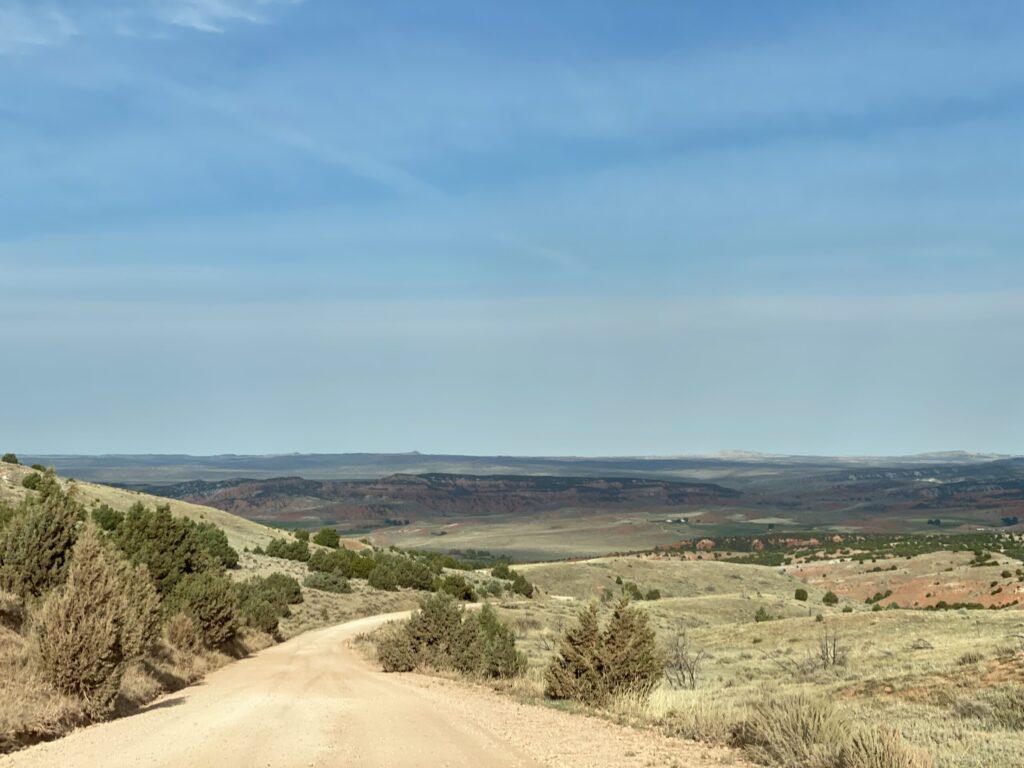
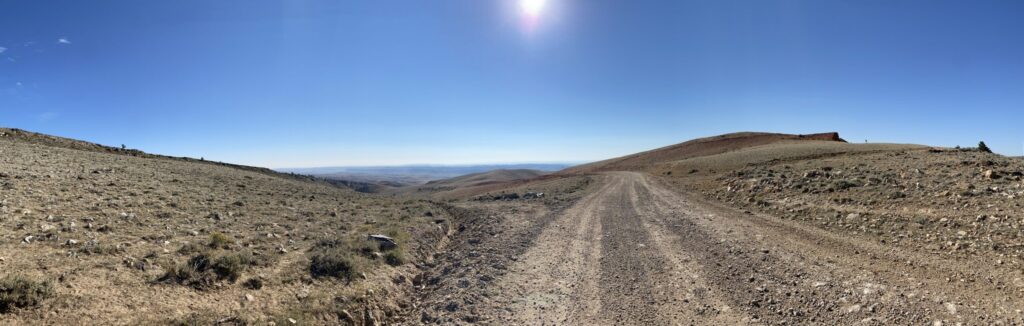
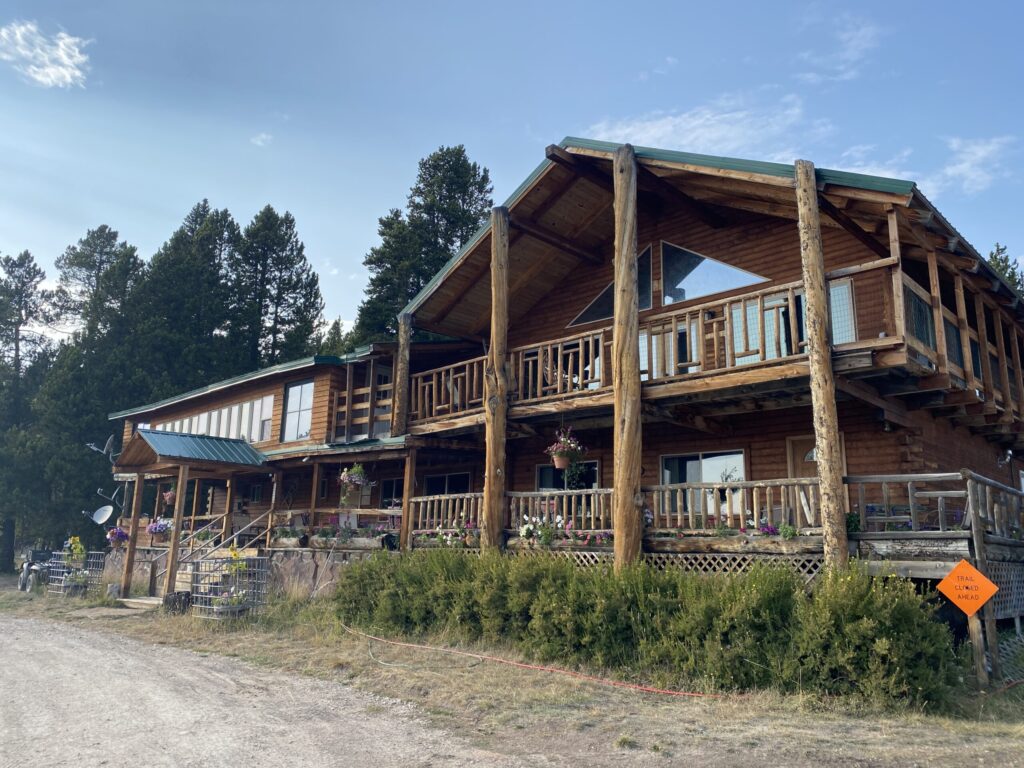
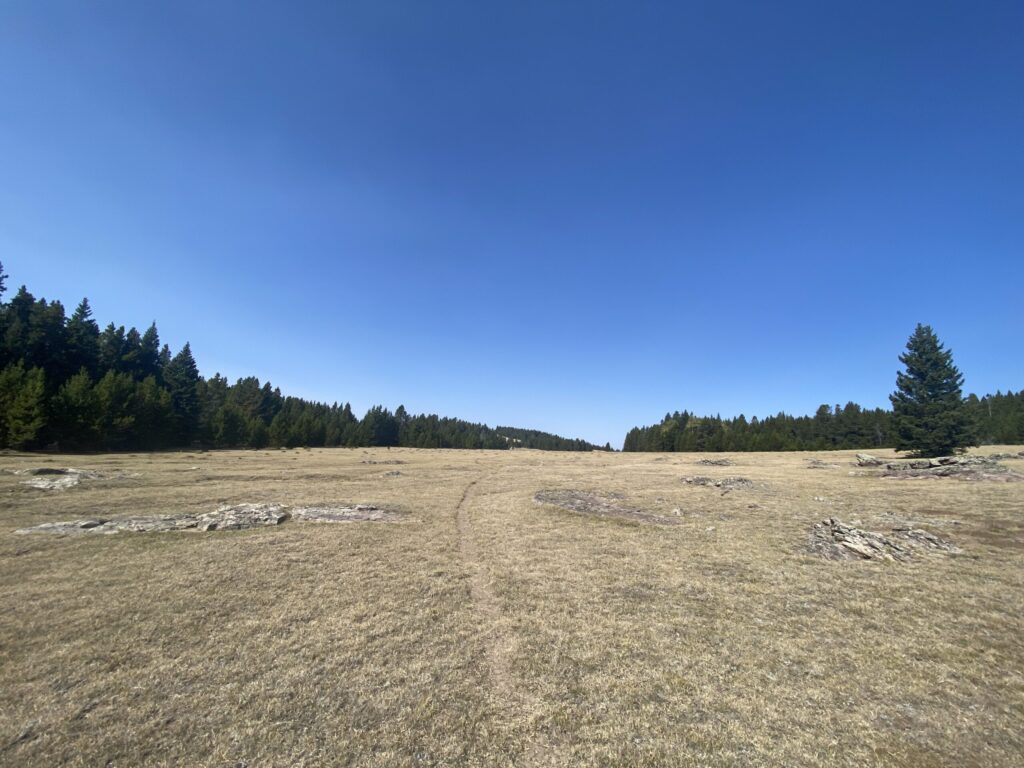
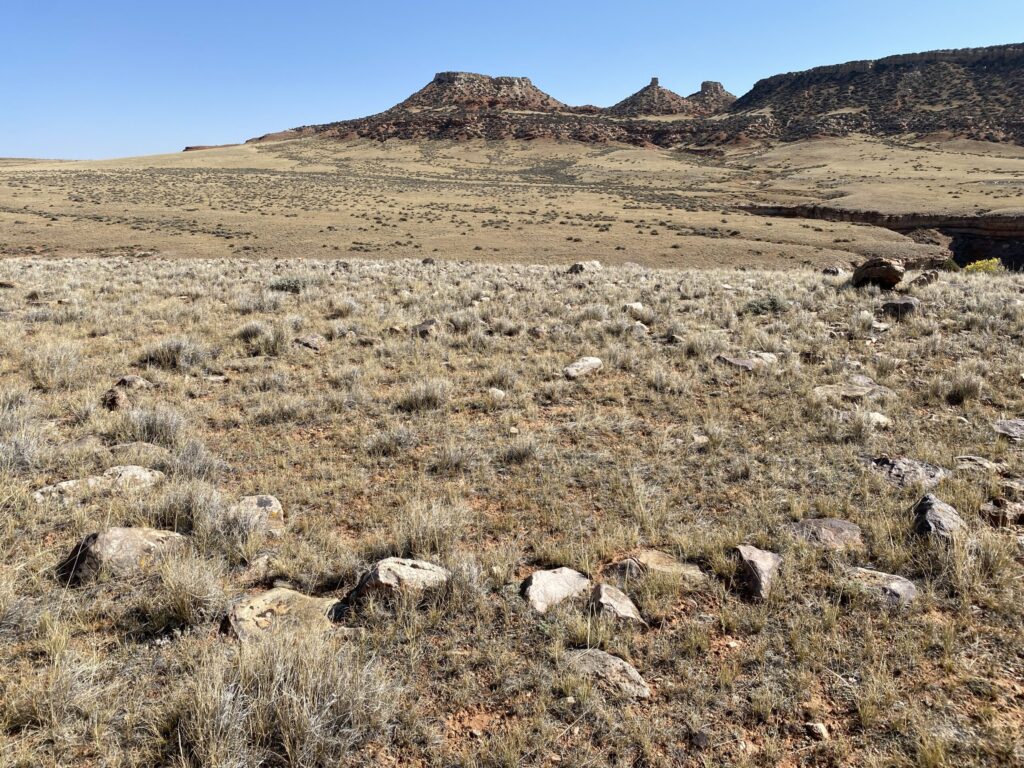
On one trip, we visited my friend Leann and her husband, John, staying at their hunting lodge outside of Ten Sleep. It was an hour-plus drive on gravel road and across a couple creeks to get there, but it was a blissful escape from the world. We were able to go for a hike and see buffalo wallows in the hilltop, plus spend some time at a locally-known tipi site, with dozens of tipi rings still on the surface of the butte. There are few times I have felt the history of the land so intensely.
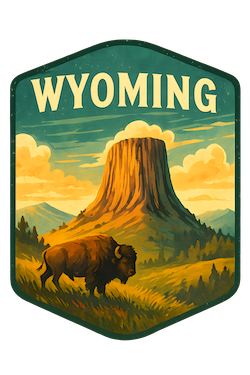
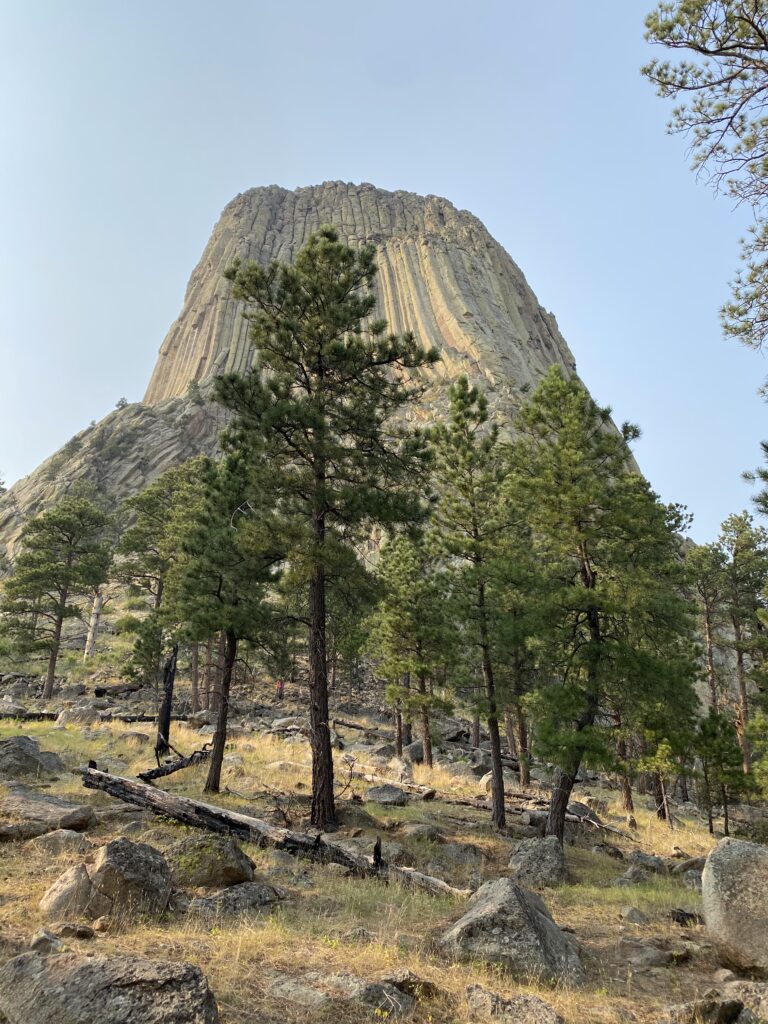
While we were in the area, one of the local shop owners had suggested we stop and see Devils Tower on our way east. I had no idea what it was, but I was driving and he was sleeping, so I took the exit and followed the signs. To say I was shocked at the sight, would be an understatement. There really is nothing like it–and the scientists are still not exactly sure how it happened. With a couple of trails and rock climbers to observe, it’s a fabulous stop along the way. Devil’s Tower was the first national monument, dedicated in 1906, and continues to holds deep cultural significance for Northern Plains tribes.
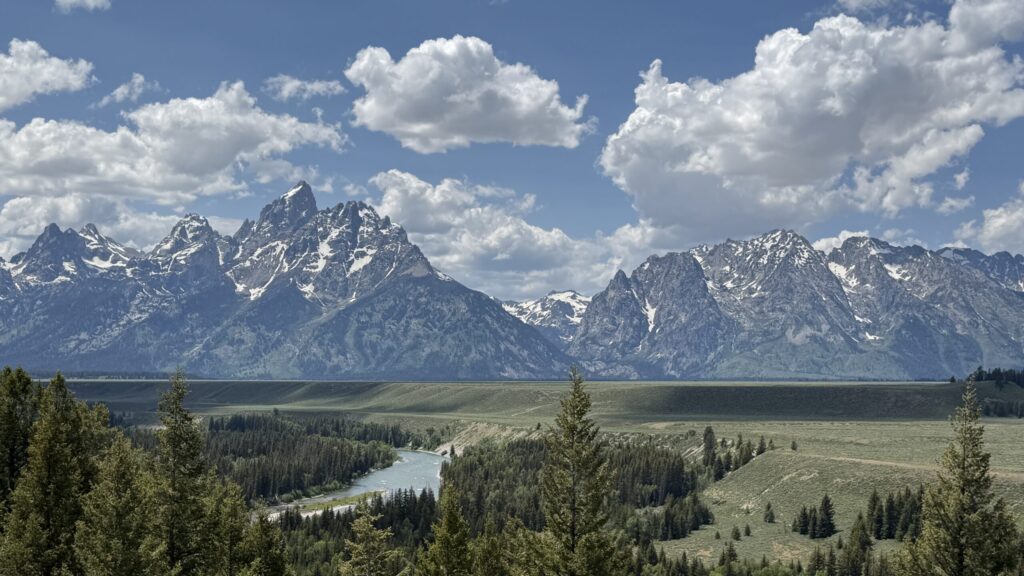
The Grand Teton National Park Is one of my very favorite views, with towering peaks and breathtaking view of the valleys. You have to stop at Jackson Hole while you’re there, both to see if you can spot any famous folks, but also just to check out the town square with its arch of antlers. One of these days, I’ll get to spend a few days in the area–goals!
Quilt Block
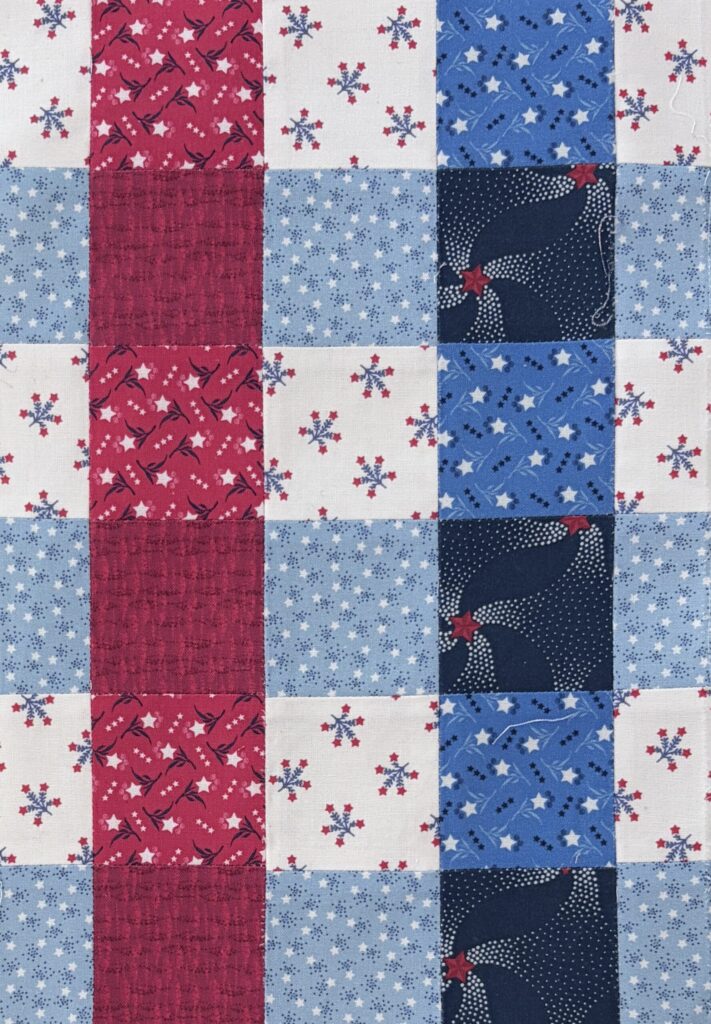
Wyoming is full of inspiration and I pondered several different ideas, including the Sage Bud for Ft. Laramie block (also called the Sage Bud for Wyoming block) in honor of the beautiful sage near my friend Leann’s hunting lodge. The block is more complicated than I thought folks might care for this week, so instead I chose Buffalo Plaid as the impetus for the block, going with a red/white/blue color palette.
This block uses simple construction that relies heavily on the values to create the plaid look. We cut the pieces a bit oversized and trim down to keep the seams straight. It’s a great opportunity to practice keeping your intersections matched without relying on nesting seams. While that will work, with this many intersections, the nested seams start to look a bit jagged. Instead we’ll open the seams and match them carefully.
Quilt Shops
- Around the Block Quilt Shop in Cheyenne
- Prism Quilts in Casper
- Sew Sisters in Buffalo
- Country Cottage Quilt Shoppe in Riverton
If you call Wyoming home, or know some places to add to my to-see list, leave a comment and let me know!
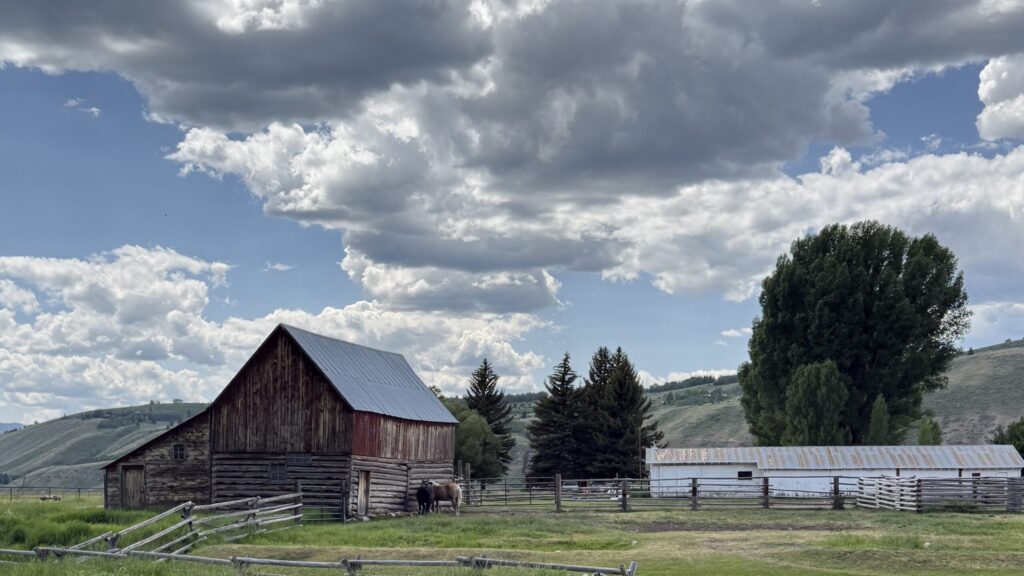
P.S. Because I can’t pass up sharing a good barn photo, here’s one from Wyoming.
I just wanted to say the Around the Block Quilt Shop is in Cheyenne, not Laramie. I was all excited that we had a new quilt shop, but unfortunately we don’t.