
The Chinook, Nez Perce, Umatilla, and Klamath nations once controlled the land, but in the early 19th century, fur trappers and traders arrived. The abundant beaver population along the Columbia River drew many from both the U.S. and Canada.
The Oregon Territory was legendary among American settlers, especially after the Lewis and Clark Expedition documented the range of opportunities available in the region. The Oregon Trail stretched over 2,000 miles from the Independence, Missouri (the furthest point West in the Union at the time). Between 1830 and 1880, it’s estimated that 400,000 people followed the route west. Following the trail, even today, is rugged and difficult, costing countless lives along the way. We followed it through Nebraska and all the way into Oregon last fall and it made it all the more evident how difficult those travels were.
My hometown of Portland was incorporated in 1851, getting its name from a coin toss between its founders, Francis Pettygrove and Asa Lovejoy, who both wanted to name the new city after their respective hometowns. Pettygrove (from Portland, Maine) won the best-of-three toss against Lovejoy (from Boston, Massachusetts) using an 1835 copper penny, that is on display at the Oregon Historical Society.
Salem became Oregon’s capital in 1854 when it was chosen as the territorial capital, and it has stayed the capital since. Oregon became the 33rd state on February 14, 1859.
The state’s economy was built on natural resources—logging became a dominant industry, gold mining drew adventurers to southern Oregon and the Columbia River enabling trade all the way to the coast .
Oregon has always embodied a spirit of independence and progressive thinking. The state was among the first to implement environmental protections, and became a leader in conservation efforts. Forests that are logged are re-planted, retaining the area’s natural beauty for future generations.
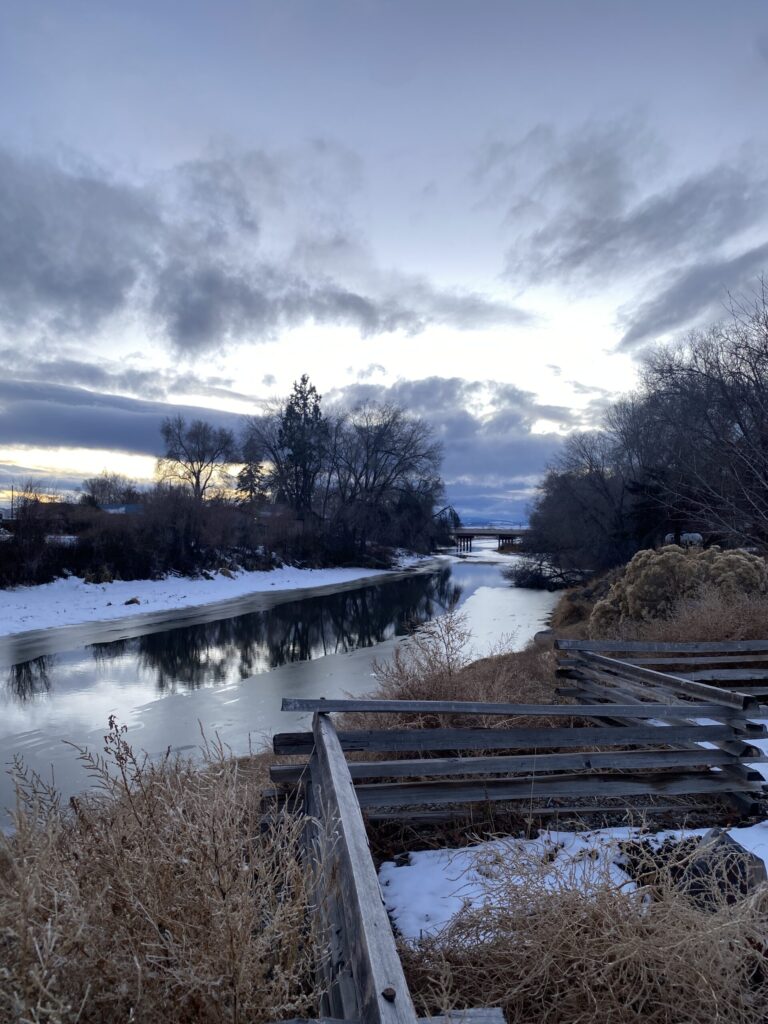
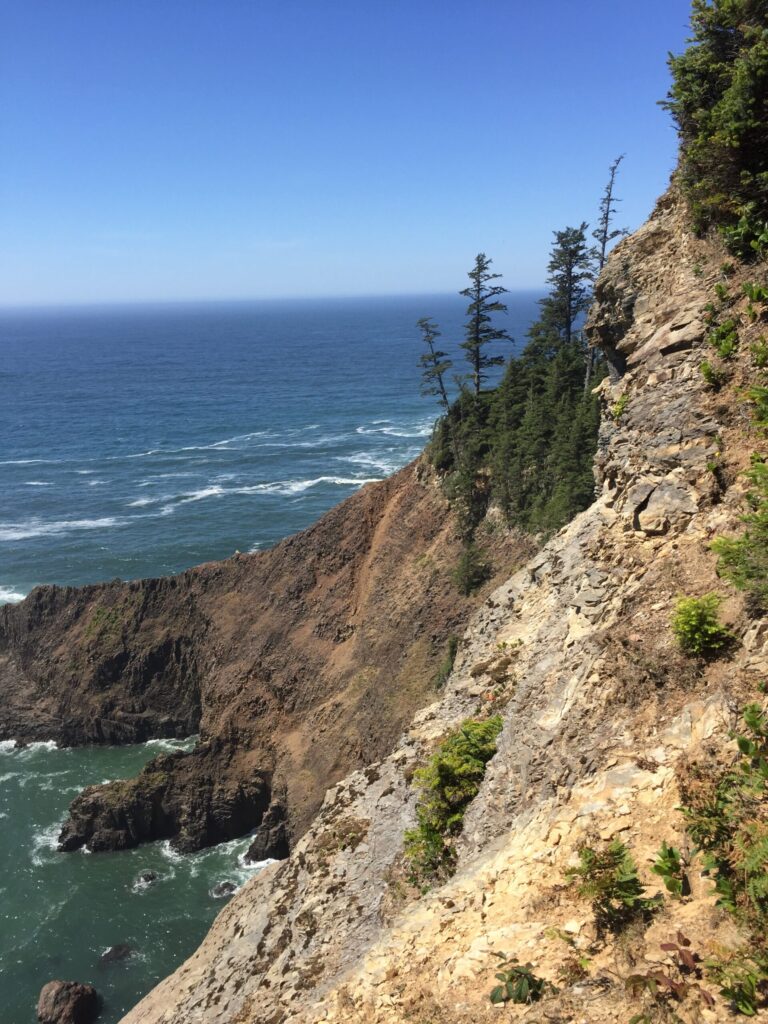
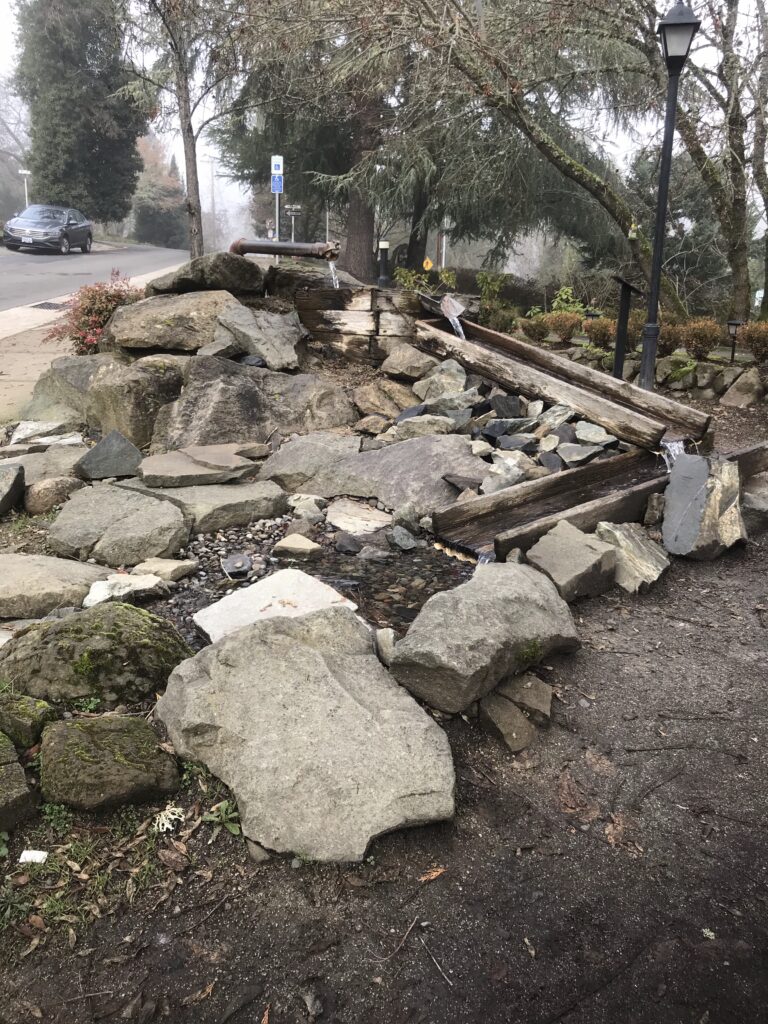
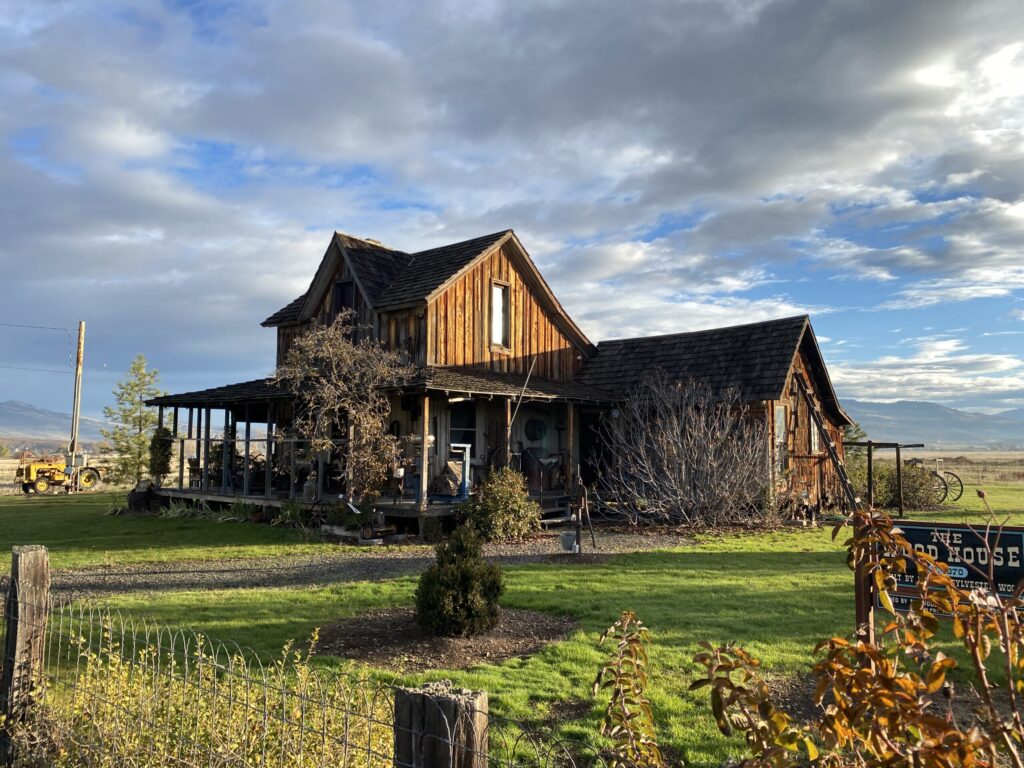
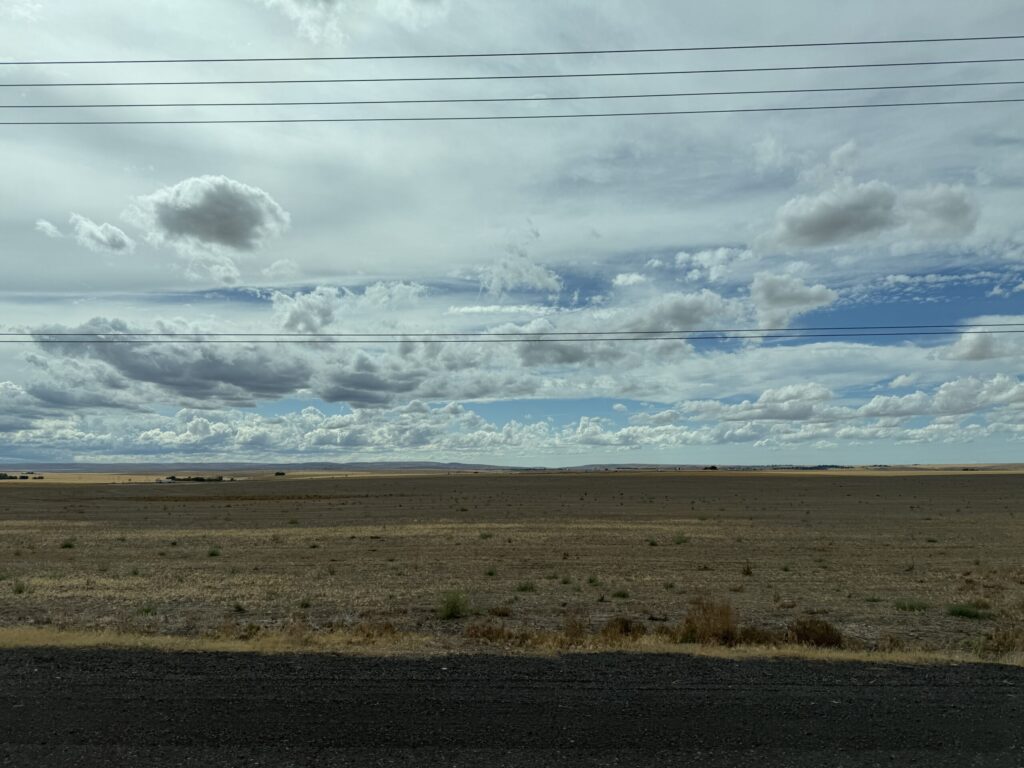
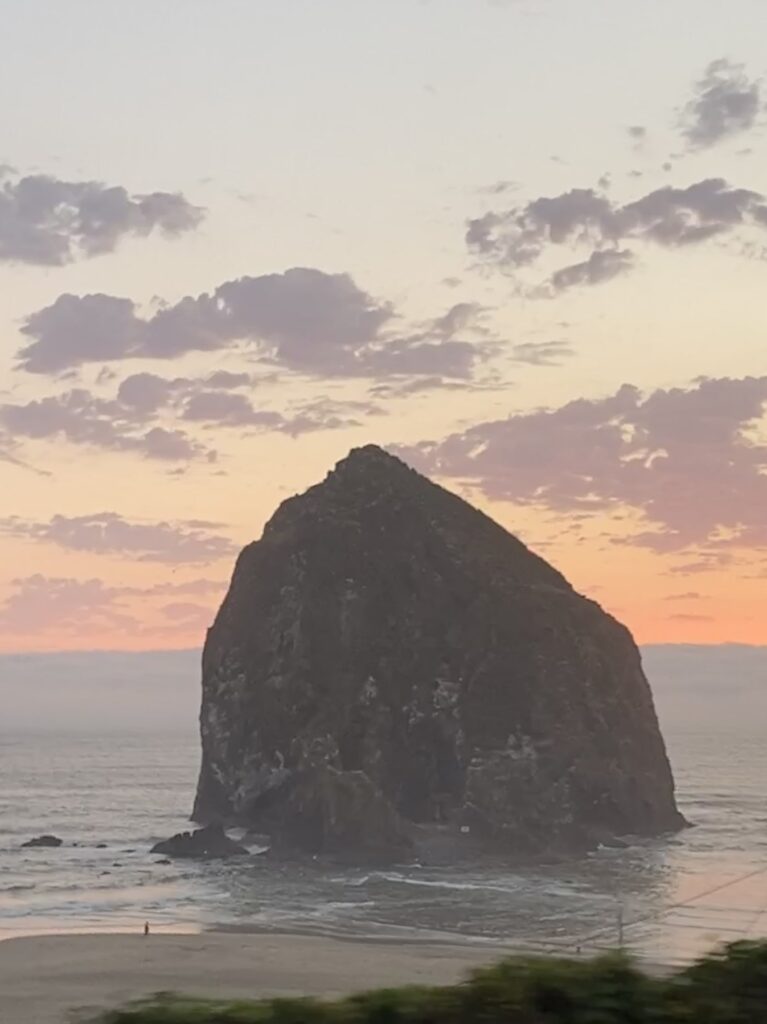
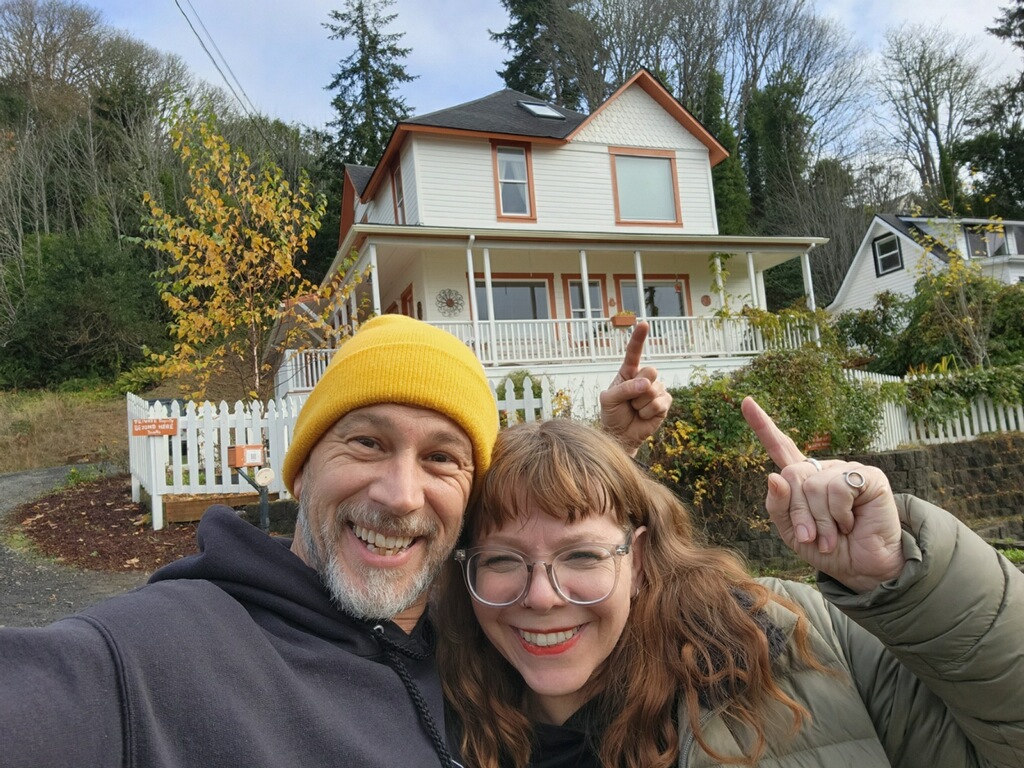
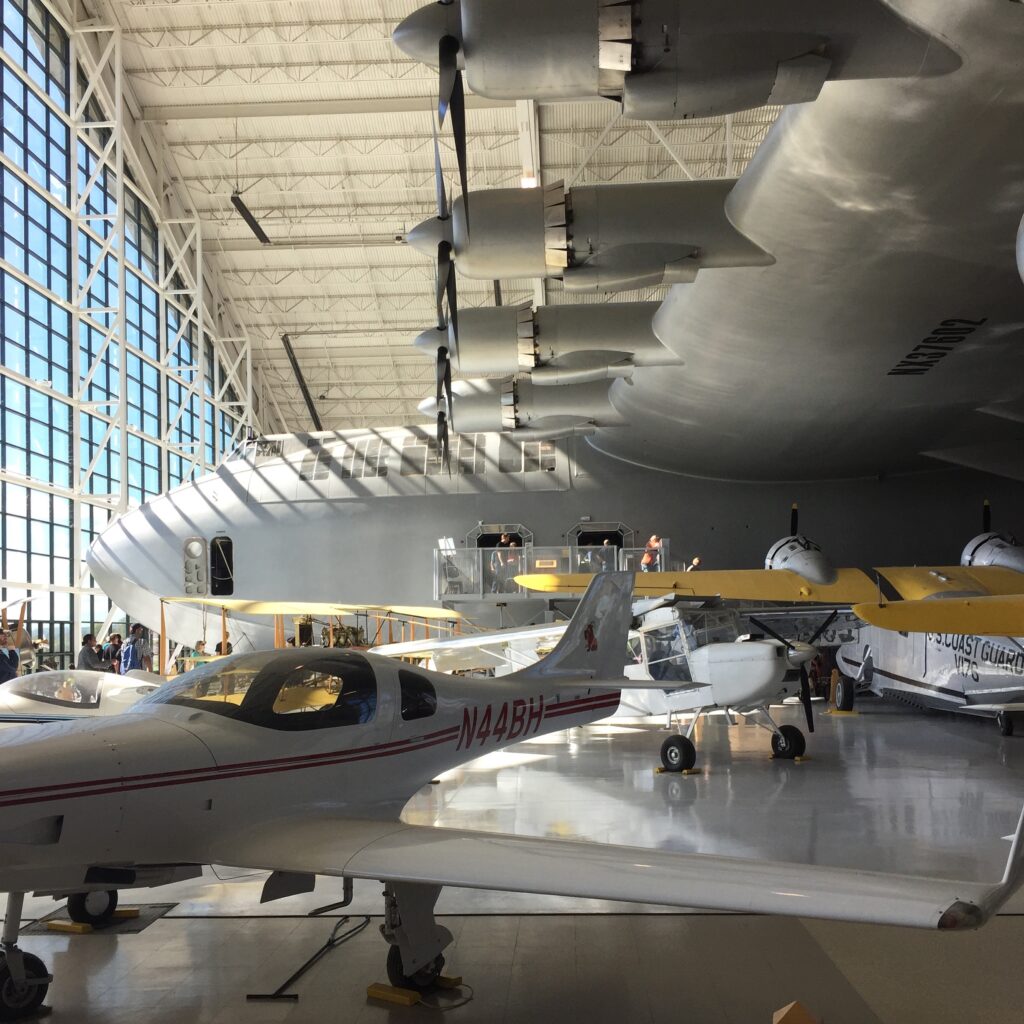
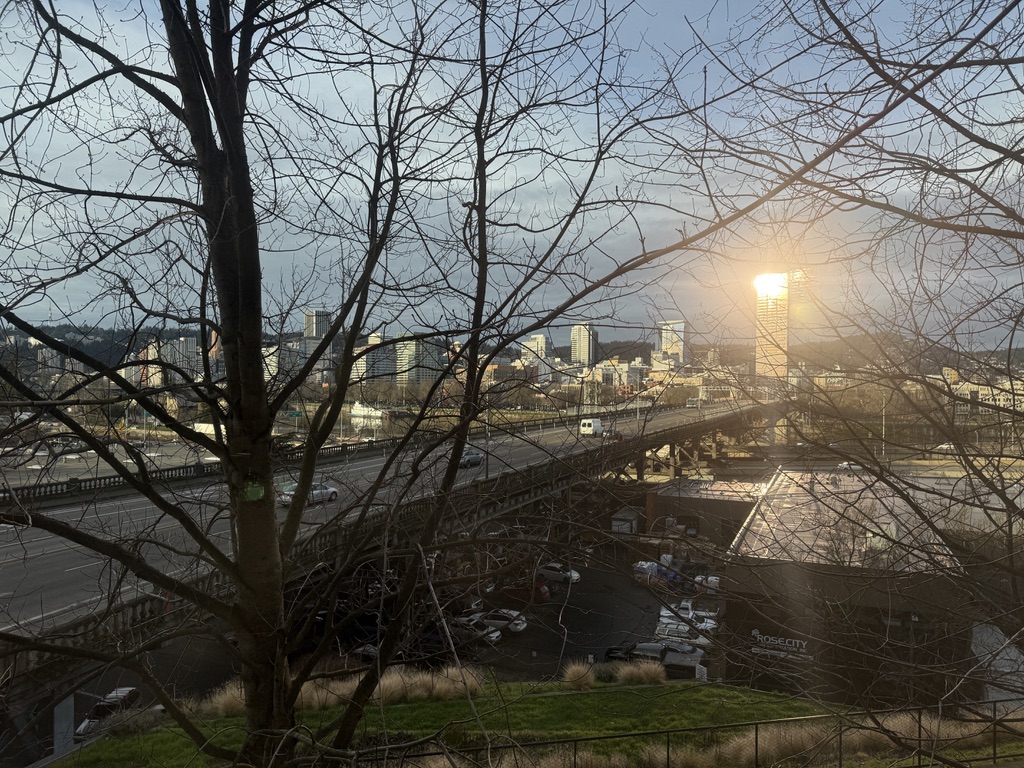
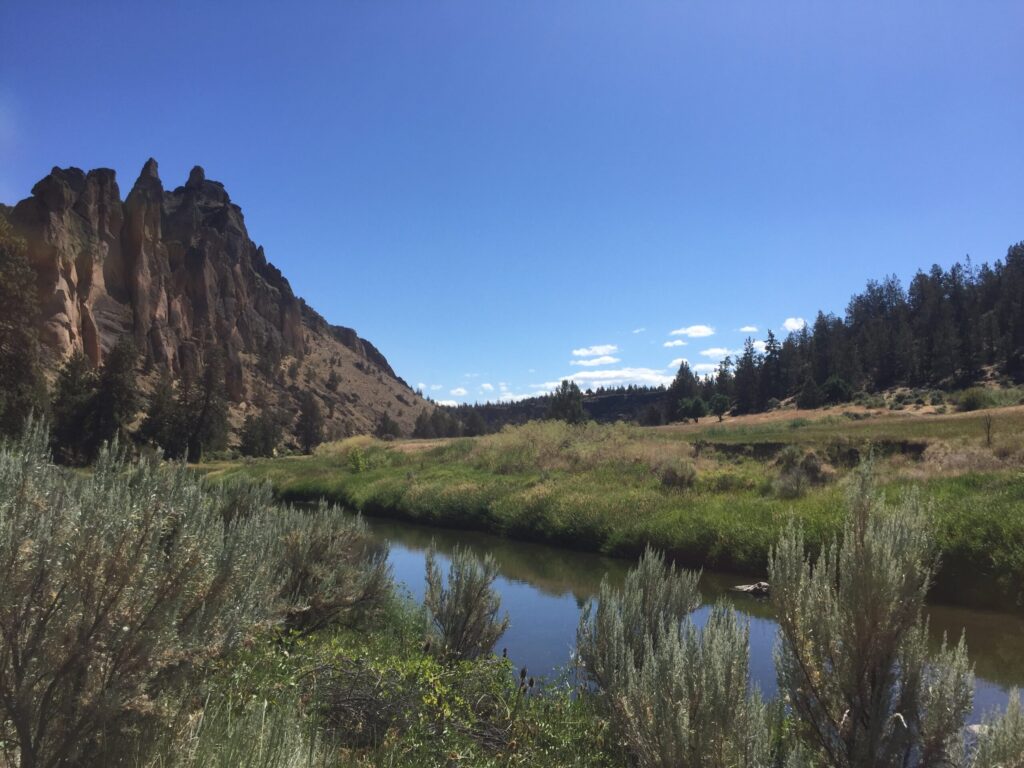
I grew up in Newberg, a small town about 30 miles southwest of Portland, but moved to Portland at 20 years and have found my way back here every time I’ve moved away (this is my fifth return!). The proximity to nature, whether it’s a trip to the coast, a visit to Willamette Valley wineries, a day on the slopes or a weekend in the high desert, it’s all only a couple hours away.
While Oregon has a reputation for being wet, in return we have some of the most lush neighborhoods I’ve ever seen and city water that is just rainwater brought down from Mt. Hood through Bull Run Reservoir.
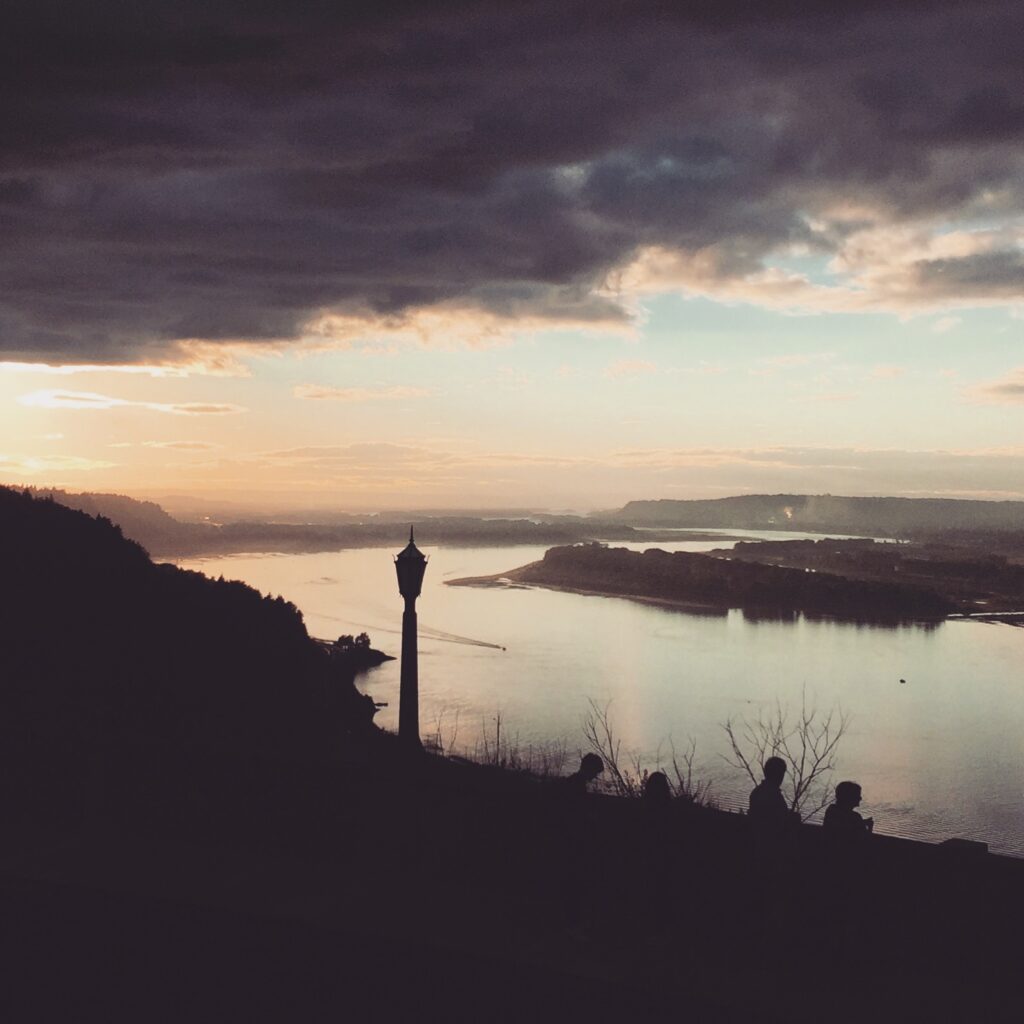
If you visit Portland, you have to stop at Powell’s Books, the largest used book store (it takes up several stories of an entire city block). Take a drive out to Multnomah Falls (and do it on the Old Columbia River Highway, so you can stop by the Vista House). Get dinner while you watch a movie at one of the refurbished McMenamin’s theaters.
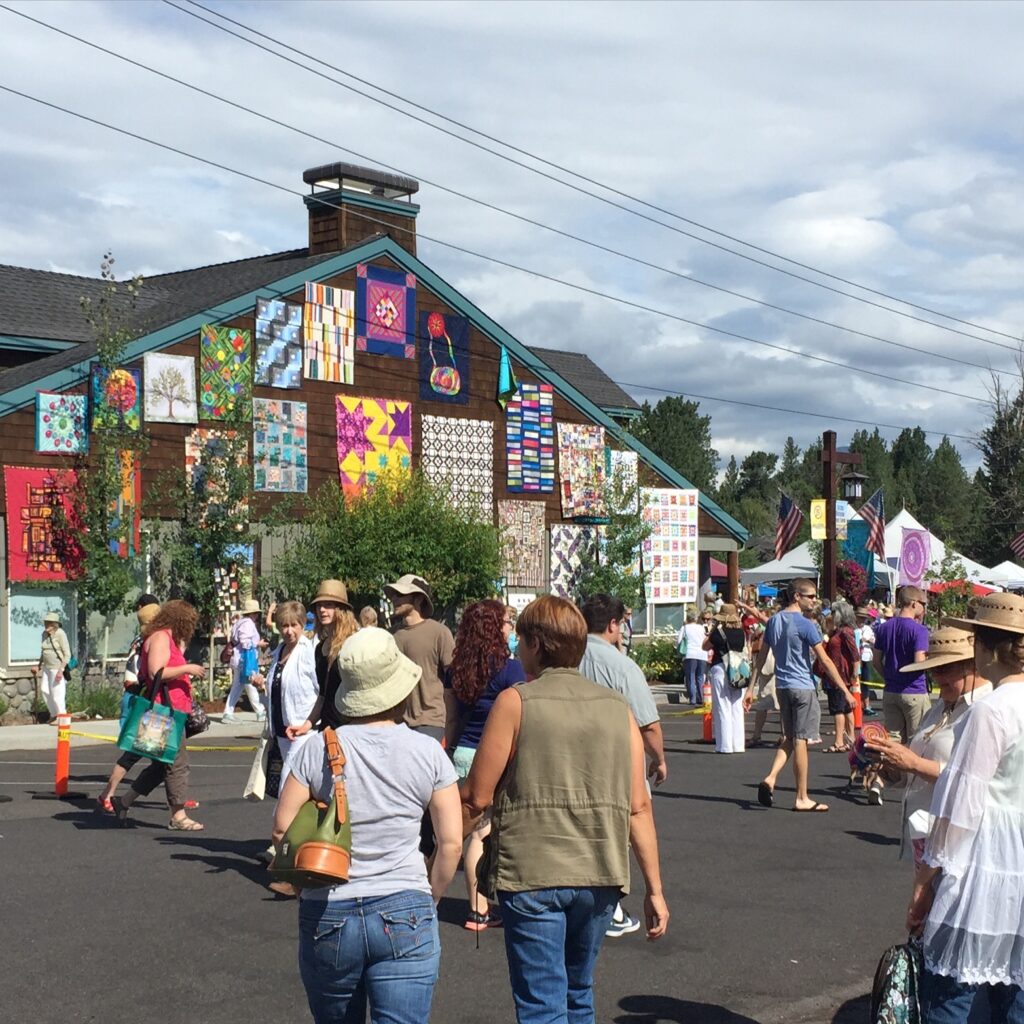
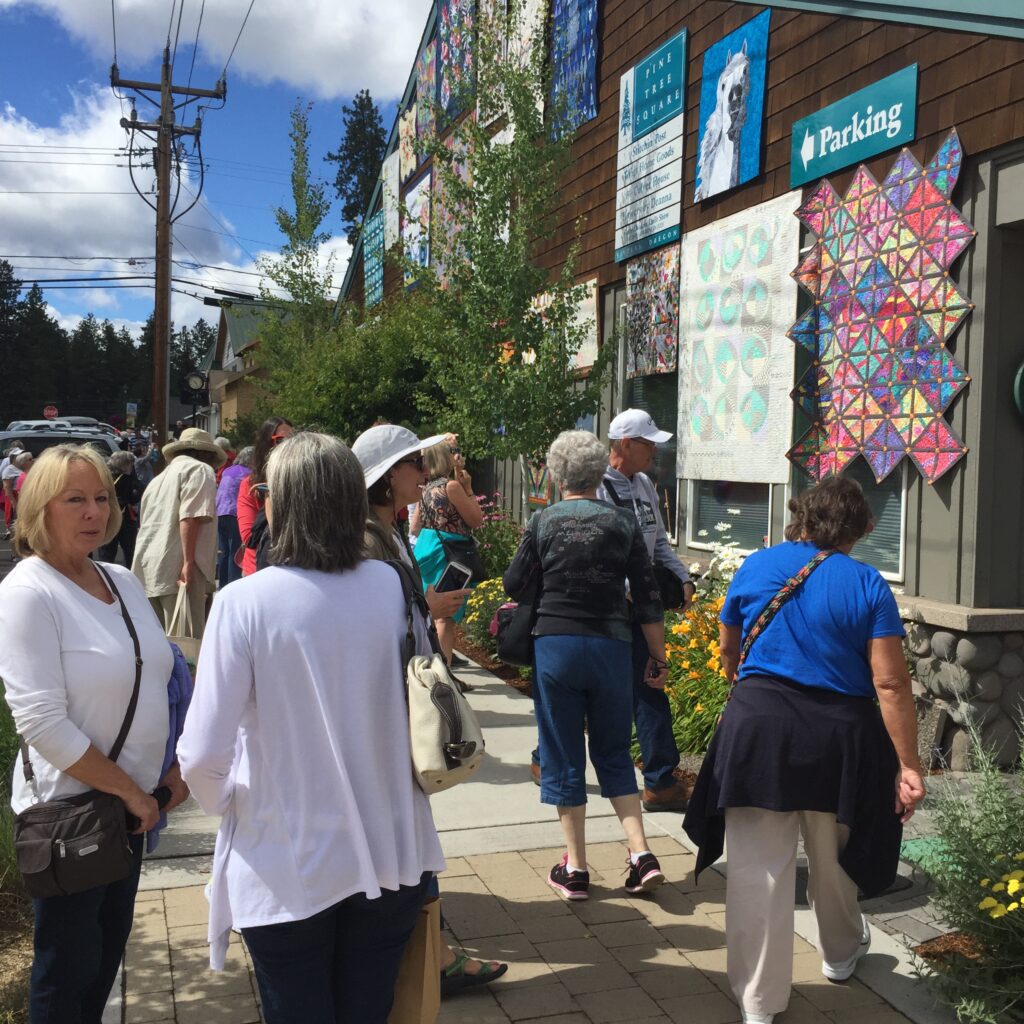
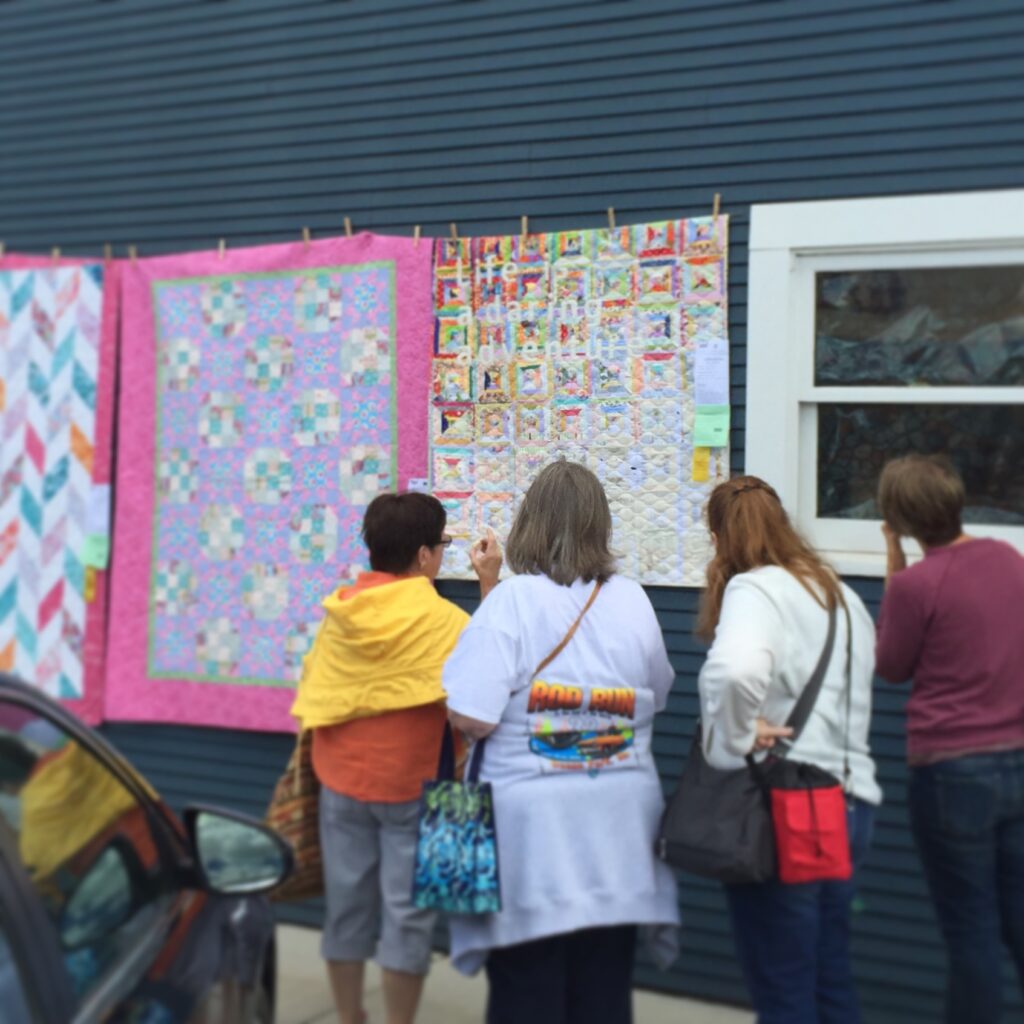
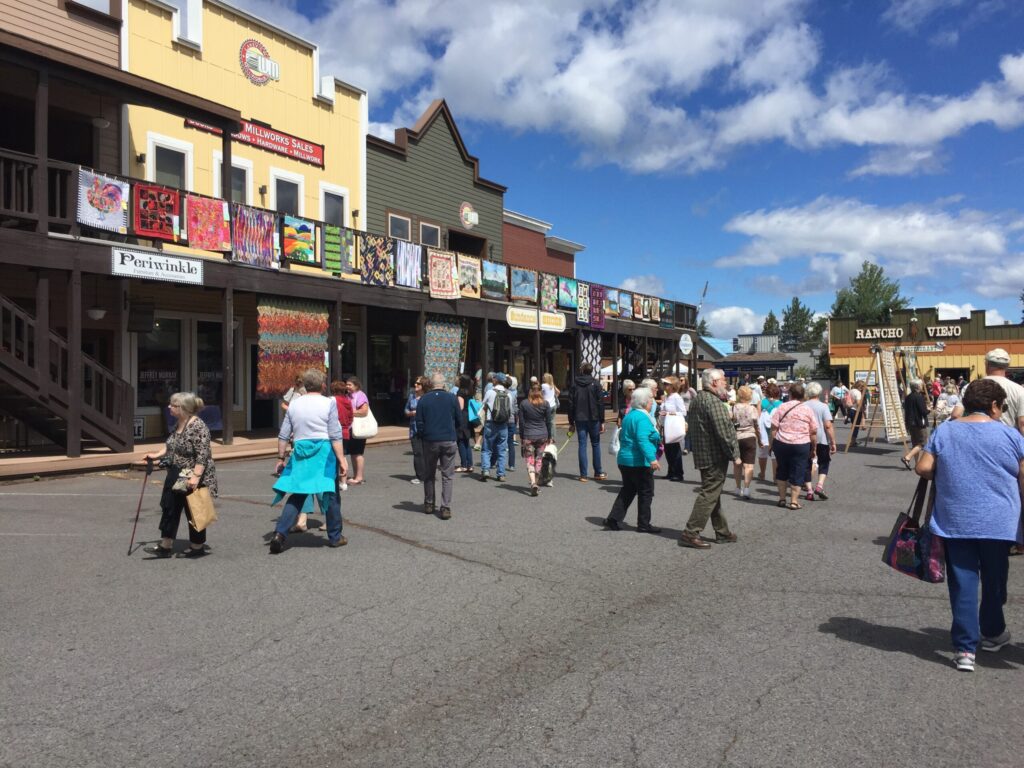
Fly into Bend in July and you’ll get the chance to visit the Sisters Outdoor Quilt Show, held the second Saturday in July every year and hosted by Valori Wells of the Stitchin’ Post. There are a week of classes that culminate in a day when the quilts take over the entire town of Sisters.
In southern Oregon, you’ll find Crater Lake National Park, the remnants of an eruption thousands of years ago. Rainwater stuck around in the crater for long enough to create a beautiful, clear lake in what used to be a mountaintop. It’s just one of the numerous mountains that make up the Cascade Mountains.
Quilt Block
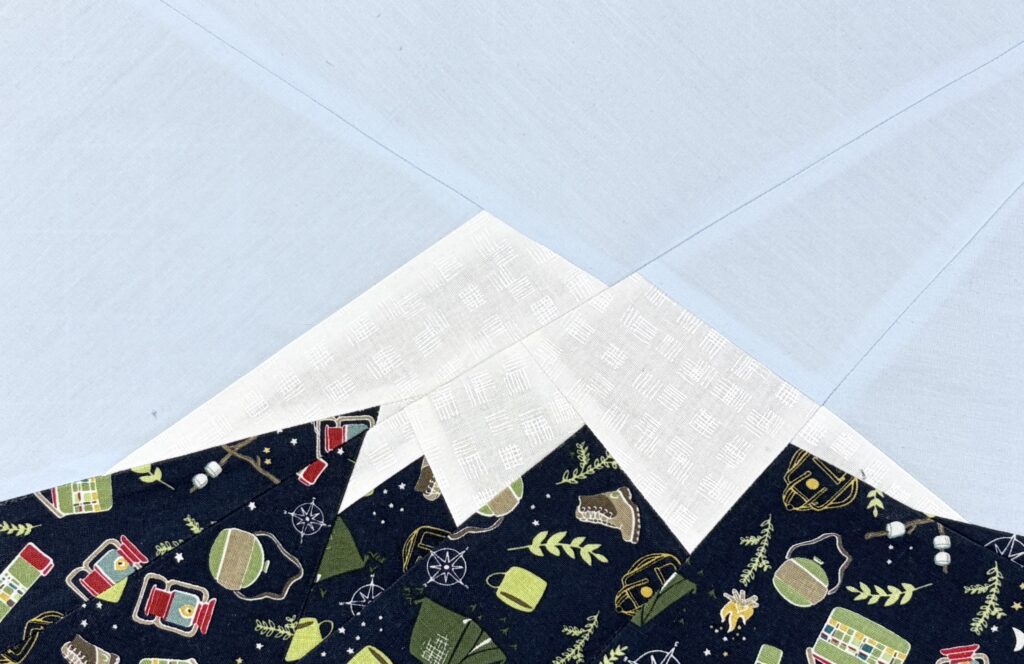
For many of us, the Cascades are symbolic of the entire Pacific Northwest, but Mt. Hood is so visible from Portland, that it has become an icon for home. “The mountain is out today” is a phrase you’ll hear, meaning it’s clear enough to see Mt. Hood easily from Portland. For those of us who’ve lived here for a long time, it’s heartwarming. For new transplants, like Hawke, it’s mind-blowing every time he sees “the volcano” (don’t tell him that Mt. Tabor is a volcano inside the city limits!).
This deep love and appreciation was the inspiration for the Oregon block: “Mt. Hood Means Home.” To get a proper representation of its iconic shape, I used foundation paper-piecing. It’s slightly more complicated than many of the FPP blocks we have done for the Quarter Millennial Quilt sew along, but it’s great practice to work toward doing more epic scenes like Violet Craft’s Elevated Abstractions: Mt. Hood or Three Sisters.
Watch the tutorial:
Quilt Shops
Sewlarium in Portland is a new-ish shop tucked into North Portland with a nice selection of quilting cottons, wide backs, Cuddle® fabrics, plus apparel fabrics like linen, denim, canvas, and corduroy.
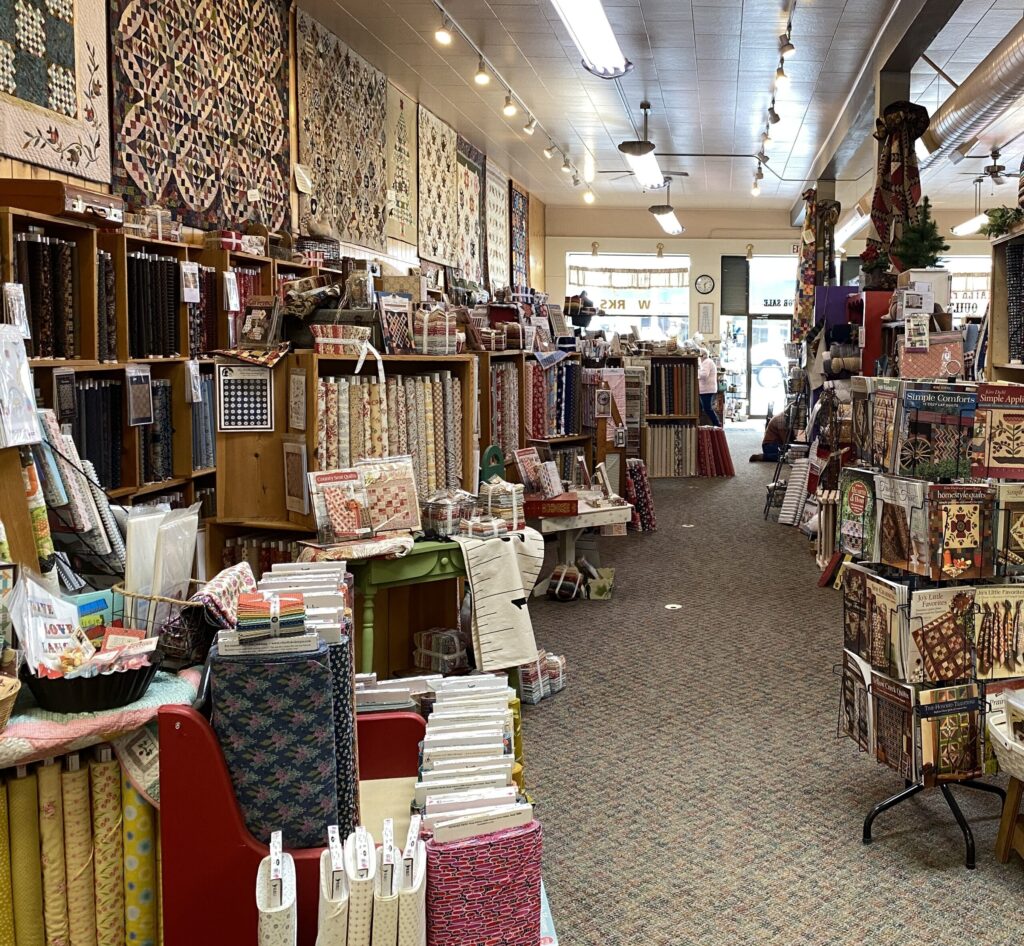
Sew Creative in Ashland is the first LQS I ever went into, way back in 2009, and every time I go back I’m reminded why I like it so much. There’s so much fabric, with a huge selection of aboriginal prints!
Tater Patch Quilts in Merrill was one of our most memorable stops on our LQS tour (we got snowed in!), but I’m so glad we found it! The town is tiny, but the shop is big with fabric, notions, patterns & classes.
Montavilla Sewing Center in Lake Oswego is my local place to teach and one of several locations. They have lots of classes and sell BabyLock, Juki and BERNINA machines.
Stitches Mercantile in Pendleton was a lucky find for me a day-trip to the rodeo town. They have variety of quilting cottons, Cuddle® backings, plus offer long-arm quilting and in-store classes.
Bits & Bobbins Quilt Shoppe in Newberg has been recommended to me several times and I need to take the suggestion so I can visit the place I grew up. 🙂
If you also live in Oregon, or you’ve visited, and you know places I really must visit, leave me a comment below!

I’m in Newberg, and have lived here most of my life ! I didn’t realize when I signed up that you are an Oregonian. Bits and Bobbins has been a great addition to our town.
Wow, I love Boersma’s in McMinnville. If you go, be sure to go downstair for deals. I grew up in Dayton, so just a skip away from Newburg. I also moved Portland area when I turned 18. Thanks for your blog and summary on quilt shops.
Oh yes, Boersma’s! I went there once several years ago, but totally forgot to add it to the list. Thank you for the reminder! (My grandparents lived in Dayton, too. Small world)