
Before the Europeans arrived, the Osage, Quapaw, Caddo, and Cherokee nations (many of whom were forcibly relocated here along the Trail of Tears) called the area we know as Arkansas their home. Echoes of their great cultures are still found in mound sites and museums.
Settlers arrived in the early 1700s through French Louisiana, and Arkansas became a U.S. territory in 1819 before achieving statehood in 1836. The antebellum era brought plantation cotton culture to the delta, and the Civil War scarred the state for generations. Less than 30 years after joining the Union, Arkansas was the ninth state to secede from it. In 1868, it was the first Confederated state re-admitted to the Union.
In the early 1900s, diamonds were discovered in Arkansas, on land bought to hunt gold, but found diamonds instead. Since then the Crater of Diamonds has continued to be a source of diamonds, including the 40-carat Uncle Sam, the largest found in the US. More than 35,000 diamonds have been found there by visitors since the park opened.
In September 1957, nine Black teenagers changed history, walking toward the front doors of Little Rock Central High School after the Supreme Court’s Brown v. Board of Education ruling. Governor Orval Faubus called in the Arkansas National Guard to block their entry. President Eisenhower eventually federalized the Guard and sent the 101st Airborne Division to escort the students inside. The following year, Faubus closed all of Little Rock’s high schools rather than comply with integration.
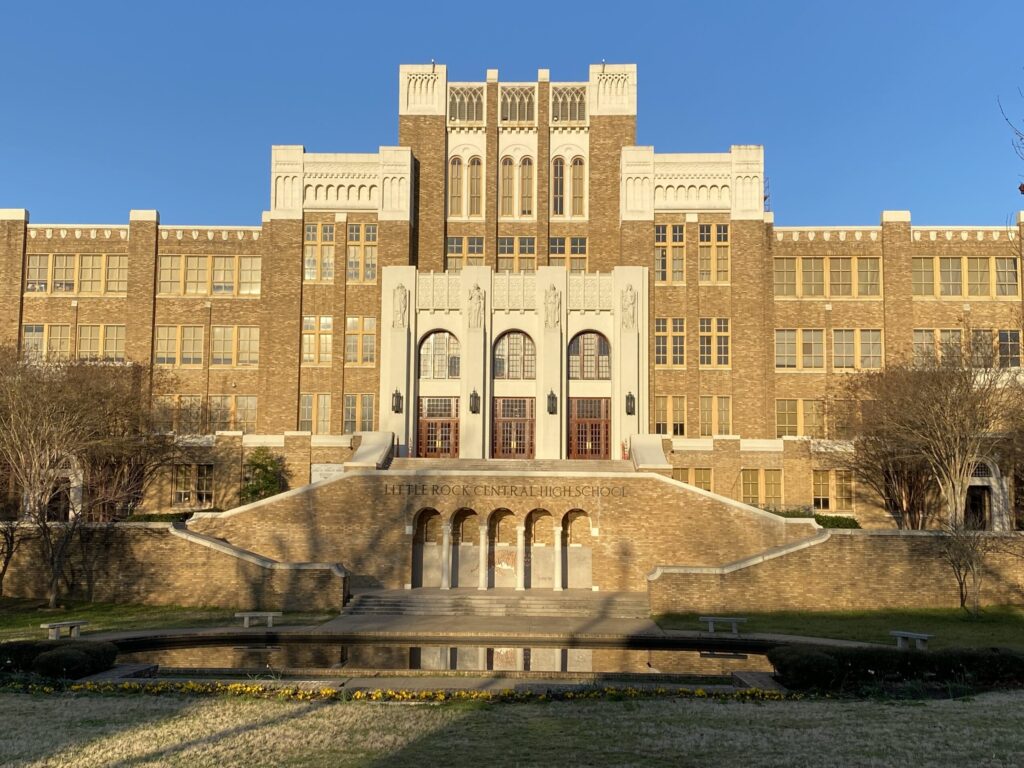
When I was in Arkansas to teach, I was able to visit the historic site and walk the grounds where these students were supposed to get an education, but weren’t allowed because of the color of their skin.
Arkansas is also famous for the birth of Walmart was born in Rogers, Arkansas, where Sam Walton opened his first store in 1962. Johnny Cash grew up in Kingsland, picking cotton and listening to the radio, before he became the Man in Black. Maya Angelou spent formative years in Stamps, Arkansas — years that would shape everything she wrote. And Bill Clinton, the 42nd President, grew up in Hope, a small town with his childhood home now serving as a historical site.
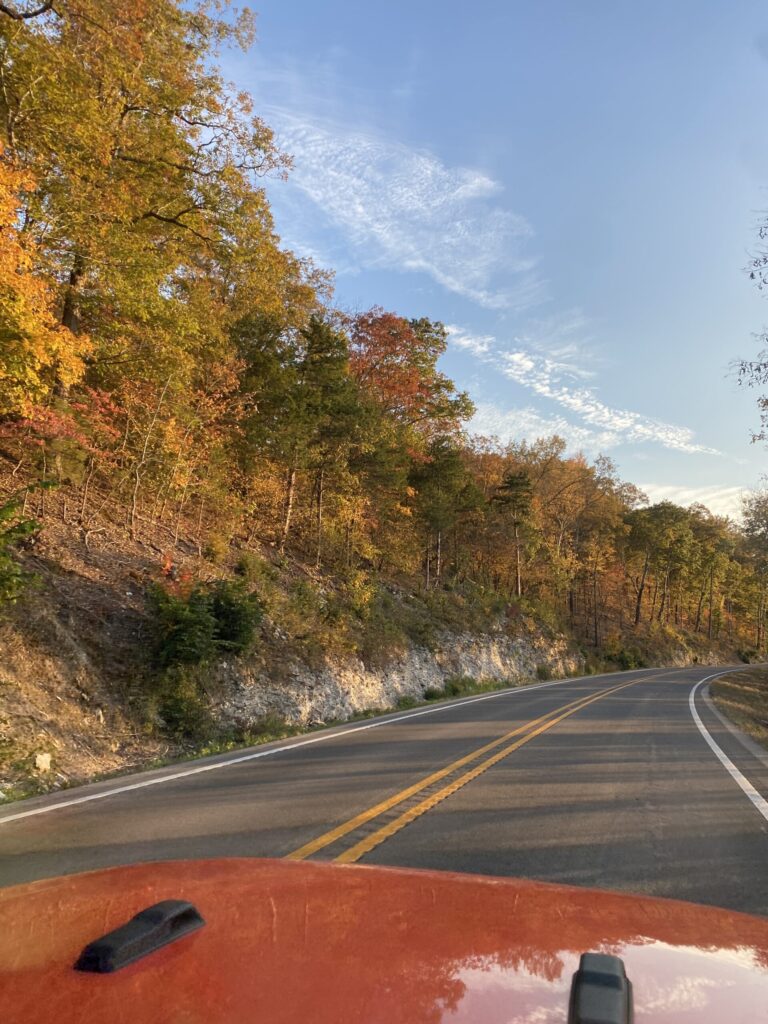
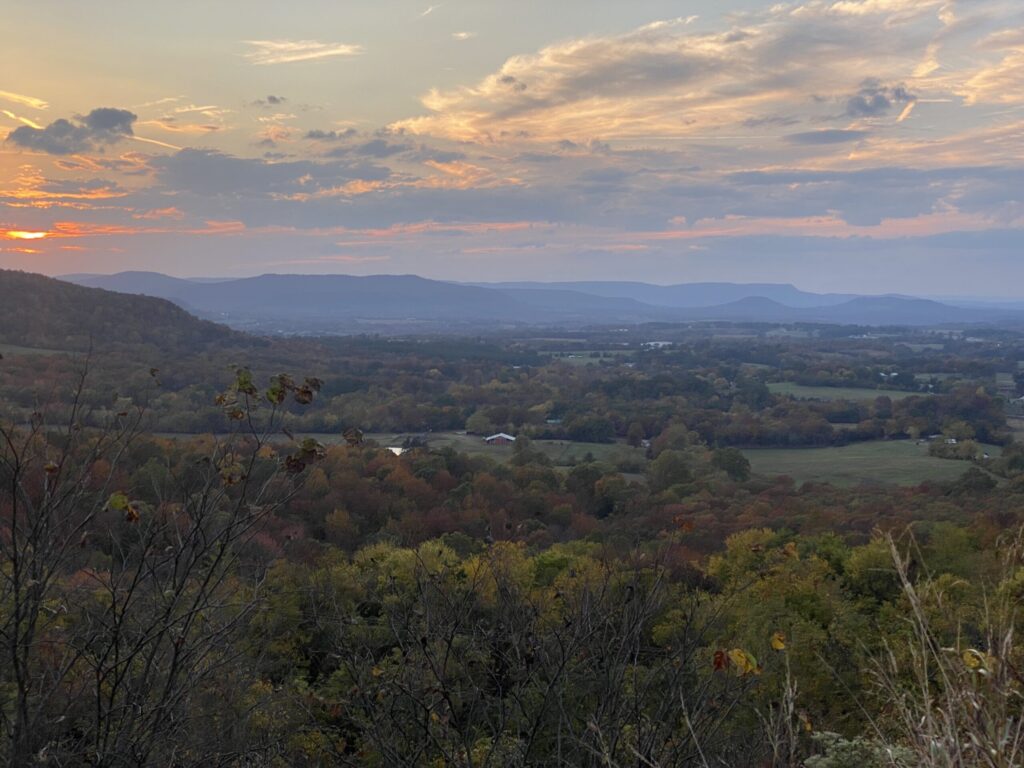
Known as The Natural State, Arkansas is the home of the Buffalo National River (the first National River!) and Ozarks, which aren’t actually mountains (they’re ancient plateaus). The state is a beauty of a road trip, especially in the fall, and one that I’ve enjoyed several times.
Quilt Block
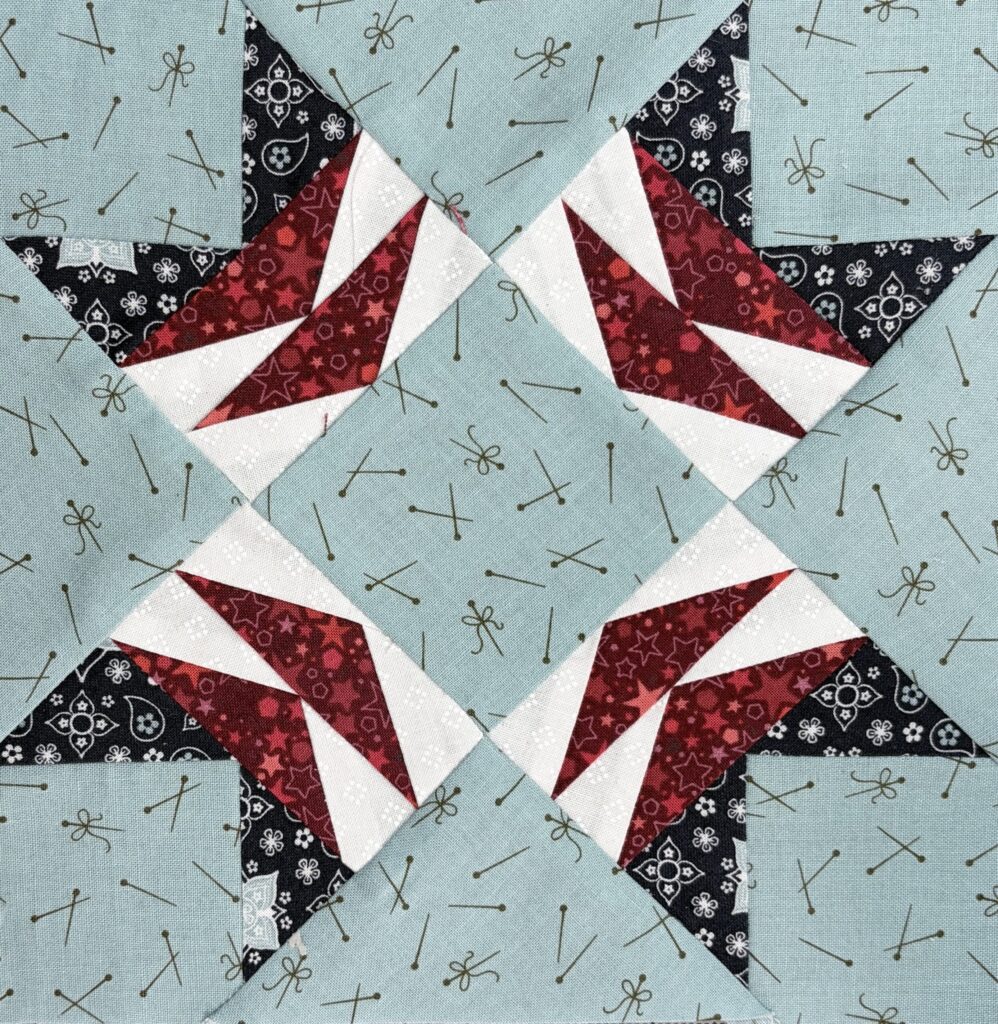
This Ozark Trail block is one of several with that name, but this is my favorite. I loved the mix of squares, rectangles and flying geese to create a block with lots of energy.
To make this block easier to construct, I mixed techniques, using paper piecing, trimming down and traditional piecing. Watch the tutorial to see how simple it is to put together.
Use that middle square for some fussy piecing, if you want!
Quilt Shops
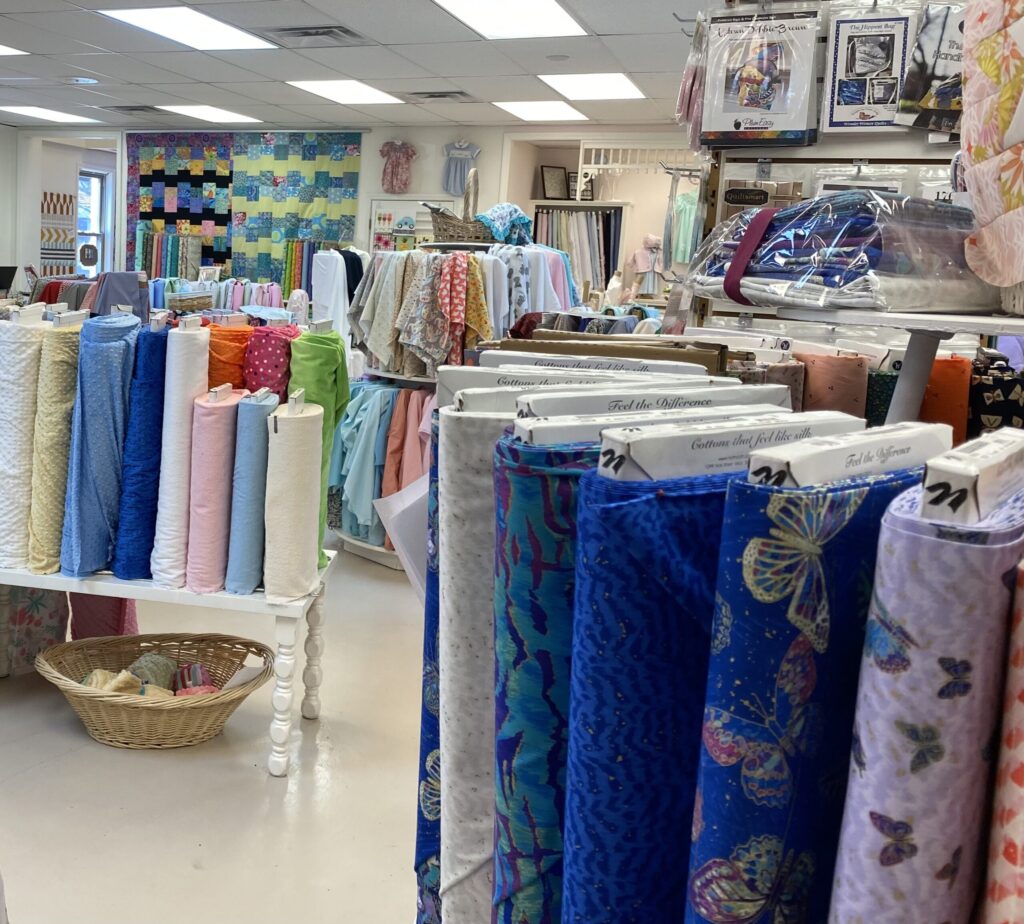
- Stitchin’ Post in Little Rock has a wonderful array of apparel fabrics and the first place I ever saw smocking supplies in a quilt shop. The staff are knowledgeable and they’ve got a great classroom.
- Mama’s Log House Quilt Shop in Huntington is actually in a log cabin, making it an extra fun place to shop for traditional quilting fabrics.
- Remember Me Quilt & Fabric Shop in Mountain Home has a bit of everything with fabrics, sewing studio furniture, domestic machines, longarms, bag making supplies and kits galore.
I can’t wait to see your Arkansas block! If you live in or have visited Arkansas, leave a comment. I’d love to hear more about it!